-

BUBBLES
Cave de Lugny Crémant de Bourgogne Blanc de Blancs
The basics – It’s 100-percent chardonnay from, of course, Burgundy.
Winemaker’s take – “Pleases with its freshness, red fruit aromas and tangy finish. Easy to pair, it will delight at all your tasting occasions – aperitif, cocktail, spicy main courses and dessert – and will also perfectly complement your sushi.”
Critical acclaim – From Decanter, which scored it a 90: “This is a great alternative to Champagne – at a fraction of the price. Fresh, light and dry with ripe apple and grapefruit. Lovely foaming mouthfeel with creamy notes and a tangy finish –very complex for the price. This is Burgundy’s most reliable co-op, so fill up your fridge.”
My take – Well, as a matter of fact, I did.
Price – $21.49 at Whole Foods
Roederer Estate Brut Anderson Valley
The basics – It’s always a 60-40 blend of chardonnay and pinot noir from the Roederer’s 600 acres of estate-grown grapes in this special corner of Mendocino County.
Winemaker’s take – “A crisp and elegant sparkling wine with complex pear, spice and hazelnut flavors.”
Critical acclaim – From James Suckling, who scored it a 95: “A chardonnay-dominant, fresh and vibrant wine with aromas of sliced pears, wildflowers, citrus blossoms and wet stones. The plate shows fresh acidity, minerality and subtle, pleasing notes of fresh bread. Citrus juice and peel in the finish. Lovely, easygoing and pleasurable.” And from Jeb Dunnuck, who also scored it a 95: “With a refined mousse and dry, crisp, lengthy layers of green apple, citrus, and a bite of brioche. With 10-12 percent reserve wine from cask, it represents from five to seven vintages in one bottle, from two to seven years old, the style of the house. The reserve aged in oak adds texture and length, broadening the chardonnay’s natural citrus-driven notes and lightness of being. Disgorged April 2024, the amount of dosage has gone down year to year and is around nine grams per liter this time around.”
My take – Roederer’s California and Champagne Louis Roederer’s French winemakers conspire to deliver this wine, which tastes about as French as American bubbles can taste – at a most friendly price.
Price – $29.99 at Kroger
PINK
2025 La Vieille Ferme
The basics – From the famous Family Perrin, it’s a field blend of bourboulenc, grenache blanc, roussanne, ugni blanc and vermentino grown mainly within the Parc Regional du Luberon equidistant from Avignon, Aix-en-Provence and Manosque.
Winemaker’s take – “The hot, sunny summer encouraged excellent concentration in the grapes, while the cool nights preserved aromatic freshness and good acidity levels, essential for balanced wines. Despite the heat and some rain at the end of the harvest, the grapes remained remarkably healthy, with particularly concentrated fruit and controlled yields.”
My take – This is crazy good juice for the price and I love that the fruit grows only a couple of hours from my home turf in Haute Provence.
Price — $7.99 at Kroger
WHITE
Bonneté Blanc de France
The basics – It’s sustainably-grown sauvignon blanc from the renowned Gunz Gravel terraces near Saint-Émilion, ideally situated between the right bank of the Garonne River to the south and the left bank of the Dordogne River to the north.
Winemaker’s take – “Beautiful pale yellow hue with gold hints. To the nose fresh aromas of white flowers and exotic fruits are remarkable on this wine. The sauvignon blanc is bringing freshness and complexity.”
My take – The vineyards belong to my great friends, Houstonians Jean-François and Nathalie Bonnette, so it’s hard to be objective, but I don’t have to be, do I? I just keep drinking this vibrant, wonderfully priced white.
Price – $11.98 at Spec’s
RED
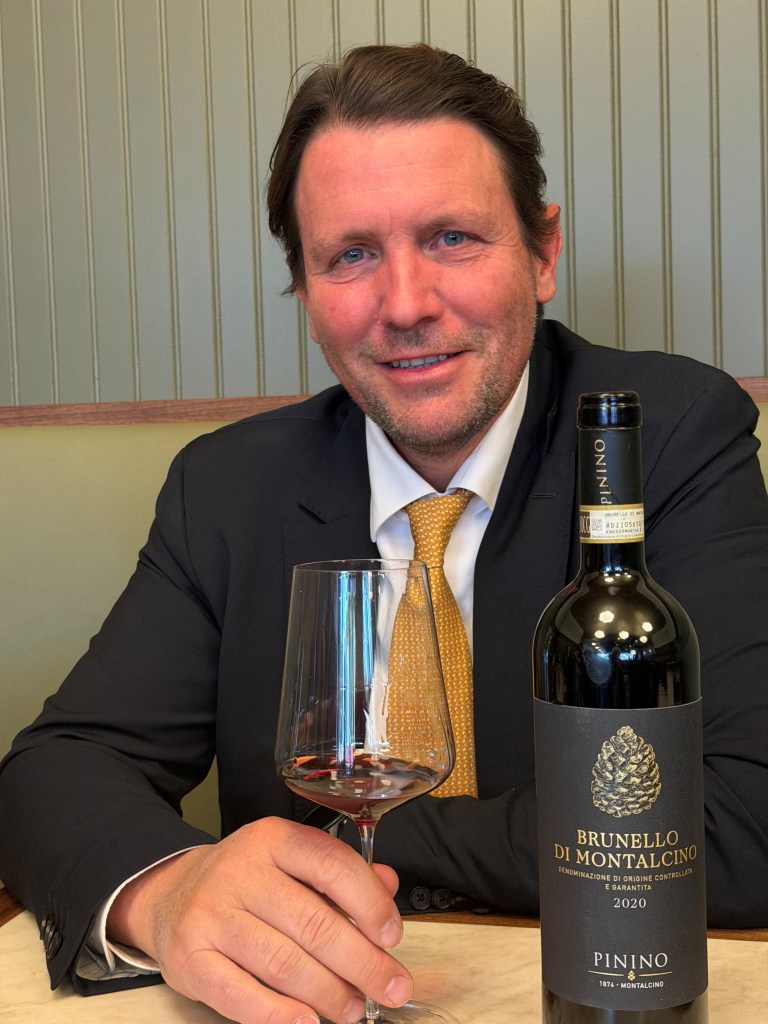
2020 Pinino Brunello di Montalcino
The basics – It’s 100 percent Sangiovese grosso from Salvatore Ferragamo’s Il Borro winery not far from Montalcino in the heart of Tuscany.
Winemaker’s take – “Embodies the productive philosophy, the values connected to the environmental typicality, the expertise and passion both in the vineyards and the cellar: a carefully selected blend of the grapes produced in the two areas where the vineyards are, which translates into a wine with an intense ruby red color in which aromas of blackberries and plums blend with hints of spices. In the mouth it’s velvety, full-bodied and smooth.
Critical acclaim – From the Wine Enthusiast, which scored it a 94: “The sweet, floral nose blooms with aromas of mandarin blossom, candied orange peel, tart cherry and wild strawberry. The palate adds a smear of raspberry jam to more notes of strawberry, citrus and florals, before a finish of sea salt and milk chocolate.”
My take – Ferragamo has got the drill down: Fermentation in steel tanks at a controlled temperature, on-skin maceration from 18 to 25 days, followed at least 30 months of aging in oak barrels and barriques.
Price – $74.99 at Premier Fine Wine & Spirits
2024 Il Borro Borrigiano
The basics – Sangiovese makes up 70 percent of the blend and, of course, cabernet sauvignon the rest.
Winemaker’s take – The year began with a mild and dry climate that lasted from January until May, when a period of heavy rainfall commenced, continuing through mid-June. The summer saw heat spikes that were counterbalanced by a cooler autumn with several rain events. The harvested grapes yielded balanced musts and wines that featured prominent floral and mineral notes, with a lower (13 percent) alcohol content.”
My take – It’s Super Tuscan for a superb price. Yep, Ferragamo hits another one out of the park.
Price – $19.99 at Total Wine
2022 Abbona Barbera del Monferrato
The basics – The barbera grapes grow in the vineyards around Monferrato – obviously.
Winemaker’s take – “A purplish ruby red wine, it features fresh and clean aromas of black currants, blueberry, red fruits and violet notes. With a warm and elegant profile, the wine is full-bodied and presents a pleasant, harmonious palate.”
My take – I happily keep stumbling upon delicious value-driven reds from this under-appreciated corner of the Piemonte. #yay
Price – $18.99 at Total Wine
2022 Pernici Monferrato Nebbiolo
The basics – The Morando Winery fruit also grows – obviously – near Monferrato, not far from Asti in Italy’s Piemonte.
Winemaker’s take – “An intense, full-bodied nebbiolo showing ripe red fruits, violet, and a hint of vanilla. Velvety with slight herbaceous notes.”
My take – A quaffable nebbiolo for under 10 bucks? Mama mia!
Price – $8.97 at Total Wine
-
Happy Valentine’s Day, everyone!
BUBBLES
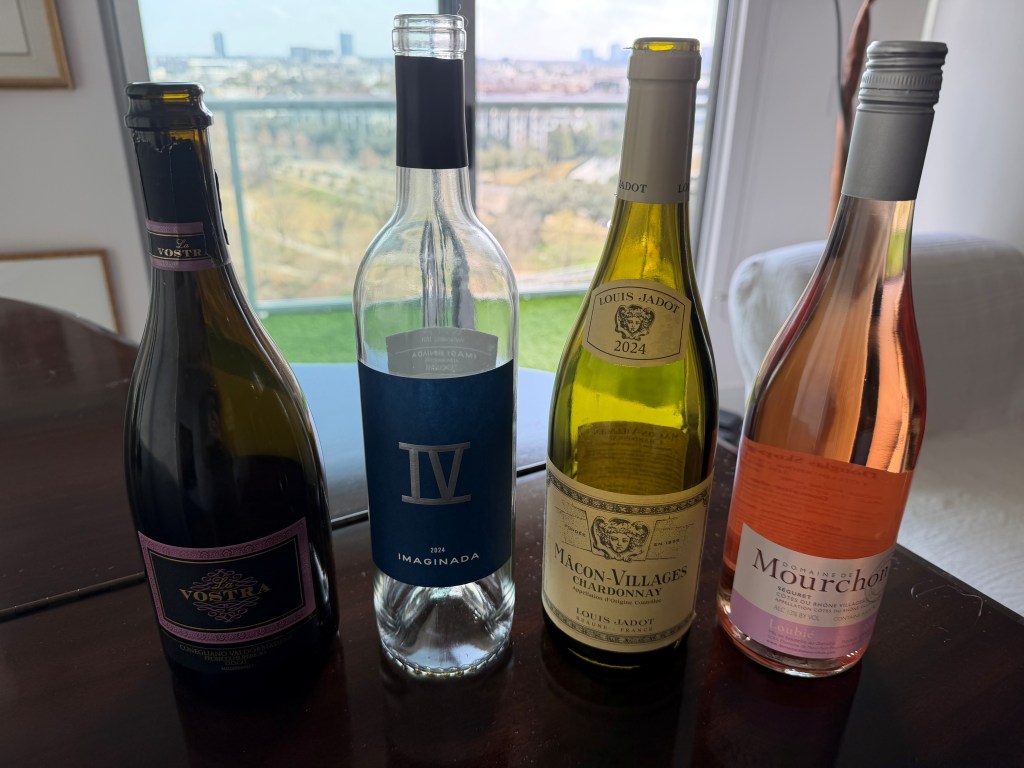
La Vostra Conegliano Valdobbiadene
The basics – The Conegliano Valdobbiadene appellation, near the center of the Treviso province, was created in 1969 and promoted to DOCG status 40 years later. These bubbles, of course, are made from the glera grape.
Winemaker’s take – “Peach and slight honey aromas become flavors on the palate, along with a nice green apple note that brightens the wine. Approachable and round with an easy-to-enjoy, smooth, bubbly texture.”
My take – I thought it offered remarkable value when I bought it for $16.99 a bottle. Now? Woo hoo!
Price – $12.99 at Total Wine
WHITE
2024 Imaginada IV Albariño
The basics – The albarino gets fleshed out by chenin blanc, chardonnay and trebbiano, all of which is Texas High Plains fruit.
Winemaker’s take – “A brilliant pale straw in color, this lovely wine is a made-for-friends and late afternoon quaffing. Charming aromas of peaches, pineapple, lemon and tangerine yield a soft, delicate, and perfectly balanced palate leading to a crisp, refreshing finish.”
My take – Invention is justifiably proud of its low-alcohol wines. This one is only 12.7 percent, but that never crosses your mind while you sip it. Super-satisfying at every level.
Price – $40 at https://heathfamilybrands.com/shop/wines/inventionvineyards/
2023 Louis Jadot Mâcon-Villages Chardonnay
The basics – The Mâcon-Villages AOC is located in the southern part of Burgundy, close to Beaujolais. It’s the largest of the Mâconnais area, covering about 2,500 hectares of mostly chardonnay vineyards encompassing 43 communes.
Winemaker’s take – “Shows floral, apple and citrus aromas and flavors, with mineral notes. A classic expression of Chardonnay from this appellation.”
My take – You’ll look long and hard trying to find a more fundamentally satisfying chardonnay from anywhere.
Price – $15.97 at wine.com
PINK
2025 Domaine de Mourchon Loubie
The basics – A classic grenache (70 percent) and syrah blend, the fruit comes from young vines – average age 15 years – planted on the property’s Loubié terroir near Seguret with its well-draining sandy limestone and clay soil. Fermentation takes place in stainless steel tanks at low temperatures.
Winemaker’s take – “Pale salmon in color this rosé offers a bouquet of summer berries, peach and a little tangerine. Mouth-wateringly juicy, with a medium-bodied creaminess packed with vibrant fruit flavors, it’s ideal as a summer aperitif but well enough structured to stand up to seasonal foods such as salad Niçoise, a watermelon, basil and burrata salad, dressed crab and prosciutto.”
My take – From the McKinlay family, it has been my favorite rosé for years, checking all the boxes – price, flavor profile,
Price – $18.99 at Spec’s
RED
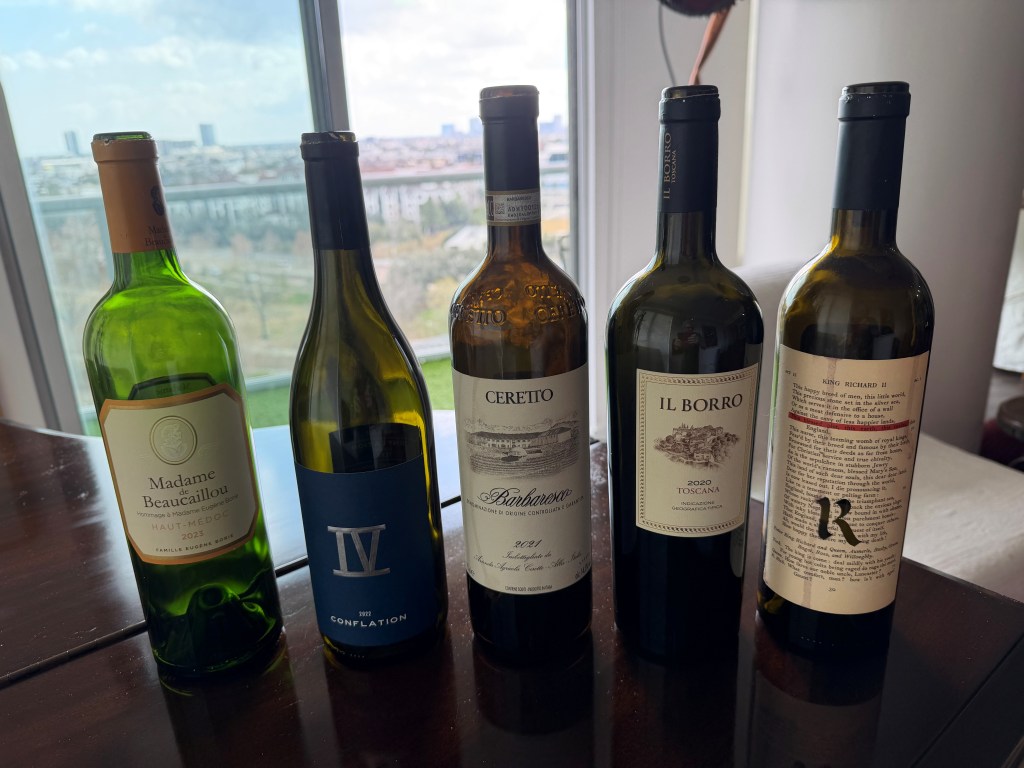
2023 Madame de Beaucaillou
The basics – This “second” wine from the second-growth producer Ducru-Beaucaillou in St. Julien is a blend of merlot (59 percent), cabernet (37) and petit verdot.
Winemaker’s take – “Medium to deep garnet-purple in color, it zips out of the glass with sparky notes of juicy raspberries and wild strawberries with underlying suggestions of cloves, roses, and dusty soil. The medium-bodied palate is bright and refreshing, with youthful red berry flavors and a lightly chewy texture, finishing with a touch of herbal zing.”
Critical acclaim –From Peter Moser: “Dark ruby, opaque core, purple reflections, delicate edge brightening. Delicately leafy black cherry fruit with a hint of liquorice and orange zest. Complex, juicy, a hint of blueberry, ripe tannins, freshly structured, lively, lemon finish.”
My take – No, not all Bordeaux must break the bank. The Madame would hold up against most of the big boys.
Price – $22.98 at allendalewineshoppe.com
2022 Invention Vineyard Conflation
The basics – It’s mostly mourvedre (81 percent) with syrah and rubired in the blend, too.
Winemaker’s take – This inaugural vintage of an exciting new Invention Vineyards wine is a Rhone-style blend featuring fresh aromas of strawberry shortcake and tart cherry with a spice-driven undercurrent of vanilla, cinnamon, and clove. The crisp palate is bright, lively, and refreshing with brisk acidity that makes it a great wine for lighter, warm-weather meals.
Critical acclaim – From the Wine Enthusiast: “This nimble blend delivers fresh raspberry, violet and strawberry aromas on the nose, while the palate dances with lively acidity and a notable sour cherry-cinnamon vibe. Give this a slight chill and crush it with slow cooked pork tacos
My take – Again, the Invention lineup is focused on lower alcohol levels, and the Conflation comes in at 13 percent with no loss of flavor intensity.
Price – $55.29 at heathfamilybrands.com/shop
2021 Ceretto Barbaresco
Winemaker’s take – An elegant red, offering cherry, strawberry, floral and mineral flavors. Lively and focused, with a line of chalky tannins underneath. Shows fine balance and length.
Critical acclaim – From James Suckling, who scored it a 93: “This is a really solid, meaty and mouth-filling Barbaresco that offers vivid red fruit with floral and mineral nuances and hints of licorice and cedar. Medium- to full-bodied with compact, velvety tannins that form the backbone of the wine, showing impressive concentration and length.” From the Wine Advocate, which also scored it a 93: “Reveals a lifted bouquet with bright tones of raspberry and wild strawberry. Those aromas offer a sweet side to the bouquet, but there is also a sour side that comes forth with blood orange or tart pomegranate. The wine ages in French oak for 12 months and is racked into neutral barrel for another year. Fruit comes from both Treiso and Barbaresco.”
My take – The vintage is already acquiring legendary status in the Langhe and this beautiful Barbaresco classico from one of the region’s great families is another reason why.
Price – $79.99 at wine.com
2020 Il Borro
The basics – It’s a Super Tuscan blend of organically grown merlot (50 percente), cabernet sauvignon (35) and syrah aged in 20-hectoliter casks.
Winemaker’s take – “After an accurate geological study, the varietals were all planted in the best suited soils to express all their potential, giving birth to a velvety and opulent blend.”
Critical acclaim – From James Suckling, who scored it a 96: “This is a round and rather juicy young wine with blackberry, chocolate and grilled meat notes. Full and layered with very fine tannins that are well integrated and a bright finish. Lively at the end. From the Wine Advocate, which scored it a 93: “The wine shows a lot of oak that comes off as toasted spice, coconut or buttered almond. There is a distant note of dried dill, probably in the pyrazine family of the Cabernet Sauvignon, but it dissipates within the context of the big, ripe black fruit at the core. From a hot vintage, you get a lot of richness and fruit weight.”
My take – It’s early, of course, but this is my Wine of the Year to 2026. We’ll see if anyone can beat it going forward.
Price – $89.99 at wine.com
2021 Realm The Bard
The basics – It’s 83 percent cabernet sauvignon with merlot, cab franc, petit verdot and petite sirah rounding out the blend.
Winemaker’s take – The 2021 is the largest and most complex blend we’ve ever made with dozens of components from vineyards across the realm of Napa Valley. This vintage includes new vineyard sources from Calistoga, Rutherford and Oak Knoll AVA, allowing us to broaden our painter’s palette. The Bard is generally more approachable in its youth than some of our single vineyard bottlings, but we expect it to age for many years to come. This is our first time using a technical cork for this
wine, which should guarantee consistency and improve longevity.”
Critical acclaim – From Jeb Dunnick, who scored it a 98: “This beauty has a killer bouquet of cassis, spring flowers, graphite, chalky minerality, and violets. This carries to a full-bodied, seamless, silky, flawlessly balanced effort revealing fine tannins, a good sense of freshness, and a thrilling finish.” And from James Suckling, who scored it a 97: “The purity of fruit here is impressive with blackcurrants, bark and black mushrooms. Full-bodied but light-footed and fresh with integrated tannins that melt into the wine. Real transparency and focus.”
My take – Full disclosure: I didn’t pay anywhere near this much for the Bard (I knew a guy!), but it’s not overpriced by any means. I can’t imagine a more perfectly constructed cab.
Price – $174.99 at wine.com
-
The NFL crowned two conference champions Sunday and the Super Bowl LX matchup has been set. It’s New England’s Patriots vs. the Los Angeles Rams in Santa, Clara, Calif., on Feb. 8. For the LXth time – that’s 60th for you non-Romans – it will not include a team from Houston. Also, if you’re counting (and I am), this became the 45th year in a row that a team from Houston failed to even reach the penultimate game, never mind the ultimate one.
Our fair city’s record in the Division Round since the Oilers pulled off the Mission Valley Miracle in San Diego in the 1979 playoffs, beating the Air Coryell Chargers without Dan Pastorini, Earl Campbell and Ken Burrough? That would be 0-11. Afraid so.
During said sad span, the Warren Moon-era Oilers went 0-4, stumbling in 1987, 1991, 1992 – when, as you may recall while recoiling again in horror, they led the Bills 35-3 in the middle of the third quarter – and also 1993. As for the Texans, after going belly up at New England last weekend, they are 0-7, having succumbed in 2011, 2012, 2016, 2019, 2023, 2024 and 2025.
All of their losses have been to the Patriots (three) and Ravens (two) and the Chiefs (two). Their Buffalo meltdown equivalent was the 24-0 second-quarter lead they squandered in Kansas City six Januarys ago, back when we thought Deshaun Watson was the future of the franchise.
Is there any consolation to be found in the fact that four of the Texans’ six defeats this season were to the four conference finalists by a combined 28 points? That’s for you to decide. Me, I’m tired of finding any consolation is losing.
It’s fair for you to ask what any of this has to do with wine? Welp, it has caused me to drink probably too much of same. In the weeks ahead, I’ll be sharing my favorites consumed over the course of this holiday season and yet another non-dry January, a personal streak that goes back as far as I’ve been of legal age.
Oh, if you’re wondering about the identity of the dapper gent pictured above, he will figure prominently in my next blog. That’s Salvatore Ferragamo of, yes, that Ferragamo family, except, as he’s proud to say, he’s the “farmer” in the bunch. I was tasting with Ferragamo last Sunday at Murray’s Wine & Cheese – crazy good pie, by the way – while C. J. Stroud was busily throwing his four first-half interceptions.
Fortunately, Murray’s didn’t have a TV so I was spared the misery first-hand. Also, fortunately, Ferragamo’s wines are outstanding, including a beautiful bottle of bubbles. Much more to come on that.
Cheers!
-
This missive has nothing to do with wine except for one of the most memorable post-game quotes of my 50-plus years of writing about sports. It was spoken by Russ Francis, one of the NFL’s best tight ends of his day, and it came at the end of a disastrous afternoon for Francis and his New England Patriots, who had just been face-planted by the Houston Oilers 31-14 in a Division Round playoff game on their own turf in Foxboro.
Having admitted he’d expected to be celebrating an ass-kicking – instead of lamenting one – Francis said of the bottle(s) of bubbles waiting for him back home that New Year’s Eve: “Dom Perignon is the truth the light and the way. But tonight . . . it’s going to be light’s out.”
The memory is relevant, of course, because H-town’s current NFL franchise, the Texans, visits Foxboro Sunday for another Division Round game (albeit in a different stadium), hoping to end our town’s 45-year conference championship game drought, which happens to be the longest among the league’s current cities by a full decade.
Both those 1978 Oilers and the 1979 team – the first to be officially christened the “La Ya Blue” Oilers – would lose AFC Championship Games in Pittsburgh, where the Texans at least finally sort of made amends with their 30-6 AFC Wild-Card Round stomping of the Steelers Monday night. A stunningly lopsided victory that ended Mike Tomlin’s storied coaching career in Pittsburgh, it earned the Texans a spot in the Division Round for the seventh time.
Since 1979, Houston’s franchises are 0-10 when reaching the AFC semifinals. Hall-of-Famer Warren Moon went 0-for-4 when he got this far during his Oilers years. Subsequently, Matt Schaub was 0-2 as the Texans’ QB of record, while Brock Osweiller and Deshaun Watson failed in their only shots. (Both Schaub and Osweiler also came up short in their respective visits to Gillette Stadium.) Now C. J. Stroud, admirably back for his third try in three seasons, again hopes to break Houston’s Division Round curse.
The Oilers’ breakthrough romp came in their first-ever Division Round game in their ninth season in the NFL and followed a no-less surprising 17-9 Wild Card-round beat-down of the Dolphins in Miami. While, on paper, the Pats paddling was considered a mild upset at the time, Houston had previously pulled off an astonishing comeback on the same field in mid-November and the Patriots subsequently found themselves in a chaotic state for the high-stakes rematch.
Only a few weeks earlier Chuck Fairbanks was suspended as head coach after owner Billy Sullivan learned that Fairbanks had already been secretly hired to take the reins at the University of Colorado (Where he would go 7-26 before being fired. Yep, karma can be a bitch).
Anyway, the first quarter ended deceptively 0-0, but the final 45 minutes mostly belonged to Houston. The Oilers built a 21-0 lead, starting with a 71-yard Dan Pastorini touchdown pass to Kenny Burrough. A Mike Reinfeldt pick of a Steve Grogan pass then gave the Oilers the ball at their 1-yard line, from where they drove 99 yards with the final 19 coming on a Pastorini-to-Mike Barber strike. Another Pastorini-Barber TD hookup left the Pats reeling.
The flummoxed Grogan would be benched right before the half after completing only three of 12 passes for 38 yards. Trailing 24-0 following a Toni Fritsch field goal, the Patriots offered a bit of resistance late behind Grogan’s backup, Tom Owens, but a Gregg Bingham interception sealed the deal, setting up a clinching 2-yard touchdown run by Earl Campbell. The Oilers, for better or worse, were Three Rivers Stadium-bound.
Interesting fact: The Patriots wouldn’t lose another home playoff game for 31 years.
“Oh, wow, how about that?” Wade Phillips responded when I told him that in a conversation Thursday.
Phillips, who was his late father Bum’s defensive line coach that day, remembers how “confident we were after beating them up there already with that comeback. We just knew we were going to win.”
“That comeback?” On Nov. 12, the Patriots had stormed out to a 23-0 lead only to have the Oilers respond with 26 unanswered points. A deftly executed field goal – a variation of Phillips’ patented “Bumerooski” – preceded a second-effort Earl Campbell 1-yard touchdown plunge that cut the margin to three, and Pastorini subsequently found Rich Caster for the winning points.
“We had a great defense . . . Hall-of-Famers across the front,” Phillips said, referencing nose tackle Curley Culp, end Elvin Bethea and outside linebacker Robert Brazile. “We were good, really good.”
Alas, not good enough to deal with the hand they were dealt in the next weekend in icy Three Rivers Stadium. Although the Oilers’ defense forced five turnovers, the offense coughed up the football nine times – five Pastorini interceptions and four lost fumbles – in a 34-5 thumping.
Like me, Wade found it interesting that the Texans earned their latest golden opportunity at the expense of the Steelers.
“Kind of amazing, isn’t it?” he said.
Note that Phillips, me and John McClain will share the dais on Jan. 31 for Sports Night at the Pearl Fincher Museum (pearlmfa.org) in Spring. Tables go for $3,000 and individual tickets for $300. Wines from the excellent, locally-owned Nice Winery will be served and it’s a slam-dunk given that a slew of great memories will be shared.
Phillips holds the distinction of having served as the head coach of more NFL franchises – six – than any man ever. Wade and I initially met in 1976, his first year on his dad’s staff and my first year covering the Oilers for the Houston Post. McClain and I battled it out as rival beat reporters for the Post and the Chronicle from 1980 through 1983, forging a lifetime friendship in the process.
OK, enough ball talk. Let me close with a wine note. There will be a Burgundy “class” at the Alliance Française de Houston (427 Lovett Blvd., in Montrose) from 6:30 to 8 p.m. Thursday, Jan. 22, conducted by Spec’s eminently knowledgeable fine-wine buyer James Barlow. It renews a long tradition of Spec’s tastings at the Alliance (alliancefrancaise.org) begun by the late Bear Dalton. The price is $55 for Alliance members and $65 for non-members. Yes, I fully intend to be there.
-
Merry Christmas everyone!

BUBBLES
Incanto Prosecco
The basics – It’s 100-percent glera from the Veneto, as it must be.
Trader Joe’s take – “Straw-yellow in your glass, and every sip crisp and aromatic. Luxurious notes of peach, apricot, and almond tickle the tongue and lead to a vivid, dry finish. We particularly love it for toasts and nightcaps, but it also makes magical mimosas for brunch.”
My take – Before the New Year, I’m going to drink these bubbles side-by-side with Costco’s Kirkland Prosecco and attempt to decide on a favorite. Then again, I may declare it a tie. At this price, very similar to the Kirkland’s price, why bother to quibble?
For more information – www.traderjoes.com
Price – $8.99 at Trader Joe’s
PINK
2024 Ile de Conas Le Rosé
The basics – It’s a kitchen-sink blend of grenache gris (25 percent), grenache noir (20), caladoc (15), pinot gris (15) and cinsault from the highly respected Paul Mas estate in the Languedoc.
Winemaker’s take – “This unique Mediterranean blend is succulent with a delicate, tongue-tingly zest. Bursting with flavors,it can be served as a pre-dinner drink or paired with salmon teriyaki, zucchini, carpaccio or Mediterranean salad.”
Critical acclaim – From the Cheap Wine Finder: “Tastes like a stew of honey, pear, and lemon, followed by cherry and tart cranberry. The mid-palate adds melon, a salty sensation, and raspberry hard candy (not sweet). The acidity is well-balanced, allowing the flavors to unfold and beckons you to take the next sip.”
My take – It’s my new house rosé for reasons of flavor, price and the gorgeous bottle.
Price – $8.99 at Trader Joe’s
WHITE
2023 Ferrari-Carano Chardonnay
The basics – The grapes, 96 percent chardonnay with a bit of gewürztraminer and other white varietals thrown in to add nuance, come from the winery’s estate vineyards, of which there are 30 in six different AVAs.
Winemaker’s take – “This wine is rich and round, opening with aromas of Meyer lemon, pear, golden apple, toasted marshmallow, and vanilla bean. The palate shows incredible depth with layers of Bartlet pear and graham cracker leading to hazelnut and baking spice on the finish.”
Critical acclaim – From James Suckling, who scored it a 91: “Generous aromas of lemon confit, vanilla, pastry and yellow apples. The palate is full-bodied with bright acidity and a creamy texture, the slight phenolic grip adding to the structure. Ripe yet elegantly balanced and refreshing.”
My take – A reliable workhorse, it may not dazzle, but it never disappoints.
For more information – www.ferrari-carano.com
Price – $16.37 at Spec’s
RED
Drop of Sunshine Red Blend
The basics – It’s an unusual blend of Central Coast pinot noir (62 percent), syrah (19), and cabernet sauvignon.
Winemaker’s take – “Rich and full-bodied, this red blend envelops the senses with the bold flavors of dark, ripe fruits, including luscious blackberry and deep black cherry. Smooth, velvety tannins provide a perfect structure, while well-integrated toasty oak and a hint of spice add complexity and warmth. The wine’s round, approachable character delivers a seamless finish, making it an inviting and balanced companion for any occasion.”
Critical acclaim – From the Tasting Panel: “This warm and cozy wine exudes toasty aromas and flavors of plum, cherry, and raspberry lightly drizzled with vanilla and caramel; taut acidity adds a spark to its velvety mouthfeel.”
My take – We don’t see many pinot noir-cab blends, do we? But I paired it with a burger and fries and that proved to be about as perfect pairing as exists.
For more information – www.dropofsunshine.com
Price – $19.99 at Total Wine
2019 Adobe Road SHIFT Red Blend
The basics – It’s blend of zinfandel (52 percent), teroldego (25), syrah (18) and carignane fruit from Sonoma County (61 percent) and Santa Barbara County. Adobe Road founder Kevin Beckler has been an auto-racing maven for more than three decades with 200-plus podium finishes around the glove, which explains the truly ingenious bottle design.
Winemaker’s take – “SHIFT your palate into gear with dark blue fruits. Zinfandel brings the strawberry compote and Teroldego is all about cocoa nibs and blueberries. Syrah adds a touch of everything that’s good about food off the grill, and Carignane deepens the aromas with fresh cigar. Complex baking spices, caramel notes, and a big mouthfeel make this an incredible wine.”
Critical acclaim – From the Wine Spectator, which scored it a 92: “A high-octane red that retains a sense of style and polish, with expressive cherry, cassis, licorice and savory cracked pepper flavors that zoom toward medium-grained tannins.” And from Jeb Dunnuck, who scored it a 91: “It’s full-bodied and packed with spice, with toasted cedar, cracked pepper, plum, and scorched earth. It’s another warming wine, with ripe tannins and an earthy finish as well as a coating and lasting feel.”
My take – A big, bracing, flavorful wine. Note that Dunnuck also scored the 2021 Adobe Road Red Line a 92, and that red, a blend of six varietals, also revved up my palate bigtime. (Sorry, couldn’t resist.)
For more info – https://adoberoadwines.com
Price – $42.99 at a smattering of Total Wine stores around the Houston area. The Red Line can be ordered from the Saratoga Wine Exchange (www.saratogawine.com), which ships to Texas. Their price is $39.94.
2023 Domaine de Mourchon Tradition
The basics – it’s a concrete-aged grenache-syrah blend from the winery’s three principal terroirs just outside the Rhone Valley village of Seguret.
Winemaker’s take – “This wine is deep garnet in color with a complex nose of juicy red berries, liquorice, ground pepper and black olive. Ripe and round on the palate, richly textured and balanced with notable freshness and fine tannins.”
Critical acclaim – From Janis Robinson: “Juicy sweet fruit but with structure and amazing freshness. Offers lots of pleasure.”
My take – I couldn’t agree with Janis more. It’s just a delicious wine that pairs comfortably with almost everything. I’ve probably been through 50 cases in my lifetime.
For more information – www.domainedemourchon.com
Price – $20.49 at Spec’s
2024 Fratelli Revello Nebbiolo d’Alba
The basics – The grapes come from a southeast-facing vineyard near Annunziata – on the hillside below La Morra – planted in 1996.
Winemaker’s Take – “A beautiful nose of strawberry and savory herbs that leads to great structure. Brighter notes of red and black cherries compliment the depth of fruit on the palate. Vanilla and cedar round out the smooth finish that ends with fine and silky tannins.”
My take – I love finding nebbiolos that can pass for a Barolos, as this one does in spades.
For more information – www.revello.wine.com
Price – $29.99 at Spec’s
-

The wines touted here and in my next blog to follow are among the most intriguing I’ve tasted over the past sixth months and that can currently be found either on local store shelves or through on-line purchase — especially important, of course, this time of the year. Some are new to me; others have been my go-to bottles for years.
As for the very best wines I’ve sampled of late . . . Good luck finding or affording them. I’ll share that story soon.
BUBBLES
Champagne Mailly Grand Cru
The basics – It’s a classic blend of pinot noir (75 percent) and chardonnay from only Grand Cru vineyards.
Winemaker’s take – “Iridescent golden yellow tones, full, fruity nose, clean palate. A very come-hither Champagne: racy, elegant and deeply sensual, with beguiling bubbles that literally burst with luscious fruit. Mouth-watering hints of lightly toasted, freshly buttered bread.”
Critical acclaim – From James Suckling: “A fruit-forward style with yellow plums and stone fruit, enhanced by lemon zest. Light-bodied and crisp, if not zesty, with a good finish.”
My take – These tasty bubbles were new to me when I tasted the Mailly for the first time not knowing the price. It turned out the price is right.
For more information – www.champagne-mailly.com
Price – $45.99 at Total Wine
WHITE
Drop of Sunshine Chardonnay
The basics – It’s 100-percent chardonnay from various California Central Coast vineyards.
Winemaker’s take – “A masterclass in balance, this Chardonnay opens with a burst of zesty lemon tart, seamlessly blending with the minerality that defines its crisp character. The finish reveals the lush sweetness of nectarine and ripe pear, while subtle hints of oak—delicate yet perfectly integrated—add depth without overpowering the freshness. This wine showcases a refined harmony of bright acidity and sophisticated structure, leaving a lasting impression of clarity and finesse.”
My take – Again, this wine proves you don’t have spend a fortune to satisfy your sipping urges. The complexity is startling considering the price.
For more information – www.dropofsunshine.com
Price – $15.99 at Total Wine
2024 Portlandia Pinot Gris
The basics – It’s most pinot gris from Oregon’s Willamette Valley with a tiny bit of riesling blended in to add complexity.
Winemaker’s take – “Brilliantly balanced, bright, and bursting with lively aromas, this Pinot Gris delights from the first sip. A hint of lemon zest, plush pear, and sun-kissed stone fruit paint a tantalizing picture, while crisp green apple and juicy peach play on the palate. A refreshing ribbon of racy acidity and a sleek, stony minerality lend depth and distinction, making every sip purely pleasurable.”
My take – It’s the perfect aperitif wine at a very friendly price.
For more information – www.portlandiawine.com
Price – $16.97 from www.wine.com
2023 Ron Yates Sauvignon Blanc
The basics – The sauvignon blanc grapes grow at an elevation of 3,500 feet in the remote Dell Valley Vineyards 75 miles east of El Paso.
Winemaker’s take – “Medium-bodied with vibrant acidity and silky tannins, the wine offers excellent food-pairing versatility while maintaining elegant structure. Notes of dried herbs, leather, and subtle spice.”
My take – Yates ranks among my very favorite Texas winemakers and he’s a master of his craft. The proof is in the bottle.
For more information – www.ronyateswines.com
Price – $34.99 at Houston Wine Merchant
2024 Illumination Sauvignon Blanc
The basics – It’s a mix of Sonoma and Napa fruit, which is hand-picked and pressed as whole clusters, then fermented in new and neutral French oak, acacia and stainless steel barrels as well as egg-shaped concrete fermenters.
Winemaker’s take – “A remarkable depth of flavor comes through: notes of lemon zest, honeysuckle, peach blossom, and quince are all elevated by a lovely acidity. A savory minerality layers itself among the appealing fruit flavors and hints at the complexity that will continue to reveal itself.”
Critical acclaim – From Jeb Dunnuck, who gave it a score of 95: “The wine has a Bordeaux Blanc-like vibe in its ripe lime, orange blossom, mint, and spicy wood nuances. It brings plenty of sweet California fruit and is medium to full-bodied and concentrated, with bright acidity and a great finish. Beautifully done . . . just impeccable.”
My take – What Jeb said. Yes, it’s a tad expensive, but it’s worth every dollar.
For more information – www.quintessa.com
Price – $54.99 at www.wine.com
RED
2022 Ron Yates Mourvèdre
The basics – The Texas High Plains fruit – it’s 100-percent mourvèdre – ages in mostly neutral French and American oak barrels, most of them neutral.
Winemaker’s take – “This pure expression of mourvèdre showcases the variety’s distinctive character with compelling complexity. Intriguing aromas of graphite and rich cranberry compote lead to a palate filled with flavors reminiscent of strawberry rhubarb pie, enhanced by a distinctive anise note that adds depth and intrigue. The careful oak program allows the wine’s unique terroir-driven characteristics to shine while providing structure and subtle spice.”
My take – I don’t usually feature two wines from the same producer in a blog, but this red and Yates’ sauvignon blanc were both too good to go unrecognized.
For more info – www.ronyateswines.com
Price – $39.99 from the winery
2022 Tenuta Luce LaVite Lucente
The basics – Like its famous – and pricy – big brother Luce, it’s a blend of Tuscan merlot and sangiovese.
Winemaker’s take – “Appearing a deep ruby red, the Lucente boasts an intense bouquet of red berry fruit, wild blackberry, violets, and other floral notes. Broad and generous on the palate, with tannins beautifully-integrated into the structure, it develops tangy, aromatic fruit on the mid-palate, including dark wild berry, black liquorice, and smooth spices.”
Critical acclaim – From James Suckling, who scored it a 94: “Round and creamy, offering ripe blackberries, blueberries and hints of chocolate and cedar. Medium- to full-bodied with succulent fruit and fine tannins. Compact and focused, with good length and balance overall.” The Wine Spectator, Decanter and Robert Parker’s Wine Advocate each gave it a 90.
My take – This is a superb Tuscan without the obligatory Super Tuscan price. The Luce goes for $70-plus.
For more information – www. https://www.tenutaluce.com
Price – $26.99 from www.wine.com
2022 M Cabernet Sauvignon Paso Robles
The basics – The blend is cabernet sauvignon-centric (84 percent) with malbec (6), merlot (5) and petite sirah also in the mix.
Winemaker’s take – “Chocolate-blackberry ganache, cranberry preserves, sweet mint, black licorice, dark olive, new leather, mahogany. Palate is sleek and supple, firm, fine-grain, polished tannins, with a complex, classy finish.”
Critical acclaim – From Robert Parker’s Wine Advocate, which scored it a 95: “Deep ruby-purple, it has alluring aromas of cassis, pencil shavings, dried herbs, leather and lavender, plus classy touches of oak spice. The full-bodied palate is concentrated and powerful without going over the top. It has abundant, grainy tannins, flinty streaks and plenty of refreshing acidity to carry the long finish.”
My take – It’s equal parts easy drinking and easy on the budget, certainly for a California cab.
For more information – www.mcpricemyers.com
Price – $25.97 at www.wine.com
-
Updated 10-26
I spoke too soon last week. It seems the Texans do still suck and, yep, this is already a season on the brink for them.
We witnessed a strange convergence Monday. First, Seattle’s Mariners fell short in their bid for a first-ever American League pennant and a trip to the World Series, losing a dramatic Game 7 in Toronto thanks to clutch three-run homer by George Springer, the onetime “Core Four” Astro. But the Texans helped Seattle fans salvage something on the day by obligingly rolling over for the Seahawks.
With a 2-4 record, the Texans seem certain to continue another uniquely depressing of-fer, this one belonging to Houston, as in the city of. Between the Oilers and the Texans, H-town has gone 45 seasons without having its NFL team reach even the AFC championship game, never mind the Super Bowl. As I keep reminding you, it’s the longest drought among NFL cities by a full decade. The four cities who haven’t seen their teams advance that far in the 21st century, with their most recent appearance:
* Houston – 1979 AFC Championship Game.
* Cleveland – 1989 AFC Championship Game.
* Miami – 1992 AFC Championship Game.
* Dallas – 1995 NFC Championship Game.
And the Texans, of course, remain the only franchise never to reach the NFL’s final four. However, I was thinking that should Seattle finally advance to the World Series the Texans would pounce on that as a good omen and ruin Seattle’s day completely. Instead . . . yuk. It’s scary how inept their offensive line is again and even scarier how C. J. Stroud is becoming increasingly spooked by the pressure he’s constantly confronting. Early in is third season, he’s but a shadow of his cocky, precociously competent rookie self.
The Texans rank way closer to the league’s dregs – Jets, Titans, Dolphins, Raiders – than the elites. The situation couldn’t be more dire with Nico Collins out Sunday and one of those elites, the 49ers, coming to town.
As for the karma’s-a-bitch thing, the Mariners’ fans all but guaranteed that Springer would come back to haunt them after they had cheered mightily his being plunked in the knee by a pitch in Game 6. After it happened, as he was splayed on the field in obvious pain, there were concerns that his availability would be in question when the teams returned to Toronto.
He did go 0-for-4 in the Blue Jays’ Game-6 triumph, but, a day later, there George was, dancing and fist-waving his away around the bases after blasting a grooved Eduard Pazardo sinker into the Rogers Center leftfield bleachers, turning a 3-1 bottom-of-the seventh deficit into a 4-3 lead Toronto had no problem preserving in route to its first Fall Classic since 1993.
Astros fans could relate, to be sure. Lest we forget – and we won’t, the sign-stealing “scandal” notwithstanding – Springer homered five times in seven games in Houston’s World Series triumph over the Los Angeles Dodgers in 2017, earning MVP honors. The Dodgers can’t be too excited about crossing paths with him again on baseball’s grandest stage.
If you’re counting, Springer’s 23 postseason dingers rank him third all time – he’s tied with Kyle Schwarber – behind Manny Ramirez (29) and another “Core Four” Astro, Jose Altuve (27). He went yard three times against the Mariners. Note that Schwarber also went yard three times against the Astros in the 2022 World Series, but Houston still prevailed in six games.
Now, on to wine . . .

I did an overnighter to Italy a week ago to join a Houston tour group for a winery tour and lunch at Agricola Gian Piero Marrone (www.agricolamarrone.com), located below the famous Langhe hilltop town of La Morra. I’d never tasted anything from this lovely family and I’ve visited the region at least once every year since 1995 except for the COVID lockdown in 2020.
I quickly learned that was my loss.
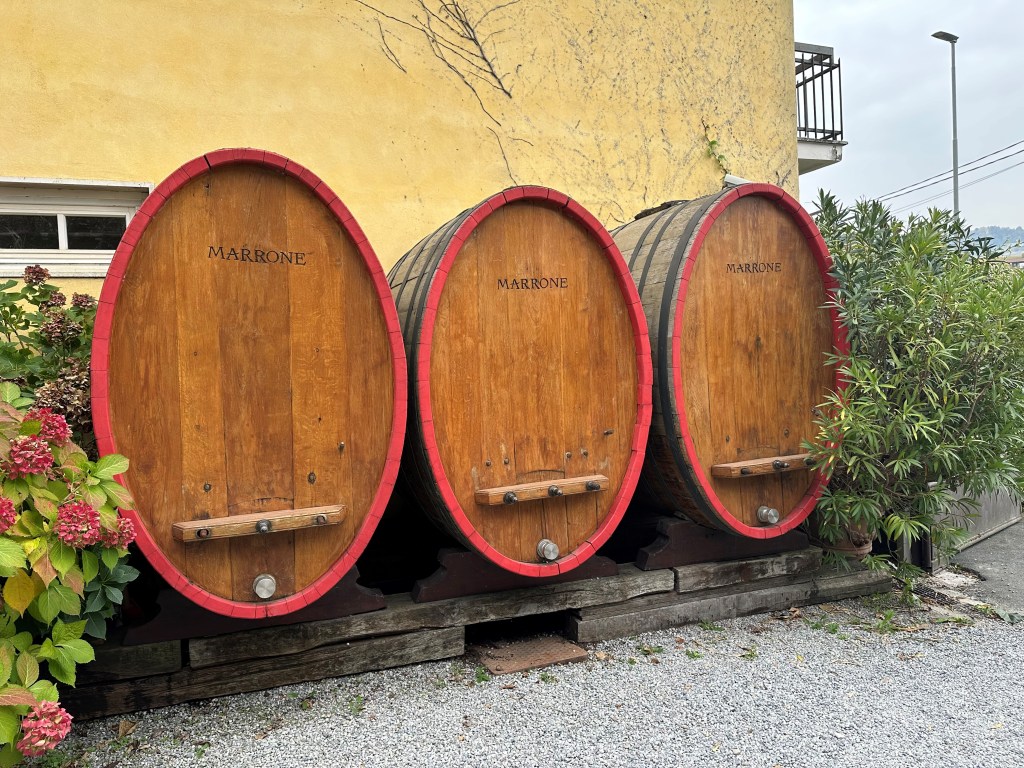
Marrone is a beautiful place with terrific sulfite-free wines (cool decorative barrels, too, shown above) and an excellent panoramic restaurant in which to taste them. Better still, the current fourth-generation leadership team includes the three sisters pictured above: hospitality director Denise, chief administrator Serena and the winemaker Valentina, who have taken the baton from their father, Gian Pero, and are running like the wind with it. Serena’s husband Marco is part of the team, too, overseeing their export market.
It wasn’t so long ago that women had to fight for their rightful place in the prestigious cellars of the Langhe. But the times they are a changin’ and, coincidentally, my guest at the lunch was Isabella Oddero, whose aunt, Maria Christina, was one of the first women in the region to fully take charge of her family’s winemaking operation. Oddero and Marrone are practically neighbors in greater LaMorra, as is Giulia Negri, a rising star I mentioned in my previous blog.
Starting back in the mid-1970s, a group of forward-thinking vignerons took Barolo production into the modern age and became famously known as “the Barolo Boys.” Their names were Luciano Sandrone, Giorgio Rivetti, Piero Selvaggio, Chiara Boschis, Elio Altare, Marco de Grazia and they shook things up bigtime – maybe too much, some will argue.
Never mind. Collectively, they put Barolo on the global stage and master marketers like Angelo Gaja and Bruno Ceretto followed, ensuring these rock-star nebbiolos would rank among the world’s most famous and respected wines. Now, Serena suggested with a smile, we have “the Barolo girls.”
Their pioneer was Chiara Boschis, who took charge of business operations and winemaking at E. Pira & Figli beginning with the 1990 vintage. Maria Christina, for her part, became the sixth-generation winemaker at Oddero – after years of stubborn resistance from her father and uncle, it should be noted – in the late 1990s. Note that she became the first winemaker, male or female, to erect netting to protect Oddero’s prized grapes from hail.
Others beside Valentina Marrone and Negri whose names I’m committing to memory going forward are Marina Marcarino (her winery, Punset, is the oldest organic producer in Barbaresco) Maria Teresa Mascarello, Emanuela Bolla, Silvia Cigliuti, Paola Rocca, Nadia Verrua, Sara Vezza and Silvia Altare. Silvia, of course, is Elio’s daughter.
And while she loves her father, who remains a presence at the winery, she calls Boschis her hero, saying: “I look at her photo every day and say I want to be just like you.”
I should add that my visit to the Langhe included a night’s stay and a dinner in Michelin-starred chef Massimo Camia’s cozy new compound in Monchiero (www.massimocamia.it). I expected his food to be great, and it was, while the beautiful room I stayed in there made for a perfect evening. Because I wouldn’t have to drive anywhere after the meal, I felt perfectly comfortable ordering a bottle of Barolo (Ceretto 2019) all for me.
I should point out that Camia’s daughter, Elisabetta, the heiress apparent, now plays a prominent role in the kitchen at her father’s side. She had flown solo as the chef for a luncheon a tour group I led in 2024 enjoyed there, and there was no drop-off in quality whatsoever.
Gender-wise, the Piemonte’s playing field is finally leveling.
-

First, sports. After all, that was my first gig. But note that the wines pictured above will be singled out for praise later.
The Texans don’t suck anymore and hurray for that. But beating up on a terrible Ravens defense – an unthinkable adjective for their Ray Lewis era D – without Lamar Jackson under center for the Ravens offense hardly qualifies as a cosmic turning point. Ditto their 26-0 shellacking of the dreadful Titans the previous week. Tennessee is so bad coach Brian Callahan has already been fired less barely a third of the way through his second season.
But hope springs eternal, even in Houston, which hasn’t seen one of its teams advance as far as the conference championship game – never mind the Super Bowl – since the Oilers did so in 1979, a drought that exceeds all other current NFL cities by a full decade. To put this span in context, the quarterback who last got a team from H-town there, Dan Pastorini, will turn 77 next year.
And that’s why I’ve become a Seattle Mariners fan with the Astros long out of the hunt. Seattle’s baseball franchise is the only one never to play in a World Series. If the Mariners can get there, and they are now only two victories shy of same – there has to be hope for the Texans ending H-town’s suffering, right?Speaking of droughts, let’s talk about the Dallas Cowboys. Jerry Jones says he’s going to boycott the Super Bowl this year because of the NFL’s decision to make Bad Bunny the featured halftime attraction. That’s hilarious because Jones’ football team has been boycotting the Super Bowl for 30 years – and Jerry knows this one isn’t going, either.
Finally, I was also going to take some shots at the Bill Belichick circus at North Carolina, but I’ve lost my enthusiasm. Why? Because, really, who cares? Without his fortuitous intersection with Tom Brady, Belichick would be an afterthought nobody today.
Now, on to vino . . .
It’s hard to tout wines I’m enjoying while in France because most of my favorite, daily-drinking selections are small-production, super-cheap bottles that will never make their way to Houston or anywhere else in North America. To be sure, I will be confronting sticker shock upon my return in a few weeks. Just this morning, for example, I picked up a fresh, lively, eminently quaffable Côtes du Rhone from Domaine Père Hugues at the local Carrefour supermarket for what I thought was the equivalent of a little over four bucks.
Except, because I bought two bottles, the price dropped a dollar on each. Are you kidding me?
And my go-to rosés, the Crazy Tropez and a generic Var – the inland region above Saint Tropez – are about $6 each. I literally buy every bottle of both that I find on the shelf.
Thursday, however, I’m heading back to my beloved Piemonte for a single night to meet up with a couple friends who are leading a tour group through the region. I’ll also be restocking my favorites from Ceretto, Oddero, Bruno Rocca, Pio Cesare and Luigi Eiunadi with, of course, somewhat higher tariffs, they will still be way less expensive than what the same bottles would sell for in Houston . . . if I could find them.

But I’m no less excited to hit a few of my favorite Alba-area retailers to look for wines that my friends at AOC Selections have gotten behind. Master sommelier Brandon Kerne, pictured above, is filling a huge void in our market for Barolos, Barbarescos, Barberas and Dolcettos. I know Roagna, Trediberri, G.B. Burlotto and Giulia Negri only through the crack AOC team, although, full disclosure, I have yet to taste any of Giulia’s prized offerings, a number of which are now on offer at AOC.
I’m hoping to score three bottles of her 2016 “La Tartufaia” Barolo ($75) and the recently released 2021 ($90) is no less tempting. The 2016 vintage had been considered the best vintage of the early 21st century in the Langhe, but 2021 seems to be eclipsing it, based my tastings in early September and conversations with producers I know personally.

Negri cultivates Barolo’s highest site, Serradenari, shown above, in the La Morra neighborhood,and she is unquestionably a rising star in the region. Kerne’s expert take on Negri, shown above doing her “barologirl” thing, and her wines:
“Barolo has never been quick to change, and Giulia’s brilliance lies in her ability to push forward while honoring the past. She calls her approach ‘enlightened traditionalism,’ a pragmatic, respectful philosophy that refines classic methods through smarter vineyard and cellar work. One detail I love is her use of tressage, or vine braiding, a time-consuming Burgundian technique that helps vines handle heat without the trauma of hedging. Everything is aged in neutral large oak, and every choice is intentional. ‘That which is born square can never be round,’ she says, and that care and clarity comes through in the glass. These are some of the most aromatic, silken expressions of Nebbiolo being made today.”
In short, if you’re as passionate about Nebiolo as I am, run, don’t walk, to AOC today.
Finally, I need to share something I received recently from WalletHub about H-town’s vibrant wining-and-dining scene, which I’ll put it up against anybody’s, although I’m hardly unbiased.
To determine the best and cheapest local foodie scenes, WalletHub explained in a press release, it compared more than 180 of the largest U.S. cities across 28 key metrics. The data set ranges from affordability and accessibility of high-quality restaurants to food festivals per capita to craft breweries and wineries per capita to retail pricing.
While we didn’t score too well in gourmet specialty food stores per capita and average off-the-shelf beer and wine prices, ranking only 95th and 77th respectively, we were No. 1 in both restaurants per capita and availability and accessibility to highly-rated restaurants. I’m not really sure what the latter means, but, hey, let’s raise a glass of Negri Barolo to that anyway.
Cheers!
-

Updated again Sept. 24
Holed up here in my little Alpine paradise, pictured above outside my bedroom window in this most beautiful season of all, it’s easy to blissfully ignore the travails of Houston’s sports teams happening 5,400 miles to the west. However, the concurrent disasters that have befallen the Astros, the Texans and now the Rockets in recent days jarred me out of my wine-fueled complacency.
After more than a half-century spent hacking on keyboards about H-Town’s oft-prone-to-frustrate franchises, I recognize a five-alarm fire when I see one, folks. Relative to the city’s high expectations of late — at no point in our history did we have the right to believe we had three franchises with bonafide championship aspirations — I’m thinking our teams have never collectively delivered a worst fortnight.
No, really. I’m not being hysterical here. The Astros, a near-dynasty over recent summers, entered July with a seven-game lead in the AL West. The Texans were coming off consecutive seasons that produced playoff victories with a popular new coach in DeMeco Ryans and a dynamic young quarterback, C.J. Stroud, who, in 2023, delivered possibly the greatest rookie season ever for a player at his position. And the baby Rockets had ascended from the dreggiest dregs of the NBA to actually being mentioned as an outside championship contender after the addition of, holy cow, future Hall-of-Famer Kevin Durant to provide a steadying influence.
Now? After getting their butts kicked bigtime three straight nights by Seattle on their own field in the most important series of the season, then flat rolling over against a nowhere-bound A’s team twice, the Astros have all but played themselves out of playoff contention. This following seven consecutive AL West titles and after they had tricked their fans into thinking all was OK with a sweep of the Rangers. Clearly, it wasn’t.
The Texans, for their part, are a butt-ugly 0-3, having thus far showing a level of offensive ineptitude rarely seen in these parts, and we’ve born witness to some pretty dreadful offenses. How bad have they been? Their 38 points and three touchdowns are waaaay down there with the godawful 2005 Texans, who finished 2-14 after scoring 24 points and two TDs during their 0-3 start, and the pathetic 1-13 Oilers of 1973, who managed only 31 points during the same span but somehow accidentally found their find way into the end zone four times.
Offensive coordinator Nick Caley would be on the firing block if he hadn’t just been hired. The Texans’ 12.7 points per game is 32nd among 32 teams with Stroud barely a shadow of his confident, accurate rookie self. And he’s not helping his cause with an increasingly disenchanted fan base by defiantly wearing the Astros rivals’ ballcaps. Hey, C .J., get your ball-capped head out of your ass and start acting like you’ve played quarterback before.
As for the Rockets, they haven’t even reported to training camp yet and they’re already down a man, a hugely important man in the person of point guard Fred VanVleet, who has somehow torn an ACL and may not play this season. Before that terrible news broke, only the Oklahoma City Thunder were given better odds to win the NBA title than the Rockets, who have gone from 7-to-1 to 14-to-1 — even worse than the 12-1 they were prior to the Durant trade.
Da hell? What’s with these off-season injuries? Part of the Texans’ problem, of course, is their not having running back Joe Mixon, whose mysterious ankle sprain, suffered sometime over the past winter, could also keep him off the field for all of 2025.
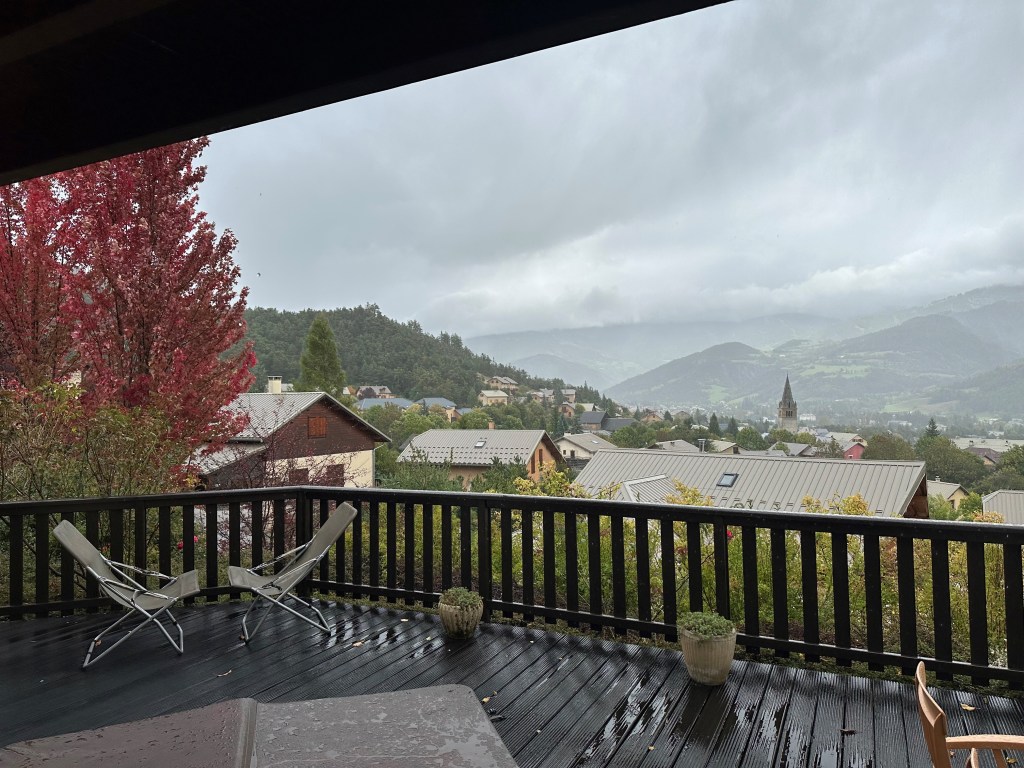
In short, things look as bleak across the board as the photo above. Nope, it’s never easy being a Houston sports fan.
But let’s move on to a happier topic — wine — and the week that was! A recent trip to Italy’s Piemonte, three hours to the east by car from the Ubaye Valley, checked every one of my happy boxes, offering gorgeous vineyard landscapes, outstanding food and wine pairings and truly wonderful people. All of the above will be subject of my next blog, to be posted soon, I promise.
Look, I’m kinda busy over here. (Insert smiley face emoji here.) To quote Bum Phillips, the last coach to lead a Houston NFL team to the brink of the Super Bowl — 45 friggin’ years ago, fyi — when he was asked how he was spending his time in retirement: “Not much of nothin’, and I don’t start ’til noon.”
We miss Bum, don’t we?
-

It was 50 years ago this month that the Frenchman Bernard Thevenet prevented Eddy Merckx from winning his sixth consecutive Tour de France, and the day he took charge in that historic 1975 race finished at the Pra Loup ski resort about 20 minutes above our home in the Ubaye Valley. (I did the climb this morning, in fact, albeit on an eBike. Hey, I’m turning 73 in a couple months.) The story I wrote for the Houston Chronicle on the anniversary follows in this space.
But the focus of my missive today is a young Slovenian named Tadej Pogačar who seems hellbent upon making every cyclist who came before him an afterthought, Lance Armstrong included. Armstrong, of course, has become officially a non-thought because his prodigious Tour accomplishments have been wiped from the record books as a result of his doping transgressions.
In speaking about Pogačar, though, I will include Armstrong’s Tour stats, accomplished between 1999 and 2010, just for the sake of comparison. The Texan’s seven “wins” (1999-2005) made him at the time the first rider in the Tour’s history to finish first or second seven summers in a row. Pogačar, not insignificantly, is now 6-for-6 after he claimed his fourth yellow jersey in six tries Sunday — tying him with Chris Froome for second place all time — to go with a pair of runner-up finishes.
And here’s the most important number: Tadej is only 26. Armstrong didn’t win his first until he was 27. Ditto Miguel Indurain. Only Bernard Hinault had won as many as three before the age of 27.
Pogačar appears to be doing what he’s doing without doping, too. I know, that may sound naive, but the sport has evolved dramatically from its bad ol’ days of systemic doping, despite persistent rumors that the modern bikes are equipped with tiny motors. Yeah, right. Matt Seaton had a fascinating, albeit geeky piece in the Atlantic this weekend titled “Science Is Winning the Tour de France” that’s well worth the read if you want to believe cycling has indeed cleaned up its act: https://www.theatlantic.com/ideas/archive/2025/07/cycling-success-without-doping/683655/
A key quote: “The gold standard of cycling performance, which boils down to a rider’s ability to push against the wind and go uphill fast, is a high power-to-weight ratio, given in watts per kilogram. The benchmark figure is how many watts per kilo of his weight a cyclist can sustain for a one-hour effort.” Seaton specifically notes that Pogačar produced seven watts per kilo over 40 minutes in winning a crucial stage in the Pyrenees last summer, finishing a monster climb six minutes faster than Armstrong, at the height of his doping-boosted powers, had done it in 2004.
Damn.
Anyway, here’s how the best cyclists in history compare statistically regarding their Tour de France performances:
* Armstrong — Seven yellow jerseys, 83 total days wearing yellow, 22 stages won. One third-place finish.
* Merckx — Five yellow jerseys, 96 total days wearing yellow, 34 stages won. One runner-up finish.
* Hinault — Five yellow jerseys, 75 total days wearing yellow, 28 stages won. Two runner-up finishes.
* Indurain — Five yellow jerseys, 60 total days wearing yellow, 12 stages won.
* Anquetil — Five yellow jerseys, 50 total days wearing yellow, 16 stages won. One third-place finish.
* Froome — Four yellow jerseys, 59 total days wearing yellow, 7 stages won. One third-place finish.
* Pogačar — Four yellow jerseys, 54 total days wearing yellow, 21 stages won. Two runner-up finishes.
And the piece I wrote for the Chronicle . . .
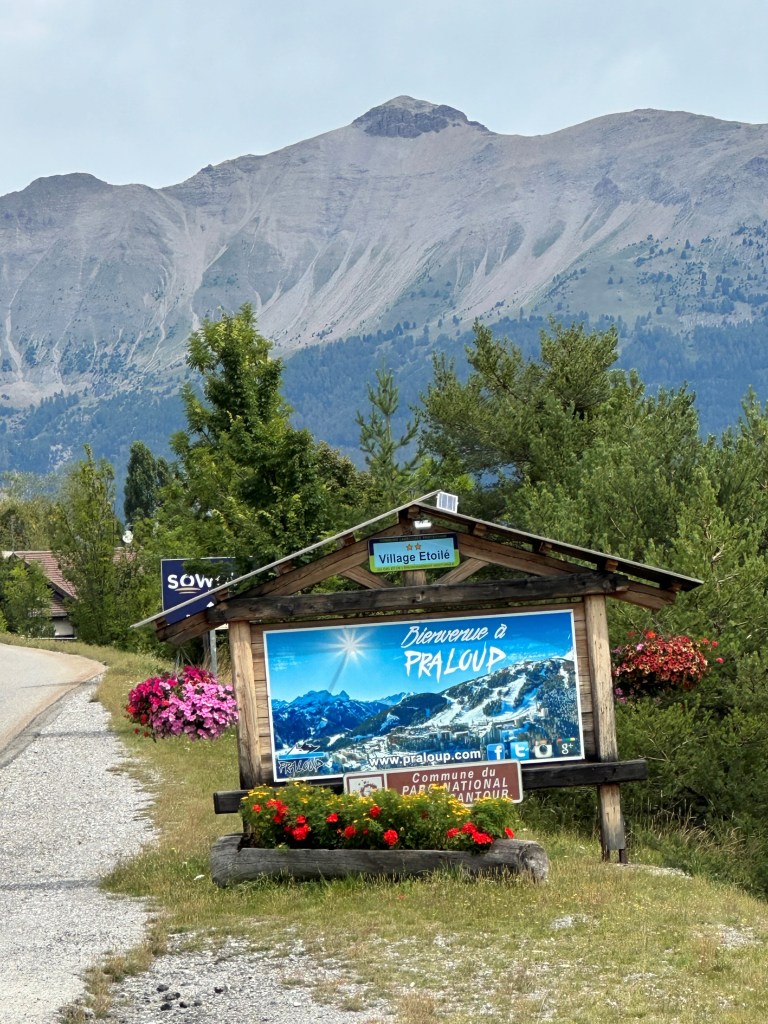
Fifty years ago Sunday, on a steep and winding two-lane road below this then-obscure ski village in the Southern Alps – I can see it from terrace of our house in the Ubaye Valley below – something unprecedented and, until then, something presumed unthinkable happened. On July 13, 1975, late in the 15th stage of the 62th Tour de France, Eddy Merckx couldn’t answer an attack by one of rivals.
The Belgian Merckx, seemingly honed in on breaking the record of five Tour triumphs he then shared with Jacques Anquetil, had pedaled out of Nice that morning wearing the yellow jersey for the 96th and final time of his storied career. Only Lance Armstrong has ever approached that record with his 83 days spent in yellow spread over seven championship campaigns, all of which, of course, have since been expunged from the Tour’s archives because of the Texan’s admitted doping.
They called Merckx “Le Cannibale” for how he chewed up and spit out every challenge to his storied reign, which had begun in 1969. He would have almost certainly been pursuing a seventh maillot jaune in 1975 if he hadn’t skipped the 1973 Tour to placate his Italian sponsors, who had asked him to make the Giro d’Italia his top priority that season. Merckx obliged and summarily conquered the Giro field by a margin of nearly eight minutes. He had also handily won the Vuelta a España.
The Cannibal, to be sure, had no equals.
But less than two miles from the end of a grueling 135-mile slog into Pra Loup that featured five major climbs in route, the French rider Bernard Thévenet sensed weakness in Merckx, and took his shot, bolting to the front and then staying there until he reached the finish line near Pra Loup’s tourist office. The yellow jersey would be Thevenet’s to keep for 1975. After a runner-up finish in 1976, he won another in 1977.
Significantly, however, Merckx had been viciously punched in the gut two days previously by a French spectator early in the tough ascent of the Puy de Dome in the Massif Central. Riding alone, he had been making his way through the fans crowding the roadway in pursuit of Thevenet – that stage’s leader – when the ugly incident occurred.
The perpetrator, a 55-year-old local named Nello Breton, claimed it was an accident, insisting he had been pushed into Merckx’s path from behind. But film of the incident clearly showed otherwise and he would he would subsequently be taken to court by Merckx. The presiding judge found Breton guilty of assault but awarded Merckx just a single French franc in compensation.
After finishing 34 seconds behind Thevenet, Merckx had vomited violently and that evening he would receive medication for an inflamed kidney, which only worsened his stomach issues. Still, a rest day on the Riviera followed and Merckx appeared to be his old self again heading into the mountains leading by just under a minute. His chances would be further buoyed when Thevenet incurred a flat tire. But, conceding nothing, Thévenet kept the pressure on.
Ultimately, Merckx cracked. He was said to almost unrecognizable by the race’s end, hunched over his bike and grimacing in pain, an empty look in his eyes. He could barely pedal. Another stage win followed for Thévenet the next day – giving him a lead of nearly three minutes – and he easily kept it through the Tour’s first-ever finish on the Champs Élysées in Paris.
And any lingering chance Merckx might still have had to regain the upper hand disappeared early in the 17th stage when he suffered a broken cheekbone in a flukish collision with another rider. Unable to chew, he subsisted on a liquid diet over the last five days, refusing to quit. Tour doctors had advised him to abandon, but, admirably, he wanted to ensure that his teammates received their share of the general classification’s second-place money.
Merkx ultimately conceded he should have quit and simply paid them out of his own pocket. He was never the same rider again. Battling saddle sores that required surgery and reluctant to make himself a target on France’s roads again, he opted to not contest the Tour in 1976. In his final start the following summer, he never got into contention and had to settle for sixth place. He would retire from cycling soon thereafter.
Nonetheless, a half century on with Armstrong accomplishments erased, Merckx still shares the Tour’s championship record with Anquetil and two legendary riders who followed him, another Frenchman Bernard Hinault and Spain’s Miguel Indurain. Anquetil triumphed for the first time as a upstart 23-year-old in 1957, then, as a seasoned Tour veteran, collected four yellow jerseys in a row from 1961 through 1964.
Hinault won his five Tours between 1978 and 1985 while finishing second twice. His reign ended in 1986 when he was the runner-up to Greg LeMond, who claimed the first of his three titles and remains the lone American to officially stand atop the podium in Paris. Indurain, in turn, is still the lone rider to collect five consecutive maillot jaunes, ruling from 1991 through 1995.
England’s Chris Froome almost joined Anquetil, Merckx, Hinault and Indurain with four championships between 2013 and 2017. Froome would finish third in 2018 – having been allowed to enter after fighting off doping allegations of his own – but then saw his career shortened by a horrific accident suffered during a training ride before the 2019 race.
Now, in the summer of 2025, Tadej Pogačar has thrown his name into the greatest-ever conversation. With his 19th Tour stage win – Merkx had 34, second only to the sprinter Mark Canvendish’s 35 – the defending champion Pogačar reclaimed the yellow jersey through seven stages in pursuit of his fourth maillot jaune. The tenacious, hyper-confident 26-year-old Slovenian, who’s also a two-time runner-up, leads the field by 54 seconds and he’s 77 seconds up on the only man to beat him over the last five years, Denmark’s Jonas Vingegaard.
With Pogačar leading, the Tour passed just below Pra Loup last summer in route to a first-ever Grand Arrivée in Nice, bringing back fond memories for a great friend of mine, Louis Lequette. Lequette, who turned 92 on Saturday, had founded the ski station, staking out its runs himself in the late 1950s, and was serving as mayor when Thévenet dropped Merckx. They would meet and shake hands at the finish, after which Lequette officially proclaimed the soon-to-be champion an honorary citizen. Thévenet mentioned that honor fondly while he celebrated atop the podium in Paris.
“Good marketing for us,” Lequette recalled with a smile.
Indeed, Pra Loup was on the map to stay. Today, “the wolf’s meadow” is one the Southern Alps’ busiest winter resorts and even has aspirations of hosting a future Winter Olympics. In 2015, when a Tour stage again finished there to celebrate the 40th anniversary of Thévenet’s winning ascent, a monument was erected beside the road. It’s an arc with a bicycle perched on top and the words under Thevenet’s name: “Le TOMBEUR du “cannibale.”
Merkx had indeed been slain – “tombeur means “killer – but fortunately only metaphorically.
Raising a glass to . . . Billy Wagner
The Astros’ third Hall-of-Famer wasn’t only a great closer. He was a really good guy who was routinely a cooperative being interviewed, win or lose, just like the first two, Craig Biffo and Jeff Bagwell. That mattered to us sports writers, believe me. Cheers, Billy!
And, fellow winos, I’ll get back to wine coverage with my next blog, I promise!
The Sporty Wine Guy
All things wine… but a little sports talk, too

 The Sporty Wine Guy