

It was 50 years ago this month that the Frenchman Bernard Thevenet prevented Eddy Merckx from winning his sixth consecutive Tour de France, and the day he took charge in that historic 1975 race finished at the Pra Loup ski resort about 20 minutes above our home in the Ubaye Valley. (I did the climb this morning, in fact, albeit on an eBike. Hey, I’m turning 73 in a couple months.) The story I wrote for the Houston Chronicle on the anniversary follows in this space.
But the focus of my missive today is a young Slovenian named Tadej Pogačar who seems hellbent upon making every cyclist who came before him an afterthought, Lance Armstrong included. Armstrong, of course, has become officially a non-thought because his prodigious Tour accomplishments have been wiped from the record books as a result of his doping transgressions.
In speaking about Pogačar, though, I will include Armstrong’s Tour stats, accomplished between 1999 and 2010, just for the sake of comparison. The Texan’s seven “wins” (1999-2005) made him at the time the first rider in the Tour’s history to finish first or second seven summers in a row. Pogačar, not insignificantly, is now 6-for-6 after he claimed his fourth yellow jersey in six tries Sunday — tying him with Chris Froome for second place all time — to go with a pair of runner-up finishes.
And here’s the most important number: Tadej is only 26. Armstrong didn’t win his first until he was 27. Ditto Miguel Indurain. Only Bernard Hinault had won as many as three before the age of 27.
Pogačar appears to be doing what he’s doing without doping, too. I know, that may sound naive, but the sport has evolved dramatically from its bad ol’ days of systemic doping, despite persistent rumors that the modern bikes are equipped with tiny motors. Yeah, right. Matt Seaton had a fascinating, albeit geeky piece in the Atlantic this weekend titled “Science Is Winning the Tour de France” that’s well worth the read if you want to believe cycling has indeed cleaned up its act: https://www.theatlantic.com/ideas/archive/2025/07/cycling-success-without-doping/683655/
A key quote: “The gold standard of cycling performance, which boils down to a rider’s ability to push against the wind and go uphill fast, is a high power-to-weight ratio, given in watts per kilogram. The benchmark figure is how many watts per kilo of his weight a cyclist can sustain for a one-hour effort.” Seaton specifically notes that Pogačar produced seven watts per kilo over 40 minutes in winning a crucial stage in the Pyrenees last summer, finishing a monster climb six minutes faster than Armstrong, at the height of his doping-boosted powers, had done it in 2004.
Damn.
Anyway, here’s how the best cyclists in history compare statistically regarding their Tour de France performances:
* Armstrong — Seven yellow jerseys, 83 total days wearing yellow, 22 stages won. One third-place finish.
* Merckx — Five yellow jerseys, 96 total days wearing yellow, 34 stages won. One runner-up finish.
* Hinault — Five yellow jerseys, 75 total days wearing yellow, 28 stages won. Two runner-up finishes.
* Indurain — Five yellow jerseys, 60 total days wearing yellow, 12 stages won.
* Anquetil — Five yellow jerseys, 50 total days wearing yellow, 16 stages won. One third-place finish.
* Froome — Four yellow jerseys, 59 total days wearing yellow, 7 stages won. One third-place finish.
* Pogačar — Four yellow jerseys, 54 total days wearing yellow, 21 stages won. Two runner-up finishes.
And the piece I wrote for the Chronicle . . .
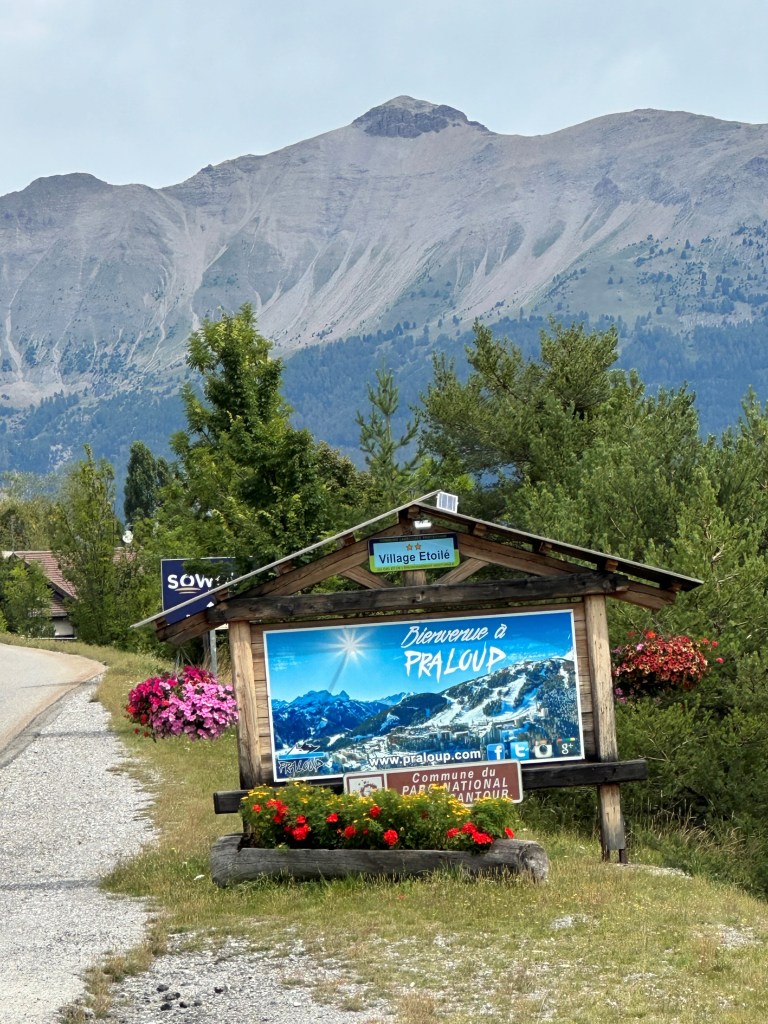
Fifty years ago Sunday, on a steep and winding two-lane road below this then-obscure ski village in the Southern Alps – I can see it from terrace of our house in the Ubaye Valley below – something unprecedented and, until then, something presumed unthinkable happened. On July 13, 1975, late in the 15th stage of the 62th Tour de France, Eddy Merckx couldn’t answer an attack by one of rivals.
The Belgian Merckx, seemingly honed in on breaking the record of five Tour triumphs he then shared with Jacques Anquetil, had pedaled out of Nice that morning wearing the yellow jersey for the 96th and final time of his storied career. Only Lance Armstrong has ever approached that record with his 83 days spent in yellow spread over seven championship campaigns, all of which, of course, have since been expunged from the Tour’s archives because of the Texan’s admitted doping.
They called Merckx “Le Cannibale” for how he chewed up and spit out every challenge to his storied reign, which had begun in 1969. He would have almost certainly been pursuing a seventh maillot jaune in 1975 if he hadn’t skipped the 1973 Tour to placate his Italian sponsors, who had asked him to make the Giro d’Italia his top priority that season. Merckx obliged and summarily conquered the Giro field by a margin of nearly eight minutes. He had also handily won the Vuelta a España.
The Cannibal, to be sure, had no equals.
But less than two miles from the end of a grueling 135-mile slog into Pra Loup that featured five major climbs in route, the French rider Bernard Thévenet sensed weakness in Merckx, and took his shot, bolting to the front and then staying there until he reached the finish line near Pra Loup’s tourist office. The yellow jersey would be Thevenet’s to keep for 1975. After a runner-up finish in 1976, he won another in 1977.
Significantly, however, Merckx had been viciously punched in the gut two days previously by a French spectator early in the tough ascent of the Puy de Dome in the Massif Central. Riding alone, he had been making his way through the fans crowding the roadway in pursuit of Thevenet – that stage’s leader – when the ugly incident occurred.
The perpetrator, a 55-year-old local named Nello Breton, claimed it was an accident, insisting he had been pushed into Merckx’s path from behind. But film of the incident clearly showed otherwise and he would he would subsequently be taken to court by Merckx. The presiding judge found Breton guilty of assault but awarded Merckx just a single French franc in compensation.
After finishing 34 seconds behind Thevenet, Merckx had vomited violently and that evening he would receive medication for an inflamed kidney, which only worsened his stomach issues. Still, a rest day on the Riviera followed and Merckx appeared to be his old self again heading into the mountains leading by just under a minute. His chances would be further buoyed when Thevenet incurred a flat tire. But, conceding nothing, Thévenet kept the pressure on.
Ultimately, Merckx cracked. He was said to almost unrecognizable by the race’s end, hunched over his bike and grimacing in pain, an empty look in his eyes. He could barely pedal. Another stage win followed for Thévenet the next day – giving him a lead of nearly three minutes – and he easily kept it through the Tour’s first-ever finish on the Champs Élysées in Paris.
And any lingering chance Merckx might still have had to regain the upper hand disappeared early in the 17th stage when he suffered a broken cheekbone in a flukish collision with another rider. Unable to chew, he subsisted on a liquid diet over the last five days, refusing to quit. Tour doctors had advised him to abandon, but, admirably, he wanted to ensure that his teammates received their share of the general classification’s second-place money.
Merkx ultimately conceded he should have quit and simply paid them out of his own pocket. He was never the same rider again. Battling saddle sores that required surgery and reluctant to make himself a target on France’s roads again, he opted to not contest the Tour in 1976. In his final start the following summer, he never got into contention and had to settle for sixth place. He would retire from cycling soon thereafter.
Nonetheless, a half century on with Armstrong accomplishments erased, Merckx still shares the Tour’s championship record with Anquetil and two legendary riders who followed him, another Frenchman Bernard Hinault and Spain’s Miguel Indurain. Anquetil triumphed for the first time as a upstart 23-year-old in 1957, then, as a seasoned Tour veteran, collected four yellow jerseys in a row from 1961 through 1964.
Hinault won his five Tours between 1978 and 1985 while finishing second twice. His reign ended in 1986 when he was the runner-up to Greg LeMond, who claimed the first of his three titles and remains the lone American to officially stand atop the podium in Paris. Indurain, in turn, is still the lone rider to collect five consecutive maillot jaunes, ruling from 1991 through 1995.
England’s Chris Froome almost joined Anquetil, Merckx, Hinault and Indurain with four championships between 2013 and 2017. Froome would finish third in 2018 – having been allowed to enter after fighting off doping allegations of his own – but then saw his career shortened by a horrific accident suffered during a training ride before the 2019 race.
Now, in the summer of 2025, Tadej Pogačar has thrown his name into the greatest-ever conversation. With his 19th Tour stage win – Merkx had 34, second only to the sprinter Mark Canvendish’s 35 – the defending champion Pogačar reclaimed the yellow jersey through seven stages in pursuit of his fourth maillot jaune. The tenacious, hyper-confident 26-year-old Slovenian, who’s also a two-time runner-up, leads the field by 54 seconds and he’s 77 seconds up on the only man to beat him over the last five years, Denmark’s Jonas Vingegaard.
With Pogačar leading, the Tour passed just below Pra Loup last summer in route to a first-ever Grand Arrivée in Nice, bringing back fond memories for a great friend of mine, Louis Lequette. Lequette, who turned 92 on Saturday, had founded the ski station, staking out its runs himself in the late 1950s, and was serving as mayor when Thévenet dropped Merckx. They would meet and shake hands at the finish, after which Lequette officially proclaimed the soon-to-be champion an honorary citizen. Thévenet mentioned that honor fondly while he celebrated atop the podium in Paris.
“Good marketing for us,” Lequette recalled with a smile.
Indeed, Pra Loup was on the map to stay. Today, “the wolf’s meadow” is one the Southern Alps’ busiest winter resorts and even has aspirations of hosting a future Winter Olympics. In 2015, when a Tour stage again finished there to celebrate the 40th anniversary of Thévenet’s winning ascent, a monument was erected beside the road. It’s an arc with a bicycle perched on top and the words under Thevenet’s name: “Le TOMBEUR du “cannibale.”
Merkx had indeed been slain – “tombeur means “killer – but fortunately only metaphorically.
Raising a glass to . . . Billy Wagner
The Astros’ third Hall-of-Famer wasn’t only a great closer. He was a really good guy who was routinely a cooperative being interviewed, win or lose, just like the first two, Craig Biffo and Jeff Bagwell. That mattered to us sports writers, believe me. Cheers, Billy!
And, fellow winos, I’ll get back to wine coverage with my next blog, I promise!
| | |
 The Sporty Wine Guy