A little of this and a little of that

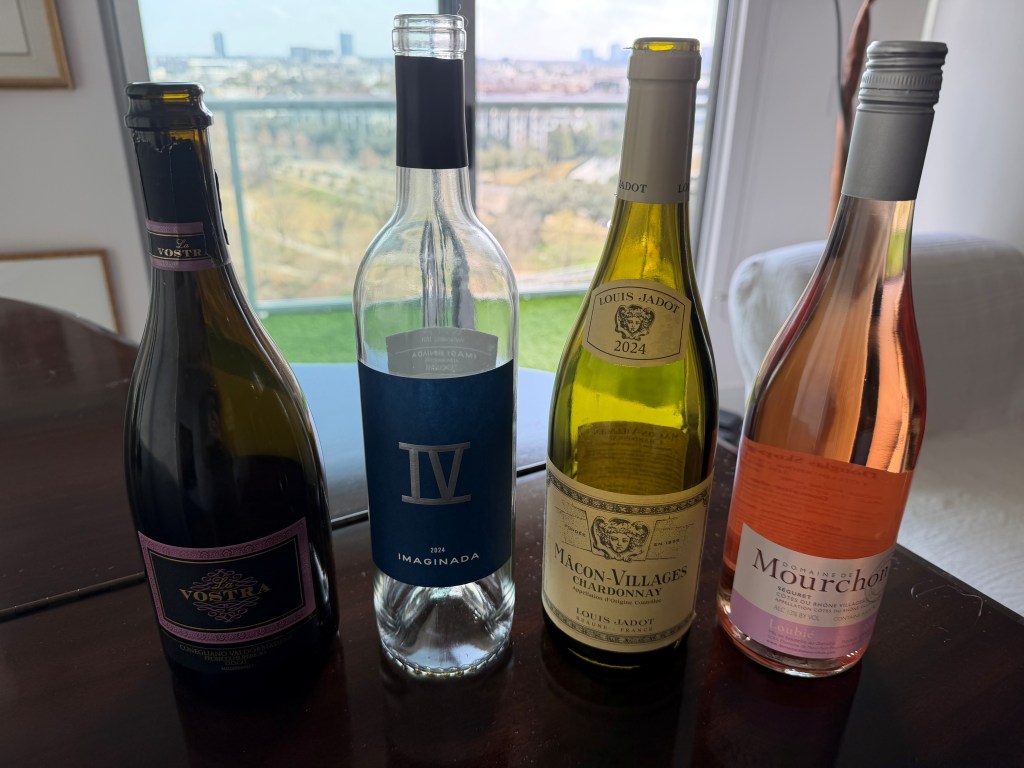
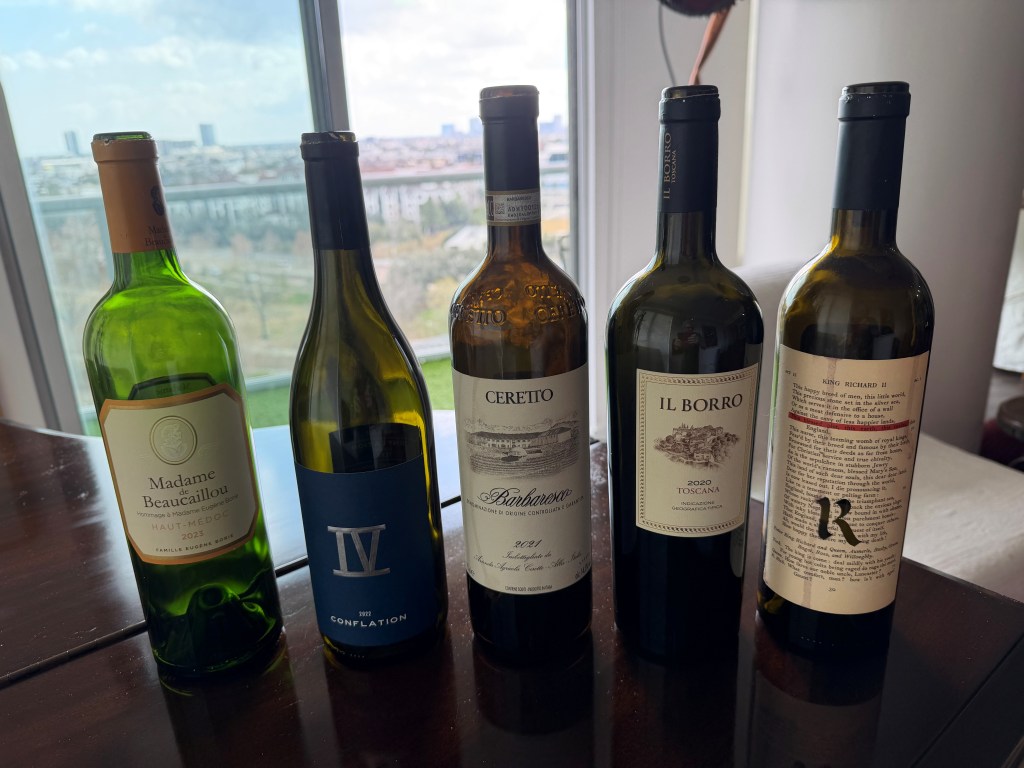
First, sports. After all, that was my first gig. But note that the wines pictured above will be singled out for praise later.  

The Texans don’t suck anymore and hurray for that. But beating up on a terrible Ravens defense – an unthinkable adjective for their Ray Lewis era D – without Lamar Jackson under center for the Ravens offense hardly qualifies as a cosmic turning point. Ditto their 26-0 shellacking of the dreadful Titans the previous week. Tennessee is so bad coach Brian Callahan has already been fired less barely a third of the way through his second season.

But hope springs eternal, even in Houston, which hasn’t seen one of its teams advance as far as the conference championship game – never mind the Super Bowl – since the Oilers did so in 1979, a drought that exceeds all other current NFL cities by a full decade. To put this span in context, the quarterback who last got a team from H-town there, Dan Pastorini, will turn 77 next year.

And that’s why I’ve become a Seattle Mariners fan with the Astros long out of the hunt. Seattle’s baseball franchise is the only one never to play in a World Series. If the Mariners can get there, and they are now only two victories shy of same – there has to be hope for the Texans ending H-town’s suffering, right?

Speaking of droughts, let’s talk about the Dallas Cowboys. Jerry Jones says he’s going to boycott the Super Bowl this year because of the NFL’s decision to make Bad Bunny the featured halftime attraction. That’s hilarious because Jones’ football team has been boycotting the Super Bowl for 30 years – and Jerry knows this one isn’t going, either.   

Finally, I was also going to take some shots at the Bill Belichick circus at North Carolina, but I’ve lost my enthusiasm. Why? Because, really, who cares? Without his fortuitous intersection with Tom Brady, Belichick would be an afterthought nobody today.     


Now, on to vino . . .

It’s hard to tout wines I’m enjoying while in France because most of my favorite, daily-drinking selections are small-production, super-cheap bottles that will never make their way to Houston or anywhere else in North America. To be sure, I will be confronting sticker shock upon my return in a few weeks. Just this morning, for example, I picked up a fresh, lively, eminently quaffable Côtes du Rhone from Domaine Père Hugues at the local Carrefour supermarket for what I thought was the equivalent of a little over four bucks.

Except, because I bought two bottles, the price dropped a dollar on each. Are you kidding me?

And my go-to rosés, the Crazy Tropez and a generic Var – the inland region above Saint Tropez – are about $6 each. I literally buy every bottle of both that I find on the shelf.     

Thursday, however, I’m heading back to my beloved Piemonte for a single night to meet up with a couple friends who are leading a tour group through the region.  I’ll also be restocking my favorites from Ceretto, Oddero, Bruno Rocca, Pio Cesare and Luigi Eiunadi with, of course, somewhat higher tariffs, they will still be way less expensive than what the same bottles would sell for in Houston . . . if I could find them.

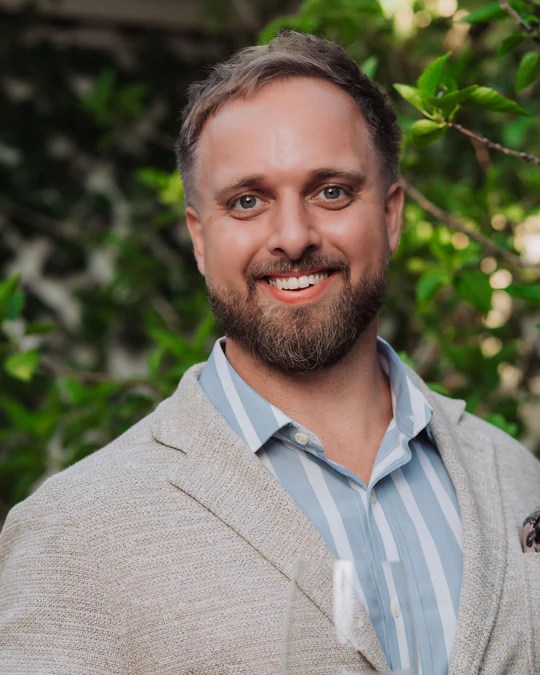
But I’m no less excited to hit a few of my favorite Alba-area retailers to look for wines that my friends at AOC Selections have gotten behind. Master sommelier Brandon Kerne, pictured above, is filling a huge void in our market for Barolos, Barbarescos, Barberas and Dolcettos. I know Roagna, Trediberri, G.B. Burlotto and Giulia Negri only through the crack AOC team, although, full disclosure, I have yet to taste any of Giulia’s prized offerings, a number of which are now on offer at AOC.

I’m hoping to score three bottles of her 2016 “La Tartufaia” Barolo ($75) and the recently released 2021 ($90) is no less tempting. The 2016 vintage had been considered the best vintage of the early 21st century in the Langhe, but 2021 seems to be eclipsing it, based my tastings in early September and conversations with producers I know personally.

Negri cultivates Barolo’s highest site, Serradenari, shown above, in the La Morra neighborhood,and she is unquestionably a rising star in the region. Kerne’s expert take on Negri, shown above doing her “barologirl” thing, and her wines:

“Barolo has never been quick to change, and Giulia’s brilliance lies in her ability to push forward while honoring the past. She calls her approach ‘enlightened traditionalism,’ a pragmatic, respectful philosophy that refines classic methods through smarter vineyard and cellar work. One detail I love is her use of tressage, or vine braiding, a time-consuming Burgundian technique that helps vines handle heat without the trauma of hedging. Everything is aged in neutral large oak, and every choice is intentional. ‘That which is born square can never be round,’ she says, and that care and clarity comes through in the glass. These are some of the most aromatic, silken expressions of Nebbiolo being made today.”

In short, if you’re as passionate about Nebiolo as I am, run, don’t walk, to AOC today.

Finally, I need to share something I received recently from WalletHub about H-town’s vibrant wining-and-dining scene, which I’ll put it up against anybody’s, although I’m hardly unbiased.  

To determine the best and cheapest local foodie scenes, WalletHub explained in a press release, it compared more than 180 of the largest U.S. cities across 28 key metrics. The data set ranges from affordability and accessibility of high-quality restaurants to food festivals per capita to craft breweries and wineries per capita to retail pricing.

While we didn’t score too well in gourmet specialty food stores per capita and average off-the-shelf beer and wine prices, ranking only 95th and 77th respectively, we were No. 1 in both restaurants per capita and availability and accessibility to highly-rated restaurants. I’m not really sure what the latter means, but, hey, let’s raise a glass of Negri Barolo to that anyway.

Cheers!      

History made . . . History in the making?

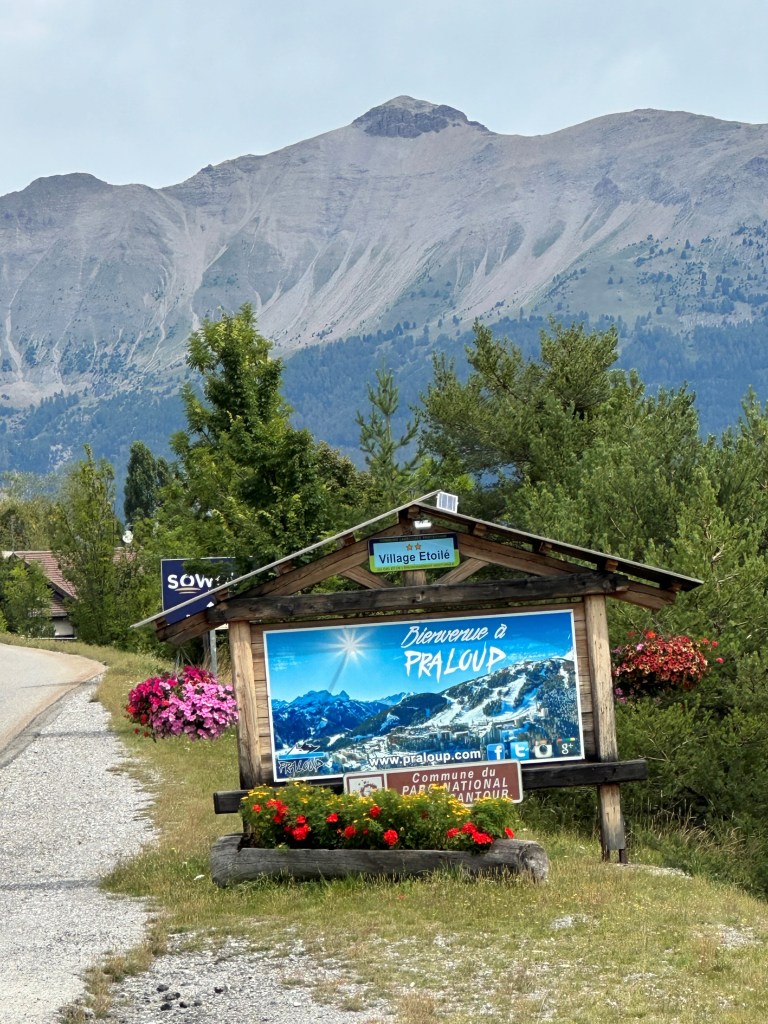
It was 50 years ago this month that the Frenchman Bernard Thevenet prevented Eddy Merckx from winning his sixth consecutive Tour de France, and the day he took charge in that historic 1975 race finished at the Pra Loup ski resort about 20 minutes above our home in the Ubaye Valley. (I did the climb this morning, in fact, albeit on an eBike. Hey, I’m turning 73 in a couple months.) The story I wrote for the Houston Chronicle on the anniversary follows in this space.

But the focus of my missive today is a young Slovenian named Tadej Pogačar who seems hellbent upon making every cyclist who came before him an afterthought, Lance Armstrong included. Armstrong, of course, has become officially a non-thought because his prodigious Tour accomplishments have been wiped from the record books as a result of his doping transgressions.

In speaking about Pogačar, though, I will include Armstrong’s Tour stats, accomplished between 1999 and 2010, just for the sake of comparison. The Texan’s seven “wins” (1999-2005) made him at the time the first rider in the Tour’s history to finish first or second seven summers in a row. Pogačar, not insignificantly, is now 6-for-6 after he claimed his fourth yellow jersey in six tries Sunday — tying him with Chris Froome for second place all time — to go with a pair of runner-up finishes.

And here’s the most important number: Tadej is only 26. Armstrong didn’t win his first until he was 27. Ditto Miguel Indurain. Only Bernard Hinault had won as many as three before the age of 27.  

Pogačar appears to be doing what he’s doing without doping, too. I know, that may sound naive, but the sport has evolved dramatically from its bad ol’ days of systemic doping, despite persistent rumors that the modern bikes are equipped with tiny motors. Yeah, right. Matt Seaton had a fascinating, albeit geeky piece in the Atlantic this weekend titled “Science Is Winning the Tour de France” that’s well worth the read if you want to believe cycling has indeed cleaned up its act: https://www.theatlantic.com/ideas/archive/2025/07/cycling-success-without-doping/683655/

A key quote: “The gold standard of cycling performance, which boils down to a rider’s ability to push against the wind and go uphill fast, is a high power-to-weight ratio, given in watts per kilogram. The benchmark figure is how many watts per kilo of his weight a cyclist can sustain for a one-hour effort.” Seaton specifically notes that Pogačar produced seven watts per kilo over 40 minutes in winning a crucial stage in the Pyrenees last summer, finishing a monster climb six minutes faster than Armstrong, at the height of his doping-boosted powers, had done it in 2004.

Damn.

Anyway, here’s how the best cyclists in history compare statistically regarding their Tour de France performances:

* Armstrong — Seven yellow jerseys, 83 total days wearing yellow, 22 stages won. One third-place finish.

* Merckx — Five yellow jerseys, 96 total days wearing yellow, 34 stages won. One runner-up finish.

* Hinault — Five yellow jerseys, 75 total days wearing yellow, 28 stages won. Two runner-up finishes.

* Indurain — Five yellow jerseys, 60 total days wearing yellow, 12 stages won.

* Anquetil — Five yellow jerseys, 50 total days wearing yellow, 16 stages won. One third-place finish.

* Froome — Four yellow jerseys, 59 total days wearing yellow, 7 stages won. One third-place finish.

* Pogačar — Four yellow jerseys, 54 total days wearing yellow, 21 stages won. Two runner-up finishes.

And the piece I wrote for the Chronicle . . .

Fifty years ago Sunday, on a steep and winding two-lane road  below this then-obscure ski village in the Southern Alps – I can see it from terrace of our house in the Ubaye Valley below – something unprecedented and, until then, something presumed unthinkable happened. On July 13, 1975, late in the 15th stage of the 62th Tour de France, Eddy Merckx couldn’t answer an attack by one of rivals.

The Belgian Merckx, seemingly honed in on breaking the record of five Tour triumphs he then shared with Jacques Anquetil, had pedaled out of Nice that morning wearing the yellow jersey for the 96th and final time of his storied career. Only Lance Armstrong has ever approached that record with his 83 days spent in yellow spread over seven championship campaigns, all of which, of course, have since been expunged from the Tour’s archives because of the Texan’s admitted doping.

They called Merckx “Le Cannibale” for how he chewed up and spit out every challenge to his storied reign, which had begun in 1969. He would have almost certainly been pursuing a seventh maillot jaune in 1975 if he hadn’t skipped the 1973 Tour to placate his Italian sponsors, who had asked him to make the Giro d’Italia his top priority that season. Merckx obliged and summarily conquered the Giro field by a margin of nearly eight minutes. He had also handily won the Vuelta a España.

The Cannibal, to be sure, had no equals.          

But less than two miles from the end of a grueling 135-mile slog into Pra Loup that featured five major climbs in route, the French rider Bernard Thévenet sensed weakness in Merckx, and took his shot, bolting to the front and then staying there until he reached the finish line near Pra Loup’s tourist office. The yellow jersey would be Thevenet’s to keep for 1975. After a runner-up finish in 1976, he won another in 1977. 

Significantly, however, Merckx had been viciously punched in the gut two days previously by a French spectator early in the tough ascent of the Puy de Dome in the Massif Central. Riding alone, he had been making his way through the fans crowding the roadway in pursuit of Thevenet – that stage’s leader – when the ugly incident occurred.

The perpetrator, a 55-year-old local named Nello Breton, claimed it was an accident, insisting he had been pushed into Merckx’s path from behind. But film of the incident clearly showed otherwise and he would he would subsequently be taken to court by Merckx. The presiding judge found Breton guilty of assault but awarded Merckx just a single French franc in compensation.  

After finishing 34 seconds behind Thevenet, Merckx had vomited violently and that evening he would receive medication for an inflamed kidney, which only worsened his stomach issues. Still, a rest day on the Riviera followed and Merckx appeared to be his old self again heading into the mountains leading by just under a minute. His chances would be further buoyed when Thevenet incurred a flat tire. But, conceding nothing, Thévenet kept the pressure on.

Ultimately, Merckx cracked. He was said to almost unrecognizable by the race’s end, hunched over his bike and grimacing in pain, an empty look in his eyes. He could barely pedal. Another stage win followed for Thévenet the next day – giving him a lead of nearly three minutes – and he easily kept it through the Tour’s first-ever finish on the Champs Élysées in Paris.

And any lingering chance Merckx might still have had to regain the upper hand disappeared early in the 17th stage when he suffered a broken cheekbone in a flukish collision with another rider. Unable to chew, he subsisted on a liquid diet over the last five days, refusing to quit. Tour doctors had advised him to abandon, but, admirably, he wanted to ensure that his teammates received their share of the general classification’s second-place money.

Merkx ultimately conceded he should have quit and simply paid them out of his own pocket. He was never the same rider again. Battling saddle sores that required surgery and reluctant to make himself a target on France’s roads again, he opted to not contest the Tour in 1976. In his final start the following summer, he never got into contention and had to settle for sixth place. He would retire from cycling soon thereafter.   

Nonetheless, a half century on with Armstrong accomplishments erased, Merckx still shares the Tour’s championship record with Anquetil and two legendary riders who followed him, another Frenchman Bernard Hinault and Spain’s Miguel Indurain. Anquetil triumphed for the first time as a upstart 23-year-old in 1957, then, as a seasoned Tour veteran, collected four yellow jerseys in a row from 1961 through 1964.

Hinault won his five Tours between 1978 and 1985 while finishing second twice. His reign ended in 1986 when he was the runner-up to Greg LeMond, who claimed the first of his three titles and remains the lone American to officially stand atop the podium in Paris. Indurain, in turn, is still the lone rider to collect five consecutive maillot jaunes, ruling from 1991 through 1995.

England’s Chris Froome almost joined Anquetil, Merckx, Hinault and Indurain with four championships between 2013 and 2017. Froome would finish third in 2018 – having been allowed to enter after fighting off doping allegations of his own – but then saw his career shortened by a horrific accident suffered during a training ride before the 2019 race.

Now, in the summer of 2025, Tadej Pogačar has thrown his name into the greatest-ever conversation. With his 19th Tour stage win – Merkx had 34, second only to the sprinter Mark Canvendish’s 35 – the defending champion Pogačar reclaimed the yellow jersey through seven stages in pursuit of his fourth maillot jaune. The tenacious, hyper-confident 26-year-old Slovenian, who’s also a two-time runner-up, leads the field by 54 seconds and he’s 77 seconds up on the only man to beat him over the last five years, Denmark’s Jonas Vingegaard.      

With Pogačar leading, the Tour passed just below Pra Loup last summer in route to a first-ever Grand Arrivée in Nice, bringing back fond memories for a great friend of mine, Louis Lequette. Lequette, who turned 92 on Saturday, had founded the ski station, staking out its runs himself in the late 1950s, and was serving as mayor when Thévenet dropped Merckx. They would meet and shake hands at the finish, after which Lequette officially proclaimed the soon-to-be champion an honorary citizen. Thévenet mentioned that honor fondly while he celebrated atop the podium in Paris.

“Good marketing for us,” Lequette recalled with a smile.

Indeed, Pra Loup was on the map to stay. Today, “the wolf’s meadow” is one the Southern Alps’ busiest winter resorts and even has aspirations of hosting a future Winter Olympics. In 2015, when a Tour stage again finished there to celebrate the 40th anniversary of Thévenet’s winning ascent, a monument was erected beside the road. It’s an arc with a bicycle perched on top and the words under Thevenet’s name: “Le TOMBEUR du “cannibale.”    

Merkx had indeed been slain – “tombeur means “killer – but fortunately only metaphorically.    

Raising a glass to . . . Billy Wagner

The Astros’ third Hall-of-Famer wasn’t only a great closer. He was a really good guy who was routinely a cooperative being interviewed, win or lose, just like the first two, Craig Biffo and Jeff Bagwell. That mattered to us sports writers, believe me. Cheers, Billy!

And, fellow winos, I’ll get back to wine coverage with my next blog, I promise!


Bonjour from paradise!

Oops! Written in early May, this missive never got published, it seems. So here ya go. Would be terrible to deprive you of all my wisdom . . .

I know, finally. But it has been a crazy few months for the Robertsons what with our pursuit of a long-stay French visa (so far, so good), a couple weeks hunkered down at the Houston Open and the U.S. Clay Courts (two of my favorite venues), an H-town move (complicated, yet well worth the trouble) and then traveling to France, which proved to be the biggest, most bizarre adventure of them all.

We’ll never be completely certain what happened, but my being “unresponsive” to a flight attendant was apparently deemed reason enough to turn a full United Houston-to-Frankfurt flight around over the Atlantic. We wound up landing in Boston, where things only got weirder. Two days later, following multiple consultations with medical professionals — doctors, EMTs and even an ambulance crew lugging a stretcher — each of whom pronounced me fit as a fiddle, we finally made it to France.

Now here I sit at our dining room table in the Ubaye Valley, contemplating the most beautiful view in the world, at least in my humble opinion. This lovely place, about 65 miles inland from Nice in Haute Provence, has been our home away from home since 1998 and only becomes more special with each visit in large part because our circle of friends, like-minded souls all of them, keeps expanding. We fell in love with the landscape years ago, but now it’s actually more about the people.

Although I probably sound naïve saying this, the Ubaye seems the safest of havens in this screwed up world of ours. While you can’t escape the news here, it almost feels OK to ignore it. The 12th-century church tower seen in the photo above still stands despite lots of bad stuff happening through the centuries. That’s reassuring, Still, it was a bit unnerving the other morning when a couple of sound-barrier-breaking French fighter jets screamed through the valley seemingly a couple hundred feet over my head.

Da hell?

Admittedly, I was curious how the locals we don’t know well would relate to us given what’s going on with the MAGA jackasses back in the USA. They are, to be sure, horrified by what they see on television and read in their newspapers. But, if anything, it has made them all the more welcoming. They can feel our pain. It has been hugs all around on almost a daily basis.

The Barcelonnette “suburb” of Saint Pons (population 400) will be our home base through October, but we are hoping to wander further afield than we have in the past, when our Ubaye hours felt all too limited. For starters, we’ll be visiting Marseille, where we’ll spend an evening with our great friend Claude Gouron, who has photographed the Ubaye probably more than anyone ever but now splits his time between Barcelonnette and Marseille. There his partner, the lovely Samira, lives and works as a ceramic artist . . . never mind that she’s legally blind.

For years, decades even, I went to extreme lengths to avoid Marseille. Remember Gene Hackman in the French Connection? Right, scary. But Claude introduced me to the city’s myriad charms, equal parts gritty and gorgeous. I absolutely love the place now for its energy and its diversity. In many ways, it’s Houston with an Occitane accent — but a bit more history. The Phoenicians first put down roots on that sunny, rocky Mediterranean shore some 2,600 years ago.

And, to be sure, a visit to Italy’s Piemonte — Barolo country! — looms at some point. It was a stopover Alba that led us serendipitously to the Ubaye for the first time in June of 1993. Needing to get to Nice to catch a flight the next morning to London — heading to Wimbledon — we took the long way through the southern Alps, arguably the best detour we could have possibly imagined.

Although spring is springing across the valley floor, the high road down to Nice over the Col de Restefond has only recently been cleared of snow and it’s still a winter wonderland up there in the thin air, as the photo above proves. I screwed up the courage to drive it for the first time yesterday. But it might be a few more weeks — and at least a 20-degree temperature rise — before I tackle those 4,500 feet of vertical climbing on the bike. (A recent attempt on my eBike fell a mile short when my battery ran out of juice, dammit!)

Regarding my wine consumption . . . Well, yes, there has been some. Both of our chain grocery stores have extensive options to choose from at, by Texas standards, absurdly low prices. Five euros (less than $6) will buy any one of a half-dozen delicious Provencal roses and a quaffable Gigondas goes for $17. A perfectly baked baguette to accompany same? Under $2.

But, OK, filling up my Peugeot hybrid SUV can cost $80-plus.

Anyway, going forward I hope to resume posting blogs with reasonably substantive content every two to three weeks and thesportywineguy.com podcast will continue remotely thanks to the technical wizardry of my buddy Jeremy Parzen (dobianchi.com). Parzen is currently curtailing his globetrotting a bit, in part because the Trump tariff debacle has badly disrupted his Italian wine marketing/consulting business and also because he’s busy helping transform Emmit’s Place in his Westbury neighborhood into, seriously, a wine-drinker’s destination, as I noted in the blog that dropped yesterday.

Late June will find us in Vichy, Debbie for a total immersion French class and me for lots of biking and wine-bar time. It’s one of France’s best-known and most beautiful spa towns, although it’s hard to erase from memory those dreadful years Vichy spent as the capital-in-exile of “free” France while the Nazis had Paris under their despicable boot heels. Truth to tell, we shouldn’t forget. As the philosopher Santayana famously warned, “Those who cannot remember the past are doomed to repeat it.”

Pay attention, people.

A little of this and a little of that . . .

Travels with Matthew . . . mais pas moi

After two years and two delightful trips to the South of France and northwest Italy respectively, I’m out of the wine-travel business — long story and not one to share now — but my H-town bubbles buddy Matthew Massey has picked up the baton, offering a luxury tour of his own to Champagne this fall. Massey is eminently qualified because, although he’s a Galveston native, he has become the ultimate Champagne insider. You’ve surely heard of and hopefully tasted his Madame Zéro.

I can both vouch for Madame Zéro and for Massey himself. His wines are excellent — all super-low dosage, hence the Zéro branding — and he’s a great guy to hang out with. The tour details can be found in detail at selectivity@madamezero.com, so there’s no need for me to go deep into the nuts and bolts here. Don’t tarry, though. He’s limiting his tour, set for Oct. 5-9 this fall, to eight clients. Based on my experience, that’s the perfect number. And, while eight-plus grand per person may sound like a lot of scratch, that’s imminently reasonable for what Massey’s got on tap with his clients.

Given our awful political climate, by October you’ll really want/need to get out of Texas and I must say the French, based on my experiences over the past seven weeks, will be delighted to welcome you. They really do feel our pain.

Emmit’s the Place to be Sunday

My podcast partner in crime, Jeremy Parzen, loves music at least as much as he loves wine and that led him to forge a seemingly unlikely but fortuitous partnership with the famously friendly throw-back Westbury-area dive bar Emmit’s (emmitsplace.com). After playing a gig there with his Bio Dynamic Band — do love that name! — he pitched the owner on the idea of hosting family-friendly open-mike events on Sunday afternoons. She embraced the idea, so there will be another jam happening this Sunday starting at 2 p.m. The address is 4852 Benning Dr., just off South Post Oak.

The Bio gang, featuring crooneur Katie White with Jeremy strumming a mean guitar, covers favorites from the ’70s and the ’80s. Tickets are five bucks to access the grounds, but the sound system is free to all. Still, please call ahead (713 728-0012) or contact Parzen directly (dobianchi.com) to let them know you want to play/sing. There could be a waiting list, based on early returns. Further, Parzen has created a small but thoughtfully curated wine list — new to Emmit’s if you haven’t been there in awhile — and mocktails are available for the kids.

And, speaking of podcasts, check out our latest one wherever you get your podcasts. Through the wonders of technology, it will sound just like we’re hanging out at the” Parzen-age” in Westbury, never mind that I’m 5,350 miles away in the South of France.

Oops, bad geography!

Actually, as I’m typing this, I’m squarely in the heart of France, in Vichy to be precise. Students of 20th-century history might cringe at the thought, but in the year 2025 this is a beautiful bicycling-friendly town featuring myriad fine restaurants, a wide range of cultural activities, beautiful churches (my favorite is shown above) and a gorgeous park on the banks of the Allier River. Further, I sense a cool hipster vibe, although, approaching my 73rd birthday, I’m not sure I’m fully capable of recognizing same.

My wife Debbie is here for two weeks of total-immersion French language classes at the Alliance Française’s celebrated Cavilam complex, and I tagged along to do a lot of biking and a little day-drinking (or vice versa). Although a couple of Tour de France stages that I covered back in the day finished here, I was in and out both times without spending a night, so this is new turf for me.

Thus far, we’ve thoroughly enjoyed a splendid Michelin-recognized resto, L’Écrin de Màrlene (my veal dish and dessert pictured above), and a crazy-good wood-fired pizza place, San Remo. (My ethereal pizza pictured below). The latter was so delicious and so cheap that we returned on back-to-back nights and are tempted to dine there tonight as well. Right, if it ain’t broke . . .

The coolest thing in town, however, is the free access to for-real Vichy mineral water at Les Celestines (pictured below). You simply arrive with a jug or five and start pumping. C’est merveilleux!

Vichy, of course, remains of Europe’s most celebrated spa towns and, in fact, has been since Roman times. The French aristocracy of the late 18th century swarmed the place before the Revolution and it fully recovered under the generous patronage of Napoleon III in the 1860s — that’s me in front of the casino constructed on his watch in the photo below — then flourished again during the Belle Époque.

But unfortunately the name Vichy will always be associated with Marshal Pétain’s collaborationist government, which setup shop here after Hitler’s Nazis took control of Paris in 1940. At the time, because of its mineral baths, Vichy had the country’s second largest hotel capacity and there weren’t many tourists to be had during those grim days. Less than 30 miles from the Demarcation Line, it was also well known to the Fascist prime minister, Pierre Laval, who was from a nearby town.

When the Allies liberated France, Laval was summarily sentenced to death and executed. Pétain, who had been France’s greatest hero of World War I, also received a death sentence for treason, but his would soon be commuted to life in prison. Already 89, he died six years later.

But none of that is of any import today. I, for one, am enthralled by 21st-century Vichy (and will certainly return. I suppose Debbie will as well, especially if she fails her French class. Just kidding!

The Sports Page

Wait, the Rockets got Kevin Durant? Da hell? Look, lest we forget, the last time they traded for a player of Durant’s Hall-of-Fame stature, they won an NBA championship! Of course, that title in 1995, with returning homeboy Clyde Drexler joining the team — fittingly — on Valentine’s Day, was a repeat of the the won they had claimed in 1994, pre Clyde. But, lest we also forget, there’s no Hakeem Olajuwon on the Rockers’ current roster.

No matter. Let’s raise a thanks-for-rolling-the-dice-and-going-all-in glass of Madame Zero to GM Rafael Stone and his coach, Ime Udoka, whom, significantly, Durant speaks highly of. Udoka’s last season as an assistant coach was with Brooklyn in 2021, also Durant’s final season with the Nets. They bonded, it appears. This should be fun.

And, as long as we’re toasting, kudos to ex-Astro Justin Verlander and Kate Upton and to ex-Texan J. J. Watt and his wife Kielia. Both couples have newborns!

Don’t pay the ransom. I’ve escaped!

Yep, I’ve been off the blogging grid for awhile now. Falling on my sword here. It has been a complicated, crazy 2025 as we contemplate spending most of this year and next in France’s gorgeous Ubaye Valley, but no excuses. There’s a lot to catch up on, so, as my friend Shawn Virene, the A’Bouzy owner, is wont to say, “Giddyup!” And, speaking of Virene, whom I’ve known for 20-odd — and even — years, I’ll get back to him and his new resto in a moment.

Each of the following items deserves a blog of its own, but we’re going to be short and concise today. No, really.

2022 Bordeaux rocks!

Spec’s annual Bordeaux tasting has always been one of my favorites events of the year and the most recent one even exceeded my high expectations in large part because of the super high quality of some of the least expensive wines being showcased. One crazy standout was the Ampélia — pictured above — from François Despagne with a futures price of $15.19. No, that’s not a typo.

In 1996, Despagne had inherited the Grand Corbin-Despagne estate from his family, which has owned that storied property in Saint-Emilion for seven generations, dating back to the 1700s. Seeking a fresh challenge three years later, he and his wife Murielle bought the five hectares in neighboring Castillon where the Ampélia grapes grow in a jumble of old-vine plots. The plot was special because, at 110 meters above sea level overlooking the plateau of Saint-Philippe d’Aiguilhe, it happened to be the highest place in all of Bordeaux.

The name Ampélia is derived from the Greek Ampelos (the vine). Fresh and minerally — there’s plenty of limestone in the soil there — the wine is eminently ready to drink right now.

“It’s not a cuvee,” Despagne points out. “It’s simply the optimal quality we can get from this terroir.”

As for the vintage, it reminds of 2003 when summer temperatures also often soared of 100 degrees, producing many wines with high alcohol, low acidity and rich, bright fruit. While they may not age for long before fading, they’re going to be wonderfully enjoyable for the near term.

However, despite the heat and long periods of drought, Bordeaux enjoyed heavy spring rains and a smattering of “showers at the right time (during the growing season) for the ripeness,” said Ivanhoe Johnson, one of the famed region’s most prominent négociants. “In the grapes, there was an amazing balance between softness, freshness and concentration. I never taste a vintage like this in my life.”

And I can’t wait until these wines are on the shelf in H-town. My other favorites in the bargain range included Lacoste Borie ($30.14), Petit Ducru ($33.51), Echo de Lynch Bages ($47.82), Phelan Segur ($54.56) and D’Armailhac ($57.93). Among the big boys, the standouts for me were hardly surprising: Evangile ($307.84), Ducru Beaucaillou ($259.96), Pichon Comtesse ($243.28), Pichon Baron ($193.22) and Lynch Bages ($152.89).

Note that none of the First Growths were presented. Oh well . . .

High marks for a Texas merlot

I think everyone knows by now that I hold Texas vintner Ron Yates and his wines, both from Spicewood and his eponymous estate in Hye, in the highest esteem. On my most recent visit to the latter, I got to taste the 2021 Ron Yates Friesen Vineyards Merlot, which was recently among the five finalists for best of show for that varietal in 2024 San Francisco International Wine Competition.

No small feat that. The judges said the wine “enchants with aromas of dark cherry, vanilla, and cedar, balanced flavors of ripe berries, spice, and oak, and a lingering cherry finish.” I couldn’t agree more, and it’s only $40.99 for a bottle at ronyateswines.com.

Only three of John Friesen’s 33 acres in the High Plains are planted to merlot, a grape that hasn’t historically distinguished itself in Texas. But, if you ask Yates and also Dr. Bob Young at Bending Branch Estates, two wineries that have been especially loyal Friesen customers, nobody does it better in the vineyard.

Note that Friesen also offers his own merlot, from the 2022 vintage, priced at $55 from friesencellars.com.

The Texas Wineslinger bids adieu

Sadly for me, my great friend Russ Kane, who has written more knowledgably and passionately about Texas wines than anyone ever, has up and moved to the Atlanta suburb of Decatur, Ga., in order to spend more time with his family. At some point, however, I suspect he’ll start sniffing around Georgia’s vineyards. He simply won’t be able to help himself.

To be sure, Texas vintners are going to sorely miss Kane. Like lots of folks, I was ignorantly dismissive of what the state’s wine-growers were doing in the vineyards and cellars until Kane provided much-needed wakeup call back in 2008, my first full year as the Houston Chronicle’s wine columnist. As Yates most recently proved, we’re in the big leagues — and have been for some time.

Taste of Italy 2025

This annual gathering, sponsored by the Italian American Chamber of Commerce for a dozen years now, gets better and better. For the last several springs, I’ve had the privilege of sitting on a panel that discusses the merits of pairing Texas barbeque with Italian wines. Well, duh! Of course, anything would taste great with Ara Malekian’s Harlem Road slowed-cooked meats (harlemroadtexasbbq.com). Classically trained in some of Switzerland’s finest kitchens, Malekian, shown below, came to Texas to reinvent himself as a pitmaster. He succeeded, to say the least.

But this year we added a Mexican resto to the mix, Xalisko Cocina Mexicana in The Woodlands (xalisko.com). And guess what? Samples of chef Beatriz Martines’ inventive cuisine also worked splendidly with the Italians. Martines offers a serious wine list at Xalisko that happens to be sprinkled with excellent offerings from Italy, so she was a natural fit for the party.

If you have to pick one Italian varietal to pair with either cuisine, I always default to barbera and, no, it’s not just for the perfect alliteration. Barbera’s have never been better, but their prices still make sense.

The one we tasted in the pairing seminar, a 2022 Cerrino Barbera d’Alba, can be found at Spec’s for under $16. From the little hamlet of Trezzo Tinella, it’s bright and fruity with very nice acidity.

A subsequent Italian wines event at AOC showcased producers I had missed at the Hilton: Parvus Ager (Lazio), Cantine Briziarelli (Umbria and Montefalco) and Cantina I Vini Di Maremma, I don’t think I’ve ever attended a better tasting featuring wines that, with three exceptions, were all priced under $20. And the others were under $40. Bravo!

And get a load of this super-cool “box” wine from Briziarelli. It’s indeed made of cardboard with a liner inside. But none are in the U.S. yet.

A gathering of eagles

I rarely wear ties anymore, even at black-tie events, and long pants make me uncomfortable. But a recent invitation to join an august, historic group of local wine mavens for a private dinner at the Club Marigold forced me to put on grownup clothes.

“Gotta wear a tie,” my host, Pete Creasey, said.

Houston’s Seventh of April Club dates to 1964. Why the name? It seems the founders couldn’t come to any agreement on same so they opted to go with the date of their first gathering. The one I attended was No. 548 in the series. Chef Austin Waiter’s edgy, French-accented cuisine paired splendidly with the six wines members contributed from their personal cellars, starting with a 2017 Y de Chateau d’Yquem, the exquisite dry sibling the most famous of all Sauternes, and finishing with a “sticky” Chateau Guiraud Sauternes from the 2009 vintage paired with that gorgeous confection shown above.

In between, we shared the 2018 Aubert Eastside Vineyard Russian River Valley Chardonnay, the 2000 Cuvee Mon Aieul Châteauneuf-du Pape and the 2012 Sine Qua Non Stein Central Coast Grenache. Yessir, I liked hanging with these guys. Sure hope they invite me back before another six decades passes.

California dreaming . . .

Becomes a reality when the aforementioned Virene, whose bubbles list at A’Bouzy may be the best in Houston — it’s certainly the best-priced — opens his new restaurant Succulent in the Regent Square space, West Dallas at Dunlavy, that was so briefly occupied by Pastore. There, Virene’s focus will be California wines, with Napa Valley’s front and center. The menu will be built on seasonal ingredients from both the West coast and the Houston area, including Virene’s family-owned Huckleberry Farms in Round Top. He’ll even be growing herbs and vegetables on the premises.

I’ve known Virene for most of the 40 years he has been in the restaurant business in Houston, starting when he was a young server at Ruggles on lower Westheimer. He adopted his aggressive wine-pricing model during his long tenure with Ibiza and Brasserie 19 and has continued to embrace same, bless him.

Event of the week

Master sommeliers Keith Goldston and Julie Dalton, colleagues in the Fertitta empire, go mano-a-mano at Vic & Anthony’s Thursday night in a pairings taste-off. They’ll each choose a wine to accompany three courses — a potato pave, king crab spaghetti and beef Wellington — and diners will pick the winner at the end of the evening. It seems a screaming deal for $200 per person, all inclusive. You can reserve one of the few remaining spots through eventbrite.com.