Oops! Written in early May, this missive never got published, it seems. So here ya go. Would be terrible to deprive you of all my wisdom . . .
I know, finally. But it has been a crazy few months for the Robertsons what with our pursuit of a long-stay French visa (so far, so good), a couple weeks hunkered down at the Houston Open and the U.S. Clay Courts (two of my favorite venues), an H-town move (complicated, yet well worth the trouble) and then traveling to France, which proved to be the biggest, most bizarre adventure of them all.
We’ll never be completely certain what happened, but my being “unresponsive” to a flight attendant was apparently deemed reason enough to turn a full United Houston-to-Frankfurt flight around over the Atlantic. We wound up landing in Boston, where things only got weirder. Two days later, following multiple consultations with medical professionals — doctors, EMTs and even an ambulance crew lugging a stretcher — each of whom pronounced me fit as a fiddle, we finally made it to France.
Now here I sit at our dining room table in the Ubaye Valley, contemplating the most beautiful view in the world, at least in my humble opinion. This lovely place, about 65 miles inland from Nice in Haute Provence, has been our home away from home since 1998 and only becomes more special with each visit in large part because our circle of friends, like-minded souls all of them, keeps expanding. We fell in love with the landscape years ago, but now it’s actually more about the people.
Although I probably sound naïve saying this, the Ubaye seems the safest of havens in this screwed up world of ours. While you can’t escape the news here, it almost feels OK to ignore it. The 12th-century church tower seen in the photo above still stands despite lots of bad stuff happening through the centuries. That’s reassuring, Still, it was a bit unnerving the other morning when a couple of sound-barrier-breaking French fighter jets screamed through the valley seemingly a couple hundred feet over my head.
Da hell?
Admittedly, I was curious how the locals we don’t know well would relate to us given what’s going on with the MAGA jackasses back in the USA. They are, to be sure, horrified by what they see on television and read in their newspapers. But, if anything, it has made them all the more welcoming. They can feel our pain. It has been hugs all around on almost a daily basis.
The Barcelonnette “suburb” of Saint Pons (population 400) will be our home base through October, but we are hoping to wander further afield than we have in the past, when our Ubaye hours felt all too limited. For starters, we’ll be visiting Marseille, where we’ll spend an evening with our great friend Claude Gouron, who has photographed the Ubaye probably more than anyone ever but now splits his time between Barcelonnette and Marseille. There his partner, the lovely Samira, lives and works as a ceramic artist . . . never mind that she’s legally blind.
For years, decades even, I went to extreme lengths to avoid Marseille. Remember Gene Hackman in the French Connection? Right, scary. But Claude introduced me to the city’s myriad charms, equal parts gritty and gorgeous. I absolutely love the place now for its energy and its diversity. In many ways, it’s Houston with an Occitane accent — but a bit more history. The Phoenicians first put down roots on that sunny, rocky Mediterranean shore some 2,600 years ago.
And, to be sure, a visit to Italy’s Piemonte — Barolo country! — looms at some point. It was a stopover Alba that led us serendipitously to the Ubaye for the first time in June of 1993. Needing to get to Nice to catch a flight the next morning to London — heading to Wimbledon — we took the long way through the southern Alps, arguably the best detour we could have possibly imagined.
Although spring is springing across the valley floor, the high road down to Nice over the Col de Restefond has only recently been cleared of snow and it’s still a winter wonderland up there in the thin air, as the photo above proves. I screwed up the courage to drive it for the first time yesterday. But it might be a few more weeks — and at least a 20-degree temperature rise — before I tackle those 4,500 feet of vertical climbing on the bike. (A recent attempt on my eBike fell a mile short when my battery ran out of juice, dammit!)
Regarding my wine consumption . . . Well, yes, there has been some. Both of our chain grocery stores have extensive options to choose from at, by Texas standards, absurdly low prices. Five euros (less than $6) will buy any one of a half-dozen delicious Provencal roses and a quaffable Gigondas goes for $17. A perfectly baked baguette to accompany same? Under $2.
But, OK, filling up my Peugeot hybrid SUV can cost $80-plus.
Anyway, going forward I hope to resume posting blogs with reasonably substantive content every two to three weeks and thesportywineguy.com podcast will continue remotely thanks to the technical wizardry of my buddy Jeremy Parzen (dobianchi.com). Parzen is currently curtailing his globetrotting a bit, in part because the Trump tariff debacle has badly disrupted his Italian wine marketing/consulting business and also because he’s busy helping transform Emmit’s Place in his Westbury neighborhood into, seriously, a wine-drinker’s destination, as I noted in the blog that dropped yesterday.
Late June will find us in Vichy, Debbie for a total immersion French class and me for lots of biking and wine-bar time. It’s one of France’s best-known and most beautiful spa towns, although it’s hard to erase from memory those dreadful years Vichy spent as the capital-in-exile of “free” France while the Nazis had Paris under their despicable boot heels. Truth to tell, we shouldn’t forget. As the philosopher Santayana famously warned, “Those who cannot remember the past are doomed to repeat it.”
Yep, I’ve been off the blogging grid for awhile now. Falling on my sword here. It has been a complicated, crazy 2025 as we contemplate spending most of this year and next in France’s gorgeous Ubaye Valley, but no excuses. There’s a lot to catch up on, so, as my friend Shawn Virene, the A’Bouzy owner, is wont to say, “Giddyup!” And, speaking of Virene, whom I’ve known for 20-odd — and even — years, I’ll get back to him and his new resto in a moment.
Each of the following items deserves a blog of its own, but we’re going to be short and concise today. No, really.
2022 Bordeaux rocks!
Spec’s annual Bordeaux tasting has always been one of my favorites events of the year and the most recent one even exceeded my high expectations in large part because of the super high quality of some of the least expensive wines being showcased. One crazy standout was the Ampélia — pictured above — from François Despagne with a futures price of $15.19. No, that’s not a typo.
In 1996, Despagne had inherited the Grand Corbin-Despagne estate from his family, which has owned that storied property in Saint-Emilion for seven generations, dating back to the 1700s. Seeking a fresh challenge three years later, he and his wife Murielle bought the five hectares in neighboring Castillon where the Ampélia grapes grow in a jumble of old-vine plots. The plot was special because, at 110 meters above sea level overlooking the plateau of Saint-Philippe d’Aiguilhe, it happened to be the highest place in all of Bordeaux.
The name Ampélia is derived from the Greek Ampelos (the vine). Fresh and minerally — there’s plenty of limestone in the soil there — the wine is eminently ready to drink right now.
“It’s not a cuvee,” Despagne points out. “It’s simply the optimal quality we can get from this terroir.”
As for the vintage, it reminds of 2003 when summer temperatures also often soared of 100 degrees, producing many wines with high alcohol, low acidity and rich, bright fruit. While they may not age for long before fading, they’re going to be wonderfully enjoyable for the near term.
However, despite the heat and long periods of drought, Bordeaux enjoyed heavy spring rains and a smattering of “showers at the right time (during the growing season) for the ripeness,” said Ivanhoe Johnson, one of the famed region’s most prominent négociants. “In the grapes, there was an amazing balance between softness, freshness and concentration. I never taste a vintage like this in my life.”
And I can’t wait until these wines are on the shelf in H-town. My other favorites in the bargain range included Lacoste Borie ($30.14), Petit Ducru ($33.51), Echo de Lynch Bages ($47.82), Phelan Segur ($54.56) and D’Armailhac ($57.93). Among the big boys, the standouts for me were hardly surprising: Evangile ($307.84), Ducru Beaucaillou ($259.96), Pichon Comtesse ($243.28), Pichon Baron ($193.22) and Lynch Bages ($152.89).
Note that none of the First Growths were presented. Oh well . . .
High marks for a Texas merlot
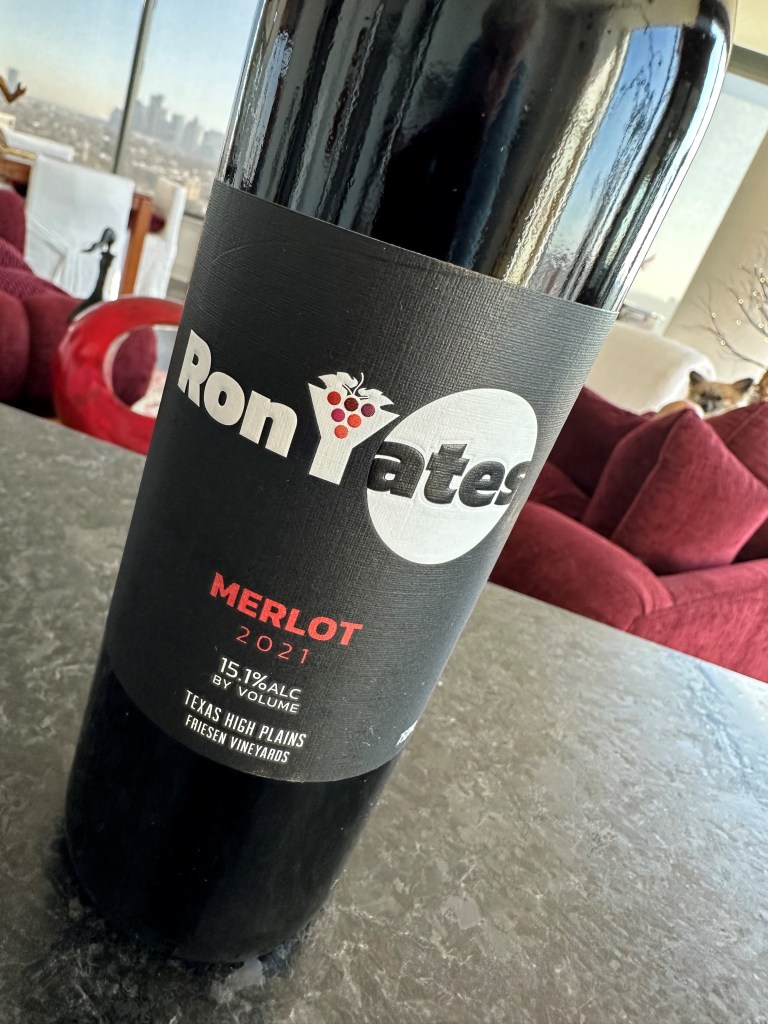
I think everyone knows by now that I hold Texas vintner Ron Yates and his wines, both from Spicewood and his eponymous estate in Hye, in the highest esteem. On my most recent visit to the latter, I got to taste the 2021 Ron Yates Friesen Vineyards Merlot, which was recently among the five finalists for best of show for that varietal in 2024 San Francisco International Wine Competition.
No small feat that. The judges said the wine “enchants with aromas of dark cherry, vanilla, and cedar, balanced flavors of ripe berries, spice, and oak, and a lingering cherry finish.” I couldn’t agree more, and it’s only $40.99 for a bottle at ronyateswines.com.
Only three of John Friesen’s 33 acres in the High Plains are planted to merlot, a grape that hasn’t historically distinguished itself in Texas. But, if you ask Yates and also Dr. Bob Young at Bending Branch Estates, two wineries that have been especially loyal Friesen customers, nobody does it better in the vineyard.
Note that Friesen also offers his own merlot, from the 2022 vintage, priced at $55 from friesencellars.com.
The Texas Wineslinger bids adieu
Sadly for me, my great friend Russ Kane, who has written more knowledgably and passionately about Texas wines than anyone ever, has up and moved to the Atlanta suburb of Decatur, Ga., in order to spend more time with his family. At some point, however, I suspect he’ll start sniffing around Georgia’s vineyards. He simply won’t be able to help himself.
To be sure, Texas vintners are going to sorely miss Kane. Like lots of folks, I was ignorantly dismissive of what the state’s wine-growers were doing in the vineyards and cellars until Kane provided much-needed wakeup call back in 2008, my first full year as the Houston Chronicle’s wine columnist. As Yates most recently proved, we’re in the big leagues — and have been for some time.
Taste of Italy 2025
This annual gathering, sponsored by the Italian American Chamber of Commerce for a dozen years now, gets better and better. For the last several springs, I’ve had the privilege of sitting on a panel that discusses the merits of pairing Texas barbeque with Italian wines. Well, duh! Of course, anything would taste great with Ara Malekian’s Harlem Road slowed-cooked meats (harlemroadtexasbbq.com). Classically trained in some of Switzerland’s finest kitchens, Malekian, shown below, came to Texas to reinvent himself as a pitmaster. He succeeded, to say the least.
But this year we added a Mexican resto to the mix, Xalisko Cocina Mexicana in The Woodlands (xalisko.com). And guess what? Samples of chef Beatriz Martines’ inventive cuisine also worked splendidly with the Italians. Martines offers a serious wine list at Xalisko that happens to be sprinkled with excellent offerings from Italy, so she was a natural fit for the party.
If you have to pick one Italian varietal to pair with either cuisine, I always default to barbera and, no, it’s not just for the perfect alliteration. Barbera’s have never been better, but their prices still make sense.
The one we tasted in the pairing seminar, a 2022 Cerrino Barbera d’Alba, can be found at Spec’s for under $16. From the little hamlet of Trezzo Tinella, it’s bright and fruity with very nice acidity.
A subsequent Italian wines event at AOC showcased producers I had missed at the Hilton: Parvus Ager (Lazio), Cantine Briziarelli (Umbria and Montefalco) and Cantina I Vini Di Maremma, I don’t think I’ve ever attended a better tasting featuring wines that, with three exceptions, were all priced under $20. And the others were under $40. Bravo!
And get a load of this super-cool “box” wine from Briziarelli. It’s indeed made of cardboard with a liner inside. But none are in the U.S. yet.
A gathering of eagles
I rarely wear ties anymore, even at black-tie events, and long pants make me uncomfortable. But a recent invitation to join an august, historic group of local wine mavens for a private dinner at the Club Marigold forced me to put on grownup clothes.
“Gotta wear a tie,” my host, Pete Creasey, said.
Houston’s Seventh of April Club dates to 1964. Why the name? It seems the founders couldn’t come to any agreement on same so they opted to go with the date of their first gathering. The one I attended was No. 548 in the series. Chef Austin Waiter’s edgy, French-accented cuisine paired splendidly with the six wines members contributed from their personal cellars, starting with a 2017 Y de Chateau d’Yquem, the exquisite dry sibling the most famous of all Sauternes, and finishing with a “sticky” Chateau Guiraud Sauternes from the 2009 vintage paired with that gorgeous confection shown above.
In between, we shared the 2018 Aubert Eastside Vineyard Russian River Valley Chardonnay, the 2000 Cuvee Mon Aieul Châteauneuf-du Pape and the 2012 Sine Qua Non Stein Central Coast Grenache. Yessir, I liked hanging with these guys. Sure hope they invite me back before another six decades passes.
California dreaming . . .
Becomes a reality when the aforementioned Virene, whose bubbles list at A’Bouzy may be the best in Houston — it’s certainly the best-priced — opens his new restaurant Succulent in the Regent Square space, West Dallas at Dunlavy, that was so briefly occupied by Pastore. There, Virene’s focus will be California wines, with Napa Valley’s front and center. The menu will be built on seasonal ingredients from both the West coast and the Houston area, including Virene’s family-owned Huckleberry Farms in Round Top. He’ll even be growing herbs and vegetables on the premises.
I’ve known Virene for most of the 40 years he has been in the restaurant business in Houston, starting when he was a young server at Ruggles on lower Westheimer. He adopted his aggressive wine-pricing model during his long tenure with Ibiza and Brasserie 19 and has continued to embrace same, bless him.
Event of the week
Master sommeliers Keith Goldston and Julie Dalton, colleagues in the Fertitta empire, go mano-a-mano at Vic & Anthony’s Thursday night in a pairings taste-off. They’ll each choose a wine to accompany three courses — a potato pave, king crab spaghetti and beef Wellington — and diners will pick the winner at the end of the evening. It seems a screaming deal for $200 per person, all inclusive. You can reserve one of the few remaining spots through eventbrite.com.
From the Wine Enthusiast, which scored it an 89: “This is a ripe wine. Pear and quince flavors are cut by lemon zest acidity, making for a fresh, rich wine that is well balanced. From vines in the Côte des Bar in the southern Aube region of Champagne, the wine has a warm, rich while still crisp character.”
From me: This officially certified biodynamic sparkler sparkles at every level. Vincent Couche is a perfectionist, especially when it comes to keeping chemicals out of his wines, and it shows. You won’t find fresher-tasting bubbles anywhere.
$46.50 at AOC Selections
Gonet-Medeville Champagne Tradition Premier Cru
From the winemaker: “The vines are sustainably farmed, have low yields, are harvested by hand, dosage is low and malolactic fermentation is blocked. The Grand Crus are vinified in wood, as are about a third of our Premier Crus like this one. The blend is 70 percent chardonnay, 25 percent pinot noir and the rest pinot meunier.”
From the Wine Advocate, which scored it a 92: “This wine is showing very well, bursting from the glass with an expressive bouquet of crisp yellow orchard fruit, honeycomb, dried citrus rind, walnuts and fresh brioche. On the palate, it’s medium to full-bodied, elegantly textural and fleshy, with ripe but racy acids, fine depth at the core and a long, sapid finish. This is a complex Champagne that sees some barrel fermentation.”
From me: We had the pleasure of meeting Theo Gonet, the winery’s generation-next face, in Houston recently. As they say, the acorn doesn’t fall far from the oak. His parents are from prominent Champagne and Bordeaux viticultural families, Xavier’s in Mesnil sur Org and Julie’s in Sauternes respectively. They’ve been producing wine as a couple under their hyphenated label since 2000 and, in 2004, they expanded into Graves, where they make the Respide Médeville.
$54 at AOC Selections
WHITE
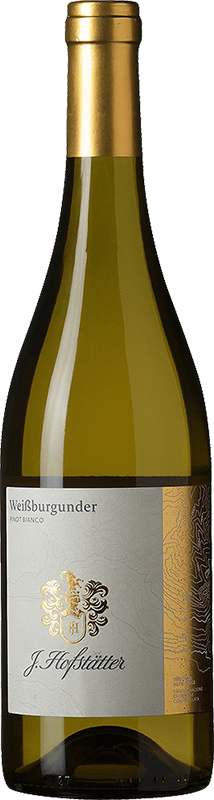
2023 J. Hofstätter Weissburgunder Pinot Bianco
From the winemaker: “Brilliant, straw yellow. An elegant fragrance with medium intensity offers notes of peach combined with apple and pear. Graceful and harmoniously structured on the palate with crisp acidity and delicate fruit. Subtle notes of hazelnut on the finish.”
From me: The winery in Italy’s Alto Adige, in the Alpine foothills below the Brenner Pass, was founded in 1907 by Josef and Maria Hofstätter. Their fifth-generation descendent and the current cellar boss, Niklas Hofstätter, also recently traveled through Houston, hosting a tasting at Vin Santo. Like Theo, he thoroughly charmed us. It’s always an added bonus to meet the people behind the wines we get to taste, especially when the wines are as special as these.
$24 at Vin Santo
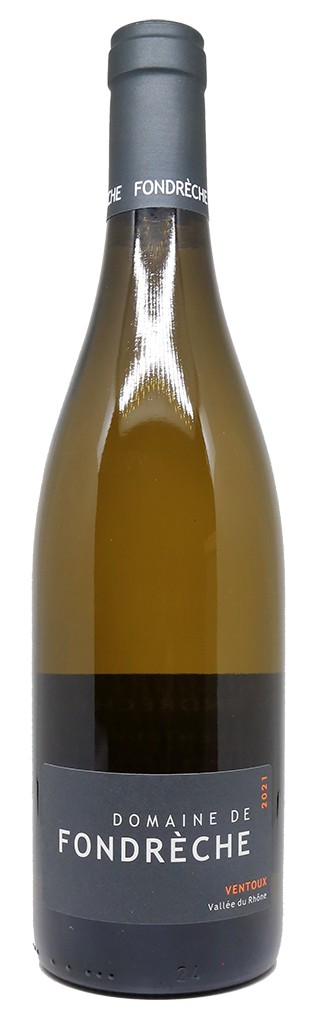
2021 Domaine de Fondrèche Ventoux Blanc
From the winemaker: “A Ventoux that opens harmoniously with floral aromas: acacia flowers, hawthorn, honeysuckle, accompanied by nuances of citrus and vanilla. Fat and roundness fill the mouth, in a very floral profile, a beautiful balance and a very pleasant freshness.”
From Jeb Dunnuck, who scored it a 92: “A blend of nearly one-third each of grenache blanc, roussanne and clairette with the balance rolle, the 2021 Ventoux Blanc has a clean, medium-bodied, vibrant style as well as attractive notes of ripe pears, citrus, and lime, with a terrific sense of underlying minerality.”
From me: Although the Fondrèche plateau in the shadow of Mont Ventoux is mainly dedicated to red wines production with its very stony soil, chalky surface and sandy-clayed texture, this classic Southern Rhone blend checked all my boxes at a very nice price.
$21 at AOC Selections
2021 Kosta Browne One-Sixteen Chardonnay
From the winemaker: “Expressive aromatics of fresh mango, honeyed lemon peel and toasted brioche encompass the senses. Stunningly balanced with a refined, smooth palate, lively acidity, and a weightless texture on the finish.”
From James Suckling, who scored it a 96: “Aromas of gunpowder, dried peach and sliced cooked apple. Sea shell. Pineapple. Medium to full body with a creamy texture and lots of fruit but still reserved at the end. Hints of brioche and caramel and then cream. Plenty of fruit and length.”
From me: Duckhorn’s stewardship of Kosta Browne, which was founded in 2007 by Dan Kosta and Michael Browne, has, if anything, made the wines better because they have become more elegant, at least in my opinion. California chardonnay doesn’t get any better than this.
$79 at wine.com/$91.99 at Spec’s
2019 Waterford Estate Stellenbosch Chardonnay
From the winemaker: “The Chardonnay vineyard was planted in 1988 and registered as single vineyard in 2012, which ensures that the traceability of the wine produced is exclusively to the original 5.8-hectare block. Soils are comprised of red clay as well as large granite deposits and parent material found throughout the clay profile. The clay adds structure to the wine, while the granite produces great minerality and finesse to the overall presentation.”
From me: Winemaker Mark Le Roux nailed it. The wine is richly flavored but complex and very well-balanced. He’d be the first to admit he’s working with perfect terroir for chardonnay in the Blaauwklippen Valley on the slopes of Helderberg Mountain in South Africa’s famed Stellenbosch.
$34.97 at Spec’s
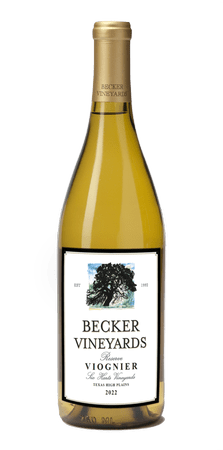
2022 Becker Vineyards Reserve Viognier
From the winemaker: “A rich, well-balanced, and aromatic wine, wonderful chilled or slightly temperate, from Six Harts Vineyards in the Texas High Plains. Aging for 16 months in French oak barrels allows a vuluptous structure on the palate while allowing delicate florals and a mosaic of stone fruits.”
From me: It’s fair to say Becker put Texas viognier on the map. That’s no small thing because I think viognier is the white varietal that’s best suited for Texas terroir.
$29 at beckervineyards.com
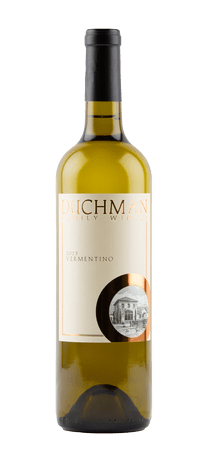
2023 Duchman Family Wines Vermentino
From the winemaker: “With aromas of lime zest, crushed rocks and lemon, the palate reflects juicy pear, pineapple and ripe, yellow apple.”
From me: And vermentino is a close second among the white grapes, particularly when Duchman’s Dave Lewis is working his magic in the cellar. This is the first Duchman vermentino to hit the market in three years — growing world-class fruit in Texas can indeed be challenging — and it’s return is to be celebrated.
$26 at duchmanwinery.com
PINK
2022 Ron Yates Grenache Rosé
From the winemaker: “Aromas of orange blossom and lemon citrus with flavors of strawberry shortcake and honeysuckle.”
From me: At the family’s original winery, Spicewood, Ron Yates sells a wine called “The Good Guy,” a robust red field blend which he named in honor of his grandfather, who purchased a piece of land to support Ron’s original forway into the wine business. Now, Yates is paying forward himself. Note that he’s a very good guy, too. This refreshing pink is a cinsault (65 percent) grenache blend from the Farmhouse Vineyards in the Texas High Plains. The grapes, which were pressed immediately after picking, were grown specifically for this rosé. The wine spent six months in 100-percent stainless steel.”
$29.99 at ronyateswines.com
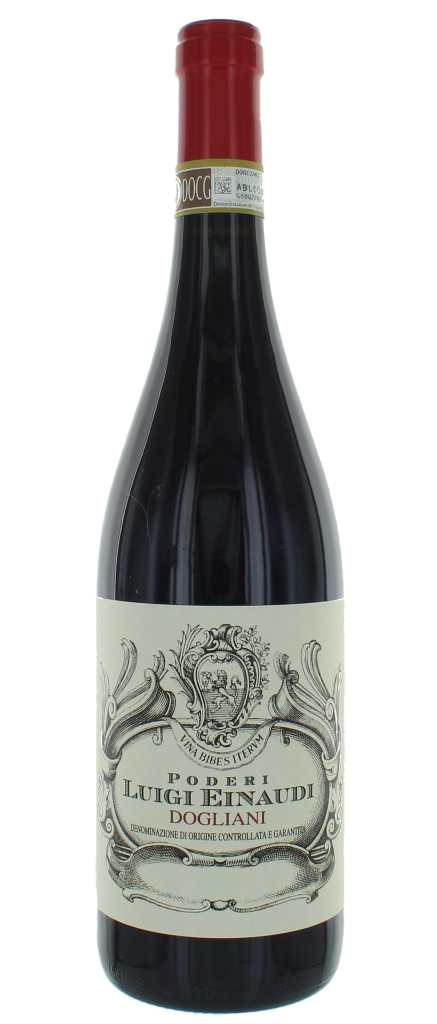
2020 Poderi Luigi Einaudi Dolcetto Dogliani
From the winemaker: “A traditional wine, easy to drink, which comes from a blend of Dolcetto grapes from the village of Dogliani. There it obtains his maximal tipicity, of a ruby red colour, which tends toward violet with a rich fruity bouquet, full bodied with an intense aroma of undergrowth and a pleasantly tannic taste, with a slight final almond note.”
From me: I’ve never been overly smitten by dolcetto, but this wine is an exception. It has depth and finesse so often lacking in dolcettos, although those coming from the grape’s “grand cru” of Dogliani, surrounding the gorgeous town of the same name, rarely disappoint. And the hilltop Einaudi estate, which features a relais as well the winery, is spectacularly situated with gorgeous views of both the Langhe landscape and the Alps on clear days.
$15.99 at wine.com
2020 Domaine du Cayron Gigondas
From Vinous, which scored it a 96: “Dark magenta. Vibrant cherry, raspberry and lavender aromas show excellent clarity and a spicy white pepper hint. Sweet and penetrating on the palate, it displays expansive red fruit and spicecake flavors with a subtle touch of candied licorice. Closes sappy and impressively long, with resonating floral and red fruit notes and gentle tannins that build slowly.”
From me: Sister Delphine, Roseline and Cendrine are the fifth generation to run the Cayron estate. They’re traditionalists, too, fermenting the juice in concrete tanks, then aging in large foudres that are more than half a century old. Most of their 60-plus-year-old vines grow at elevations above 1,000 feet beneath the dramatic Dentelles de Montmirail.
$43.59 at Spec’s/$48 at AOC Selections
2020 Les 2 Domaine la Monardière Vacqueyras
From the winemaker: “Manual harvest with sorting on the table and total destemming. Fermentation follows using only indigenous yeasts. Maceration for 15 to 18 days. Aging lasts 18 months with half in tanks and half in oak barrels. Bottling is done without fining or filtration.”
From me: It’s fun to be able to recommend both a Gigondas and a Vacqueyras in the same blog. The two AOCs, second only to Châteauneuf-du Pape in prestige in the Southern Rhone, are separated by just a few kilometers, but the wines are always quite different. This one, made from fruit grown on vines planted more than 65 years ago, would be a classic GSM if not for the small bit of cinsault in the blend.
$33 at AOC Selections
2021 C. L. Butaud Cease & Desist Texas High Plains Red
From the winemaker: “We start with a base of our flagship tempranillo, tipping our hat to the red blends of Spain from Rioja, Ribera del Duero, Toro, et al. Blended in the past with syrah and mourvèdre, these wines have been voluptuous, showstopper wines, with my artistic focus based more on the hedonistic pleasure of drinking robust and velvety wines.”
From me: I’d have to retaste half a dozen wines side by side and blind to make sure I’m not going off a limb on this, but, as I’m sitting here typing right now, I’ll pronounce this the most compelling red I’ve tasted in 2024. Yep, it’s really that good. Major kudos to native Houstonian Randy Hester. And his current release Mourvedre and Tempranillo are eminently praiseworthy, too.
$48 at clbutaud.com
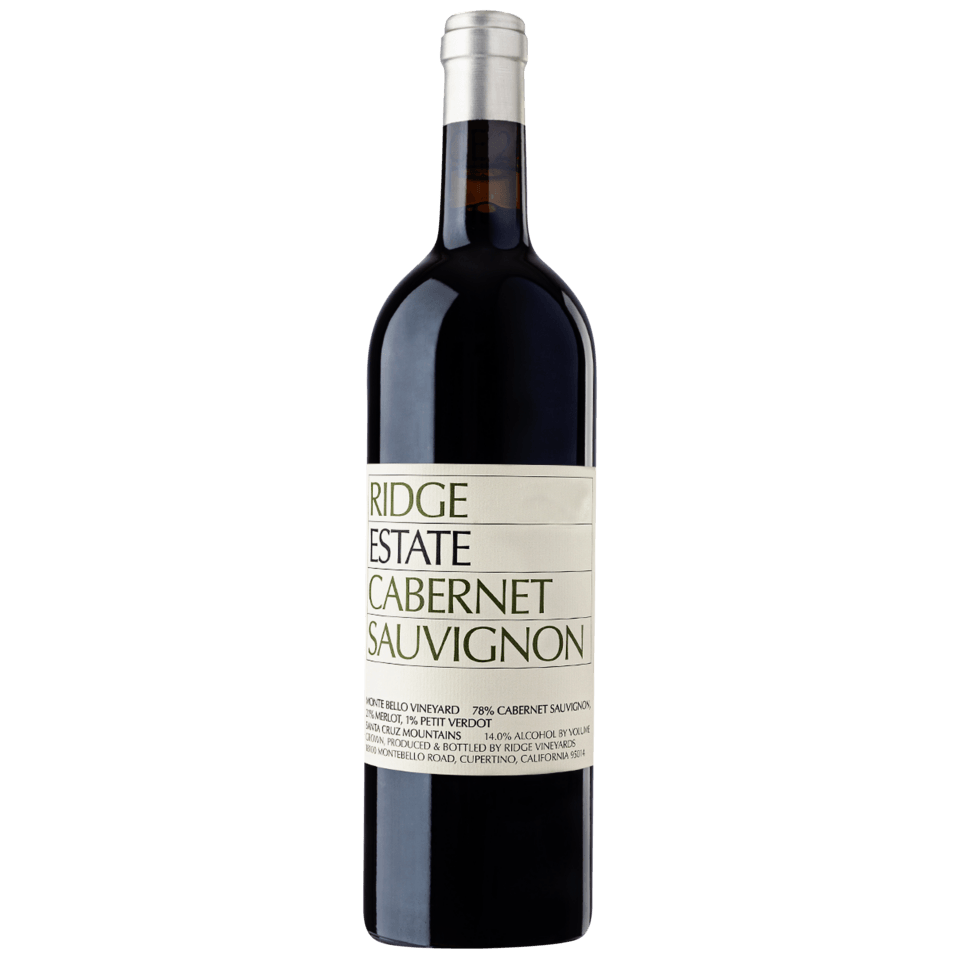
2021 Ridge Estate Cabernet Sauvignon
From the winemaker: “Dark purple hues with black cherry, dark plum, black olive, soy, dried jerky, lilac, dried rose petals, cedar, juniper berry, and wintergreen mint. Fresh entry with building tannins that coat the entire palate. Gravelly, dusty, and mineral notes give way to layers of red and black fruits. Integrated oak with youthful tannins and acidity. Will prove to be very age-worthy.”
From Decanter, which scored it a 96: “From the legendary Monte Bello estate vineyard, most of this estate cab comes from the Klein Ranch portion of the famed Santa Cruz Mountains estate. An American Cabernet (blended with 16 percent merlot) evocative of first-growth Bordeaux nuance and complexity. Freshly turned soils, bay leaf and sweet tobacco aromas segue into notes of pure black fruits. Sweet, ripe black plums open the palate with perfectly tart blackberries, muddled mint leaves, pencil shavings, and soaring acidity brighten this wine into a mineral-driven finish. This is a wine that, in eight to 10 years, will surely be at its apex.”
From me: I fell in love with Ridge’s classic zinfandels before I’d ever tasted the cabernet, but this wine makes future purchases a 50-50 proposition. Note that its big brother, the 2021 Monte Bello, received three 100-point scores from the wine critics and 10 of at least 95. But it sells for way more $$$.
$90 at ridgewine.com
2021 Chateau Croisille Le Croizillon Cahors
From the winemaker: “The malbec grapes from Cahors were sourced from several of our vineyards’ different terroirs, allowing malbec’s fruity and easily digestible qualities to come to the forefront. Part of the wine underwent carbonic maceration and the rest a 10-day maceration with little extraction. The wine aged for eight months in concrete and stainless steel.” on the rest of the volume. Aging lasted for eight months in concrete and stainless steel tanks.”
From me: It’s an easy-drinking, super high-value red that does a nice job of reminding us why and where malbec first became famous before becoming really really famous in Argentina’s Mendoza region.
Whenever I visit a winemaker — particularly in the fall — my first question is the obvious one: How did the most recent harvest go? They almost always try to paint a happy, the-glass-is-half-full face on even the worst of years, insisting that, although yields may have been low, the quality of the grapes they were able to bring in was high. And that indeed has been the case over the last several weeks as I made my way around France’s Provence and Italy’s Piemonte.b
Ultimately, of course, the proof will be in the bottles.
Frost, hailstorms and excessive rain at the wrong times have particularly affected French vignerons, resulting in one of the seven smallest vintages of the past century. Production is estimated to be about 39 million hectolitres, a drop of 18 percent from 2023 that may cost France its longstanding title as the world’s largest wine producer. Spain, it seems, has enjoyed a strong resurgence following a miserable year previously and could approach 40 million hectolitres. This despite the fact that Rioja got clobbered by isolated spring hailstorms.
Many vineyards across France were affected by dropping of flowers and young berries as well as a variation in grape size as a result of unusually humid, cool weather during flowering. Downy mildew affected most wine-growing areas, sometimes causing significant losses, while frost and hail also reduced volumes — particularly in the Burgundy-Beaujolais region, which experienced 50 percent more rainfall throughout the growing season than normal.
The official reports predict the loss there could be up to 25 percent more, and a few producers will be suffer greater losses. Gregoire Pissot, technical director at Prosper Maufoux in Saint Aubin, told the Robb Report that harvest could be “30 percent to 50 percent smaller, or even more in some specific appellations.” In Charentes, whose wine is distilled into Cognac, a 35 percent plunge is being predicted.
In Bordeaux, where 8,000 hectares of vines are being uprooted this year as part of a government subsidized program intended to cut over-production. Volumes are expected to drop 10 percent, to levels not seen since 2017. A 19-percent drop in AOP wine made in Champagne is being forecast. For Provence, the estimated reduction is 12 percent. for Alsace, it’s 13 percent.
The Jura wines, impacted by the double whammy of severe frost and mildew, will suffer the most, plunging 71 percent.
Italy’s Piemonte, pictured above in September, battled frost and capricious spring storms and suffered accordingly, but Tuscany and Veneto are reporting strong harvests overall. However, sub-normal rainfall means those regions’ reds will have more pronounced tannins and intensity. A series of late-summer heat spikes in France will also produce more concentrated flavors. But, hey, that’s good news, right?
The bad news? I give the floor to Gaya Ducceschi, the head of Wine & Society and Communication of the Comité Européen des Entreprises Vins (CEEV), the association that represents European wine companies in the wine industry and trade, who explains that “the long-term structural decline in consumption, especially on traditional markets, is at the heart of the current crisis in the sector. The global market for spirits and low- or zero-alcohol products is growing, while instead wine consumption continues to decline. European Union support should focus on improving competitiveness, reducing costs and facilitating access to new consumers.”
Hence, the CEEV together with the European wine sector is launching Vitaevino, a campaign across Europe that will promote wine consumption as being, Ducceschi says, “part of a healthy and balanced lifestyle, emphasizing its cultural and socio-economic role. The campaign will focus on generating broad public support through collective commitment, and encourage citizens, consumers and the global wine community to sign a Declaration supporting the role of wine in society and defending its cultural heritage”.
The rest of the world is a mixed bag. California has now had outstanding back-to-back harvests after years fraught with wild-fire peril. Argentina’s 2024 production figures to be up a whopping 27 percent and Australia 21 percent. But their respective regional neighbors, Chile and New Zealand, are expected to be 10 and 21 percent in the red, respectively. For the Kiwis, that represents a loss of one-fifth of their entire production compared to 2023.
Although I portend to be a food maven and a wine expert, I am reminded on an almost daily basis how much there is still to be learned. As the saying goes, I don’t know what I don’t know. But, dammit, the quest for knowledge continues unabated as my 72nd birthday approaches.
The last two months spent in the South of France and Northwest Italy significantly broadened my horizons. These are neighborhoods I have frequented annually (except during the COVID lockdown of 2020) for three decades now, but so many stones — both the real ones in vineyards and the metaphorical kind — remain unturned.
A first-ever visit to the wine museum in Barolo proved especially fruitful, pardon the pun, because of the expansive chronology of wine history presented in one fascinating exhibit. According to same, Palaeolithic and Mesolithic hunter-gatherers around 11,000 BC were the first to discover that alcoholic fermentation occurred in sugary substances. Initially, alcoholic beverages were probably made from fermented tree sap and a heady honey-based drink called hydromel.
But grapes growing on wild vines, which likely grew as weeds in land cultivated by the earliest farmers, proved a better option because it fermented so easily. Also, grapes prevailed over other pulpy fruit because the vines could be reproduced by taking cuttings, or shoots, that had the desired characteristics rather than by planting seeds. Around 10,000 BC Neolithic farmers began to cultivate vineyards between the Caspian and Black Seas, where varieties bearing the largest fruits were most abundant.
Domestication of the grapevine was completed in Anatolia, where the abundant berries became integral to the economies of the earliest urban societies. The best domestic cultivares, which is to say the vinifera varietals, gradually spread to the west, from continental Greece to southern Italy to southern France and then the Iberian peninsula. In each, new centers of domestication emerged.
And the rest, as we say, is history.
Now let’s talk about vermouth. I always believed it was a fortified wine whose roots were French. Wrong and wrong. Rather, it’s an herbally-infused aromatised wine — with an alcohol content of less than 20 percent — that was born in Turin, although the name “vermouth” is the French pronunciation of the German word Wermut for wormwood, which was long used as the primary ingredient in the drink before being largely banned in the early 20th century for health reasons.
Fortified wines containing wormwood as a principal ingredient emerged in Germany during the 16th century. At about this time, an Italian merchant named D’Alessio began producing a similar product in the Piemonte as “wormwood wine”. Martini & Rossi, the top-selling international brand of vermouth today, would be founded in 1863 in Turin by businessman Alessandro Martini, winemaker Luigi Rossi and accountant Teofilo Sola. When the Sola family sold out in 1879, and the company became known as Martini & Rossi. Martini, of course, would also give his name to the world-famous cocktail, of which vermouth has always been a signature ingredient.
Noilly Prat, founded by Joseph Noilly a half century earlier and based in southern France, is primarily known for its dry, pale vermouths that are more commonly used in martinis. Sweet red vermouth is, in turn, an essential ingredient for making a Negroni along with Campari and gin.
Spices commonly found in vermouth formulas — closely guarded secrets by every major producer — include cloves, cinnamon, quinine, citrus peel, cardamon, marjoram, chamomile, coriander, juniper, hyssop, ginger, labdanum and quinine, although the latter is more famously used these days to make Barolo Chinato, a delicious after-dinner digestif that, sadly, can be difficult to find in the Houston area.
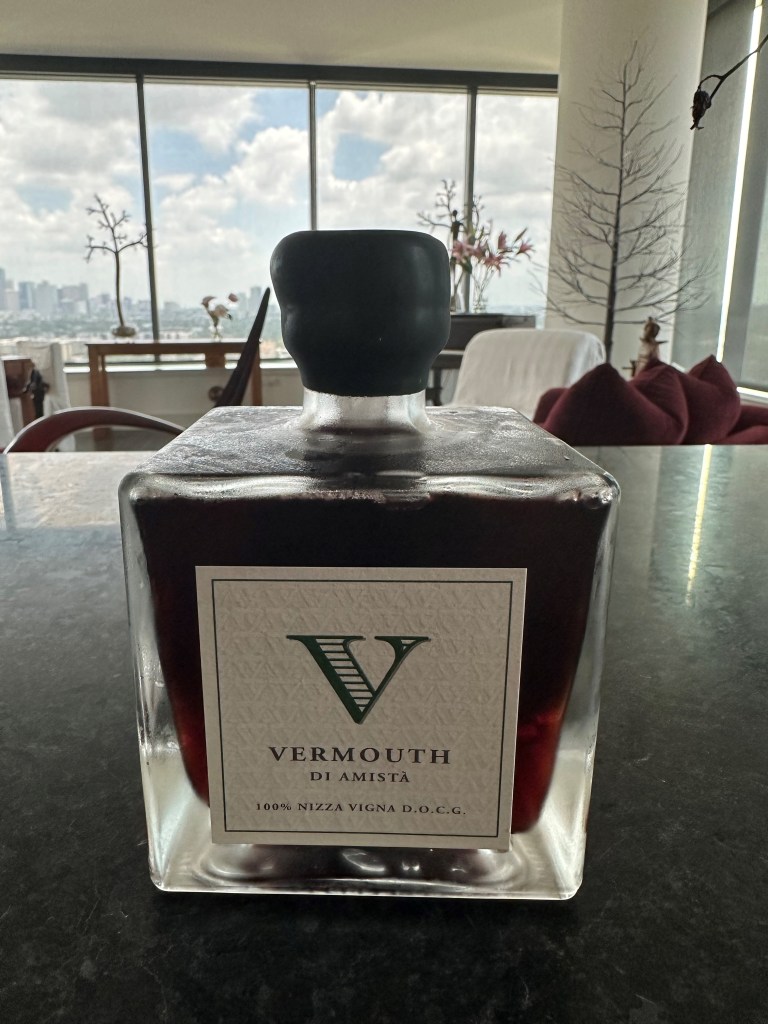
A new favorite vermouth of mine is from Àmista (https://amistapiedmontwine.com), a winery that has been at the forefront of putting Nizza Monferrato on the map as a Grand Cru DOCG for barbera. The same high-quality barbera grapes are used in the vermouth production, too. I’m hoping it will soon be available in the Houston market.
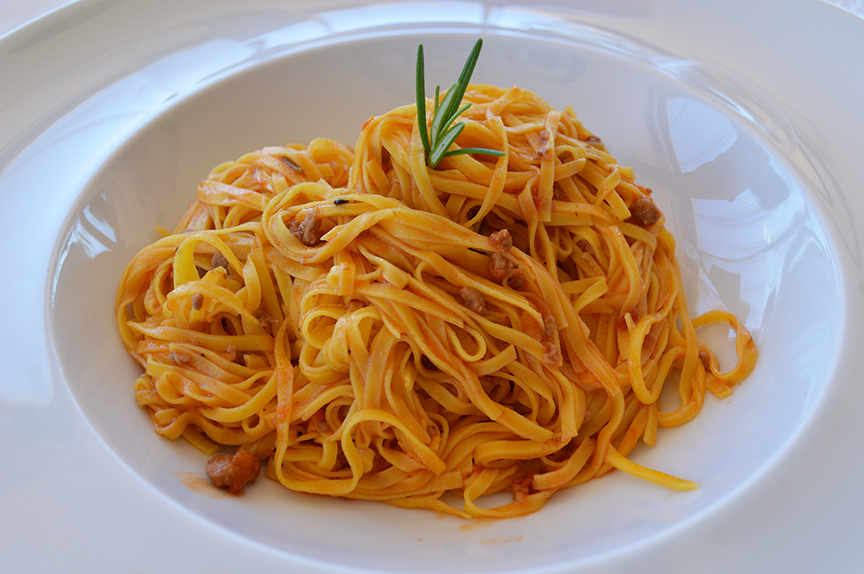
As for my big food discovery, a pasta-making “class” I attended in Turin as part of a tour I was helping lead revealed this factoid: Pastas from northern Italy always include egg yolks, while pastas from southern Italy rarely do. Regarding the former, the famous Piemontese tajarin, pictured above in all its glory, must have a minimum of 24 yolks per kilogram of dough, and some show-off producers use up to 40. #yum!
The Sports Page
Raising a glass to . . . Rudy T and the Rockets of yore
It was 30 years ago this month that the Choke-Turned-Clutch City gang claimed Houston’s first major championship at the expense of Pat Riley and the Knicks. Tomjanovich had starred as a Rocket himself, reaching an improbable NBA Finals in 1981, then eventually closed the deal as a coach. A repeat title followed in 1995 and he eventually earned his rightful place in the Basketball Hall of Fame, joining two of his stars, Hakeem Olajuwon and Clyde Drexler, there.
Pouring one out for . . . Bill Walton
He was a great baller-turned-first-rate broadcaster with a huge heart and a social conscience to match. A three-time collegiate player-of- the-year and twice national champion at UCLA, he became an NBA champion and MVP too before injuries derailed what would still be a Hall-of-Fame career. He claimed a second ring as a Celtic at the expense of the Rockets in 1986. The good they die young. He was born in the fall of 1952, not quite two months after me. Damn.
And for . . . Willie Mays
The “Say-Hey Kid,” the consummate ball player/entertainer, made it to 93 and was the oldest living Hall-of-Famer when he died. But Mays will stay forever young in my memory. He was my boyhood hero and, as a freshman at the University of Houston in 1970, I walked — walked! — from the UH campus to the Astrodome to see him play live in a regular-season game for the first time, 19 years after he had been a NY Giants rookie. Call it a religious pilgrimage. In my mind, and a lot of other minds, too, he’s baseball GOAT. End of conversation.
H-town happenings
Caymus 50th Anniversary Wine Dinner— 7 p.m. Thursday, June 27, at The Grotto Downtown. $150. http://eventbrite.com
Fireworks! Best of the ’80s covered by the Spicolis — 8:30 p.m. Thursday, July 4, at Deep Roots Vineyard in Plantersville. $24. http://eventbrite.com
Summertime UNCORKED — 2 p.m. Saturday, July 20, at Barcelona Wine Bar. $65. http://eventbrite.com
Wine Symposium — 4 p.m. Saturday, July 20, at Stella’s Wine Bar in the Post Oak Hotel. $75. http://eventbrite.com
Podcast:Sporty Wine Guy, wherever you get your podcasts. That’s me with my sidekick Jeremy Parzen above. A new one will drop soon, as soon as we both have our feet back on the ground in H-Town.












 The Sporty Wine Guy