
Although I portend to be a food maven and a wine expert, I am reminded on an almost daily basis how much there is still to be learned. As the saying goes, I don’t know what I don’t know. But, dammit, the quest for knowledge continues unabated as my 72nd birthday approaches.
The last two months spent in the South of France and Northwest Italy significantly broadened my horizons. These are neighborhoods I have frequented annually (except during the COVID lockdown of 2020) for three decades now, but so many stones — both the real ones in vineyards and the metaphorical kind — remain unturned.
A first-ever visit to the wine museum in Barolo proved especially fruitful, pardon the pun, because of the expansive chronology of wine history presented in one fascinating exhibit. According to same, Palaeolithic and Mesolithic hunter-gatherers around 11,000 BC were the first to discover that alcoholic fermentation occurred in sugary substances. Initially, alcoholic beverages were probably made from fermented tree sap and a heady honey-based drink called hydromel.
But grapes growing on wild vines, which likely grew as weeds in land cultivated by the earliest farmers, proved a better option because it fermented so easily. Also, grapes prevailed over other pulpy fruit because the vines could be reproduced by taking cuttings, or shoots, that had the desired characteristics rather than by planting seeds. Around 10,000 BC Neolithic farmers began to cultivate vineyards between the Caspian and Black Seas, where varieties bearing the largest fruits were most abundant.
Domestication of the grapevine was completed in Anatolia, where the abundant berries became integral to the economies of the earliest urban societies. The best domestic cultivares, which is to say the vinifera varietals, gradually spread to the west, from continental Greece to southern Italy to southern France and then the Iberian peninsula. In each, new centers of domestication emerged.
And the rest, as we say, is history.
Now let’s talk about vermouth. I always believed it was a fortified wine whose roots were French. Wrong and wrong. Rather, it’s an herbally-infused aromatised wine — with an alcohol content of less than 20 percent — that was born in Turin, although the name “vermouth” is the French pronunciation of the German word Wermut for wormwood, which was long used as the primary ingredient in the drink before being largely banned in the early 20th century for health reasons.
Fortified wines containing wormwood as a principal ingredient emerged in Germany during the 16th century. At about this time, an Italian merchant named D’Alessio began producing a similar product in the Piemonte as “wormwood wine”. Martini & Rossi, the top-selling international brand of vermouth today, would be founded in 1863 in Turin by businessman Alessandro Martini, winemaker Luigi Rossi and accountant Teofilo Sola. When the Sola family sold out in 1879, and the company became known as Martini & Rossi. Martini, of course, would also give his name to the world-famous cocktail, of which vermouth has always been a signature ingredient.
Noilly Prat, founded by Joseph Noilly a half century earlier and based in southern France, is primarily known for its dry, pale vermouths that are more commonly used in martinis. Sweet red vermouth is, in turn, an essential ingredient for making a Negroni along with Campari and gin.
Spices commonly found in vermouth formulas — closely guarded secrets by every major producer — include cloves, cinnamon, quinine, citrus peel, cardamon, marjoram, chamomile, coriander, juniper, hyssop, ginger, labdanum and quinine, although the latter is more famously used these days to make Barolo Chinato, a delicious after-dinner digestif that, sadly, can be difficult to find in the Houston area.
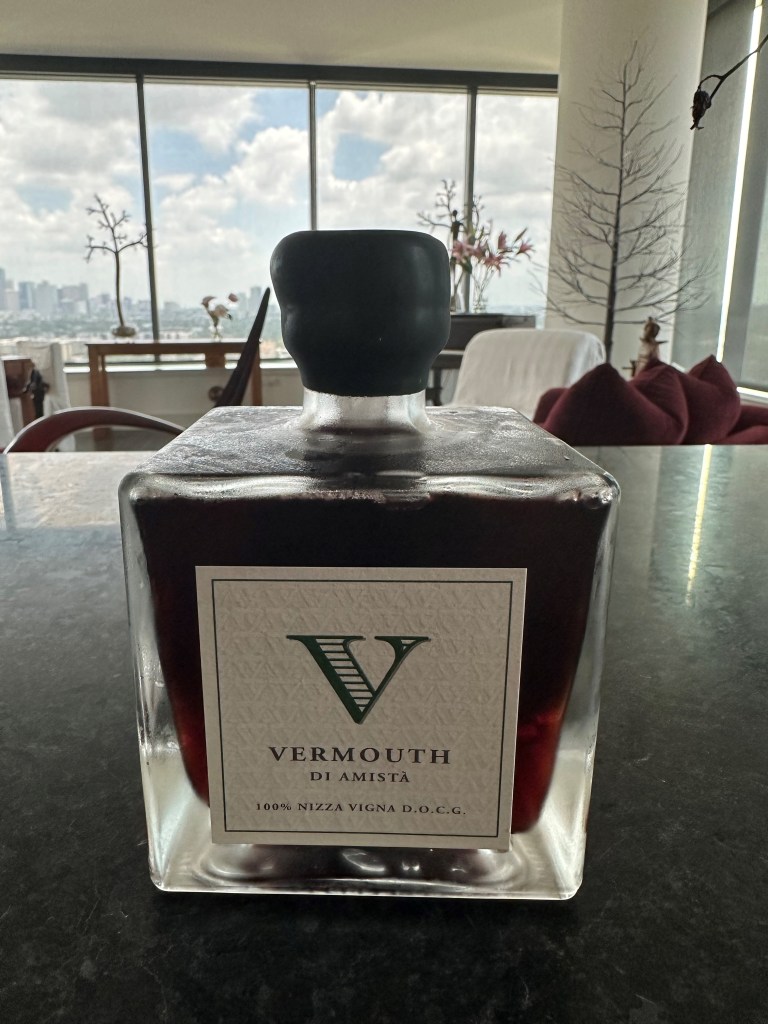
A new favorite vermouth of mine is from Àmista (https://amistapiedmontwine.com), a winery that has been at the forefront of putting Nizza Monferrato on the map as a Grand Cru DOCG for barbera. The same high-quality barbera grapes are used in the vermouth production, too. I’m hoping it will soon be available in the Houston market.
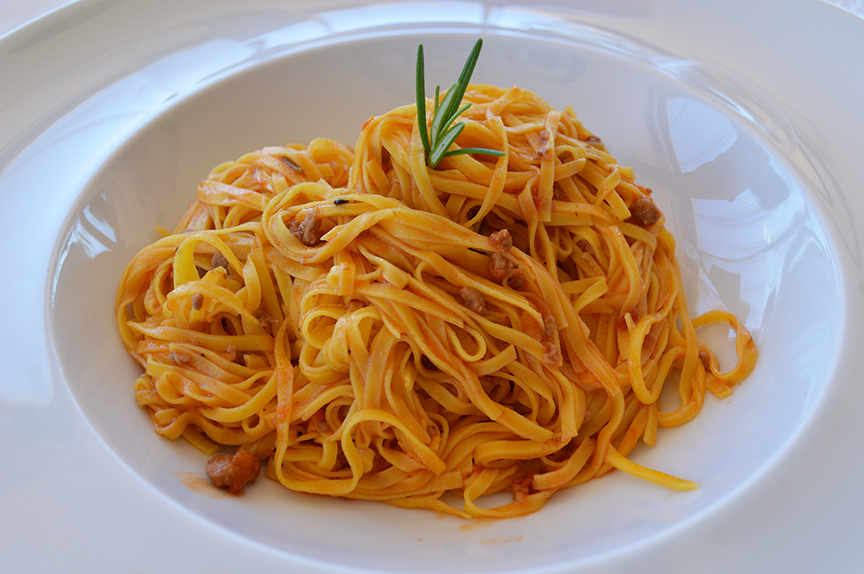
As for my big food discovery, a pasta-making “class” I attended in Turin as part of a tour I was helping lead revealed this factoid: Pastas from northern Italy always include egg yolks, while pastas from southern Italy rarely do. Regarding the former, the famous Piemontese tajarin, pictured above in all its glory, must have a minimum of 24 yolks per kilogram of dough, and some show-off producers use up to 40. #yum!
The Sports Page
Raising a glass to . . . Rudy T and the Rockets of yore
It was 30 years ago this month that the Choke-Turned-Clutch City gang claimed Houston’s first major championship at the expense of Pat Riley and the Knicks. Tomjanovich had starred as a Rocket himself, reaching an improbable NBA Finals in 1981, then eventually closed the deal as a coach. A repeat title followed in 1995 and he eventually earned his rightful place in the Basketball Hall of Fame, joining two of his stars, Hakeem Olajuwon and Clyde Drexler, there.
Pouring one out for . . . Bill Walton
He was a great baller-turned-first-rate broadcaster with a huge heart and a social conscience to match. A three-time collegiate player-of- the-year and twice national champion at UCLA, he became an NBA champion and MVP too before injuries derailed what would still be a Hall-of-Fame career. He claimed a second ring as a Celtic at the expense of the Rockets in 1986. The good they die young. He was born in the fall of 1952, not quite two months after me. Damn.
And for . . . Willie Mays
The “Say-Hey Kid,” the consummate ball player/entertainer, made it to 93 and was the oldest living Hall-of-Famer when he died. But Mays will stay forever young in my memory. He was my boyhood hero and, as a freshman at the University of Houston in 1970, I walked — walked! — from the UH campus to the Astrodome to see him play live in a regular-season game for the first time, 19 years after he had been a NY Giants rookie. Call it a religious pilgrimage. In my mind, and a lot of other minds, too, he’s baseball GOAT. End of conversation.
H-town happenings
Caymus 50th Anniversary Wine Dinner — 7 p.m. Thursday, June 27, at The Grotto Downtown. $150. http://eventbrite.com
Fireworks! Best of the ’80s covered by the Spicolis — 8:30 p.m. Thursday, July 4, at Deep Roots Vineyard in Plantersville. $24. http://eventbrite.com
Summertime UNCORKED — 2 p.m. Saturday, July 20, at Barcelona Wine Bar. $65. http://eventbrite.com
Wine Symposium — 4 p.m. Saturday, July 20, at Stella’s Wine Bar in the Post Oak Hotel. $75. http://eventbrite.com
Instagram: http://@sportywineguy
Facebook: Dale Robertson

Podcast: Sporty Wine Guy, wherever you get your podcasts. That’s me with my sidekick Jeremy Parzen above. A new one will drop soon, as soon as we both have our feet back on the ground in H-Town.
Friends of mine to follow
Sandra Crittenden: http://winelifehousthon.com
Russ Kane: http://vintagetexas.com
Jeffrey Kralik: http://drunkencyclist.com
Katrina Rene: http://thecorkscrewconcie
 The Sporty Wine Guy
Fascinating read on the history of vermouth. Inspired to order a martini tonight!
LikeLike