-
Bubbles

Gérard Bertrand An 825 Crémant de Limoux Brut
From the Winemaker: “A beautiful, golden yellow color. Complex, aromatic nose revealing hints of white flower, with hints of honey, green apple and toast. Crisp, elegant structure on the palate, where the fine texture of the bubbles complements the wine naturally.”
From me:
$19.99 at http://wine.com

Yamhill-Carlton Brut Rosé
From the Winemaker: “Aromas of strawberry shortcake, canned pear, white peach, lightly toasted broiche, and rose petals. The palate flirts with tangerine, kumquat, nectarine on the finish with warm watermelon rind and lemon meringue pie. Balanced fatness and acidity on the texture, vibrant and exceptionally clean all the way through to the finish, phenomenally precise.”
From the Wine Spectator, which scored it a 94: “That rare domestic rosé that captures the vibrant acidity of Champagne, offering delicate strawberry, raspberry flavors laced with steely minerality and sprinkle of graham cracker on the finish.”
From me: This captivating chardonnay (57 percent) pinot noir blend from the Willamette Valley would pass for a classic pink champagne in any blind tasting.
$59.99 from http://wine.com
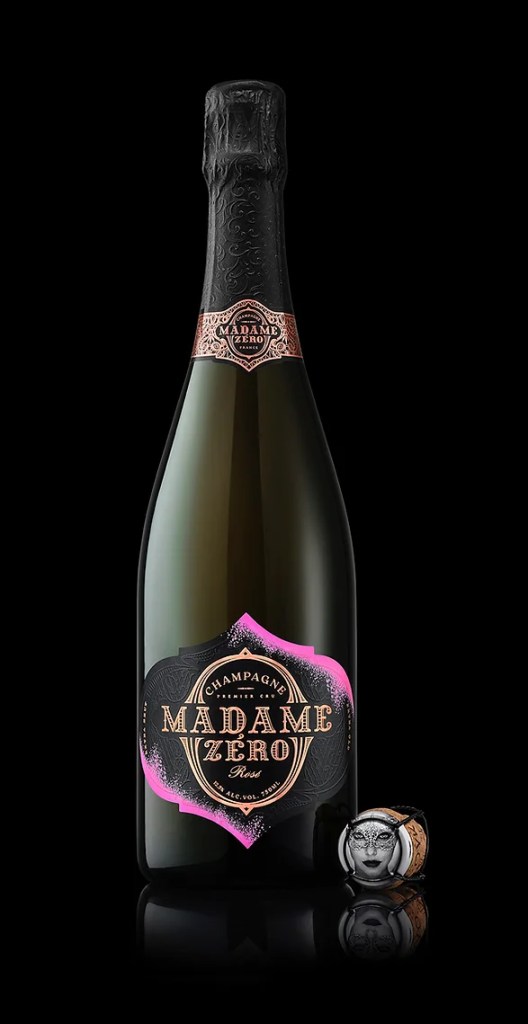
Madame Zéro Brut Rosé
From the Winemaker: “The wine is light pink salmon color and maintains a fine mousse with a ribbon of fine, delicate, precise bubbles. Aromatics of fresh berries, floral aromas and notes of citrus delivering a beautiful impression of freshness. On the palate, a refreshing expression of blood orange citrus front palate that progresses into a medley of fresh berries with pronounced notes of freshly picked wild strawberries, pomegranate and raspberry. Fresh minerality and exceptional balance makes for a an extremely clean, elegant finish.”From me: The man behind this gem, Galveston-born Matthew Massey, has become a good friend so it’s hard for me to be objective. But in a recent fully blind tasting of 22 sparkling wines, I gave it 94 points, my highest score.
$84.99 at http://madamezero.com
WHITE
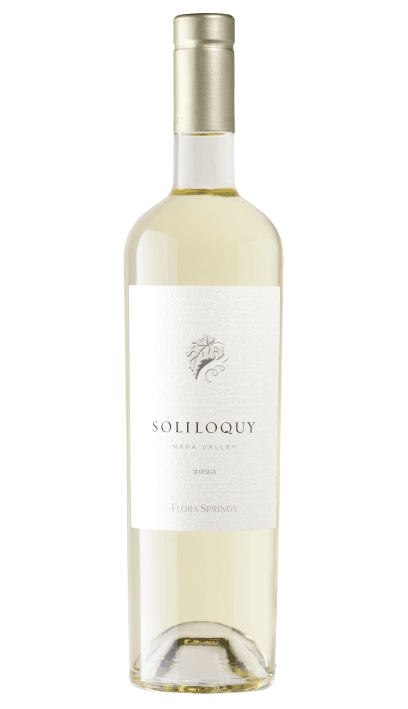
2023 Flora Springs Soliloquy
From the Winemaker: “Anchored by sauvignon blanc (85 percent), notes of honeysuckle prevail. Malvasia introduces tart apple and orange blossom to the palate and hints of chardonnay weave citrus highlights throughout. In an attempt to preserve the thumbprint of this treasured fruit source, the fruit is whole-cluster fermented in it’s natural yeast. This technique also means there is no inoculated yeast present in the wine. This gives the wine a freshness and a zesty finish, the perfect summer evening accompaniment to lighter dishes.”
From me: Flora Spring’s Trilogy, a cab-centric blend, has always been one of my reference-standard reds from California. Now I can say the same about the Soliloquy with its backbone of a sauvignon blanc clone that grows only in the winery’s Crossroads Vineyard in the Oakville AVA.
$70 at florasprings.com
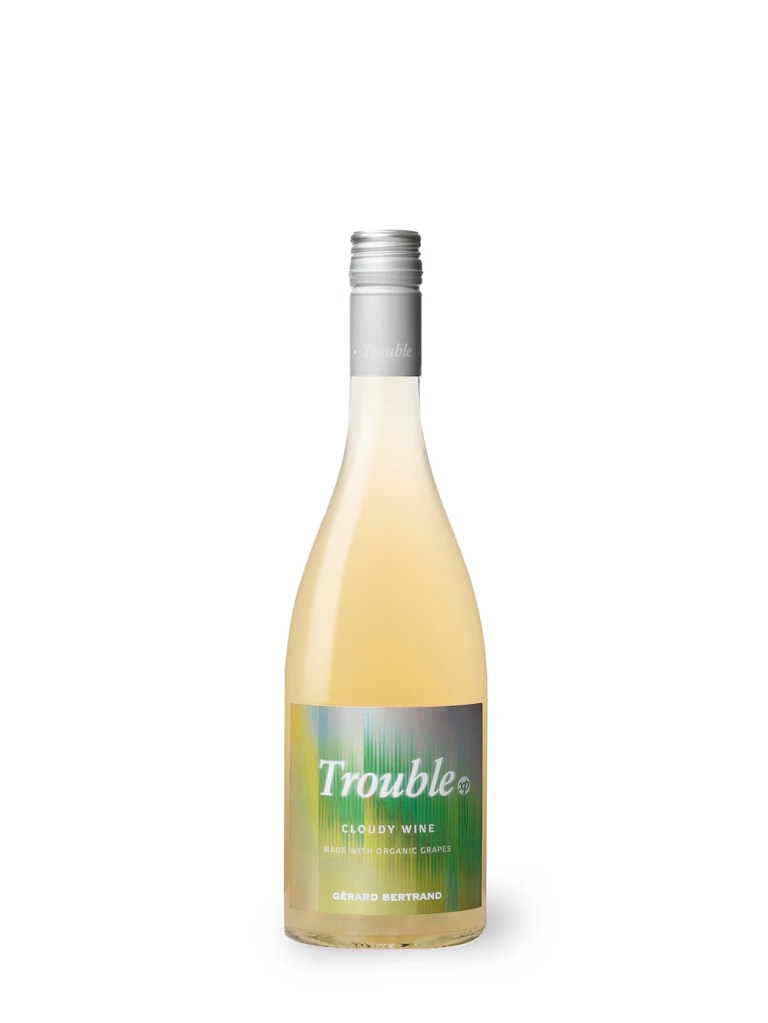
Gérard Bertrand Trouble Cloudy Wine
From the Winemaker: “On the palate it offers a meaty, velvety texture, coating the palate in succulent softness. Exotic fruit aromas explode on the palate, with juicy mango, pineapple and fresh lychee notes. The wine has impressive aromatic intensity, enhanced by delicate floral touches. The tart, lingering finish ensures a subtle balance. Bouquets of mango, pineapple and lychee, with hints of lime and blood orange.”
From me: The cloudiness in this fresh, fruity blend of chardonnay (60 percent), grenache blanc (20) and viognier, is due, of course, to the lees not being filtered. I can’t imagine a more perfect poolside sipper for summertime in H-town.
$25.99 at gerard-bertrand.shop

2022 Amici Sauvignon Blanc Sonoma County
From the Winemaker: “Aromatics of this incredibly floral wine begin with notes of jasmine, snap pea, and orange flowers. The intense aromas are met with ripe Meyer lemon, lively passion fruit, and hints of kiwi on the palate. This classic Sonoma County Sauvignon Blanc shows wonderful acidity with bright and precise notes of lime juice on the long, mouthwatering finish.”
From James Suckling, who scored it a 92: “Very crisp and clean white with sliced apple, lemon and melon with phenolic tension and texture. Layered and flavorful. Creamy. Seriously delicious.”
From me: Amici’s winemaker Tony Biagi, a for-real Napa Valley legend, knows his way around a cellar and a vineyard. His sauvignon blancs, such as this one, are among the best I’ve ever tasted.
$25 at http://amicicellars.com

2023 Wither Hills Sauvignon Blanc Marlborough
From the Winemaker: “Distinctly Marlborough with vibrant aromatics of lime, peach, nectarine, and passionfruit with a subtle hint of lemongrass and kaffir lime leaves. The palate is refined and elegant with a juicy core of guava, citrus zest, and sea salt. The finish is dry with the perfect balance of fruit flavors, acid, and minerality.”
From Wilfred Wong, who scored it an 88: ” Active and bright on the palate. Pair it with a tray of raw oysters topped with a squeeze of Meyer lemon.”
From me: I don’t usually gravitate toward New Zealand sav blancs, but this one turned my head and turned on my taste buds. Delicious!
$16.99 at http://wine.com
ROSÉ
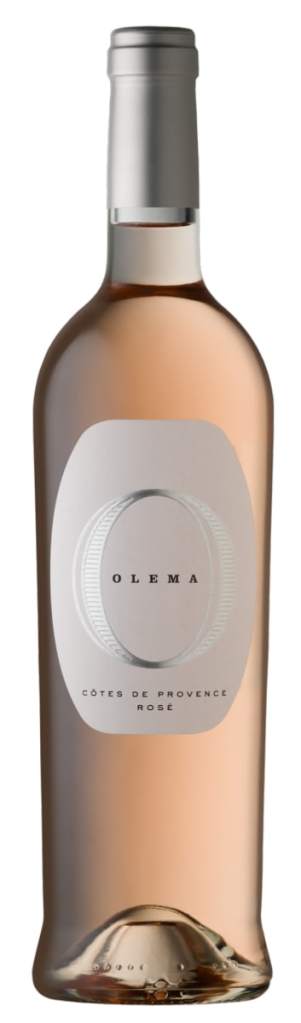
2023 Olema Côtes de Provence Rose
From the Winemaker: “Made in Côtes de Provence in the village of Vidauban in a true Provence Rosé style, the 2023 Olema Rosé opens with a nose filled with strawberries and cream, lychee, and white nectarine. On the palate, it evokes the essence of the Provençal countryside, heightened by a pronounced salinity and delicate rose undertones. The palate holds a textural, mineral-rich profile, gracefully incorporating lush ripe peaches and orange blossoms, and culminates in a well-rounded finish”.
From James Suckling, who scored it a 93: “Very floral and pretty with the typical peach and orange peel aromas and flavors. Medium-bodied, crisp and clean with a brightness and dryness at the end. Fun hints of cotton candy.”
From me: Biagi made this tasty rosé, too, because Olema and Amici are sister wineries, owned by Texan John Harris and his longtime friend Bob Shepard. It’s as Provençal as can be with grenache (50 percent), cinsault (10), syrah (10), carignan (10) and mourvèdre in the blend.
$!5.99 at http://winecom
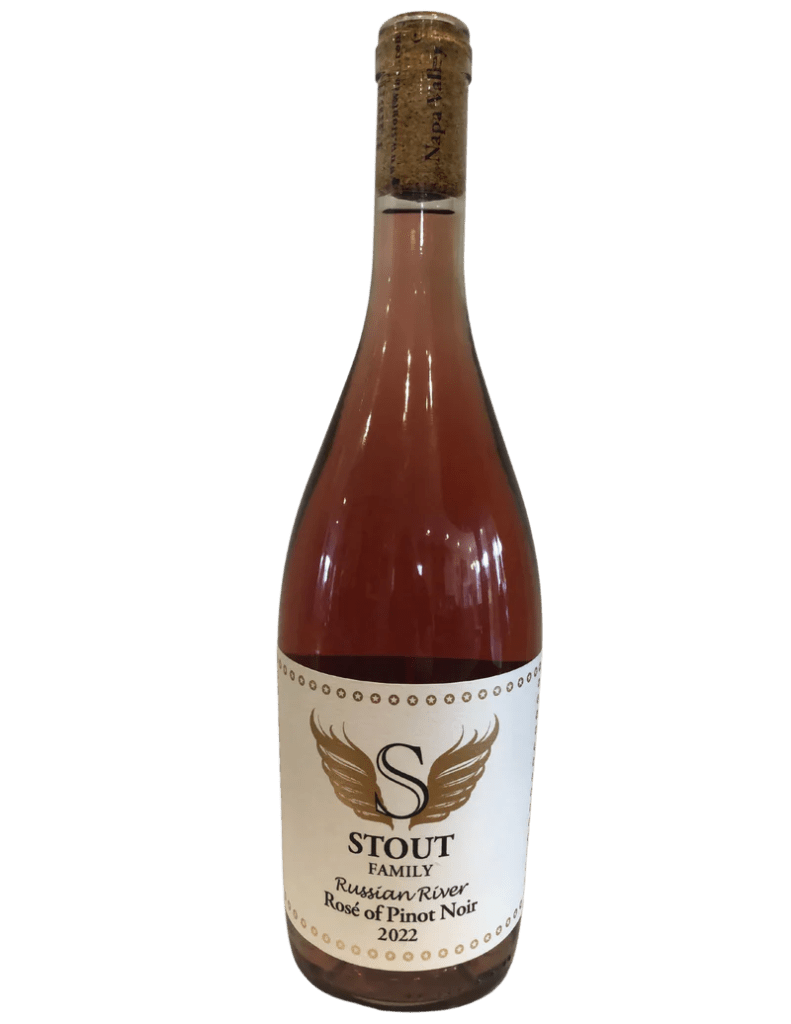
2022 Stout Family Russian River Valley Rosé
From the Winemaker: “Made from Russian River Valley pinot noir, It has a brilliant pink color with fresh bright floral aromatics and flavors of strawberry and raspberry. The finish is crisp and lively.”
From me: This is the first rosé the legendary winemaker Tom Rinaldi, who helped turn Duckhorn into the behemoth it became, has made for the Stout label and it’s, in a word, delicious. Master Sommelier Guy Stout, of course, is a Houston legend in his own right. The only bad news is that production is tiny for the moment and there won’t be a 2023 because Tom and Guy couldn’t find fruit deserving of the prices being asked.
$25 from stoutwines.com
RED

2020 Domaine de Mourchon Grande Reserve
From the Winemaker: “This wine is deep purple in color with a nose suggesting spices, licorice and cooked red fruit. The palate is full bodied with elegant fruit intensity, some spice and harmonious tannins.”
From the Wine Spectator, which scored it a 92: “Alluring and expressive, with beautiful range to the violet, plum and cherry liqueur flavors, all edged in graphite. Delivers impressive harmony and texture, with warm cedar notes rounding out the formidable palate. Reveals slightly grainy tannins that provide a firm frame. Delicious.”
From me: I’ve had every vintage of this oak-influenced grenache-syrah blend from Seguret in the Southern Rhone Valley since the first vintage came to market around the turn of the century and, through the years, the McKinlay family has become an extension of my family. Winemaker Sebastien Magnouac has been on board almost since day one and the consistency of his wines is extraordinary.
$19.95 at Spec’s

2022 Ruggero di Bardo Susumaniello
From the Winemaker: “Deep ruby red with purple shades. On the nose blueberries and ripe red fruits, underbrush and red flower, then tobacco, aromatic herbs and a light zesty sensation. Elegant and powerful, with ripe tannins, fresh and fruity, tasty and very long in persistence.”
From me: Bravo, Trader Joe’s! The chain’s partnership with the Italian D’Aquino importer always pay off with superb-value wines available exclusively at Trader Joe’s and sells for just $9.99. Like a lot of the Trader Joe’s wines, the trademark is owned by D’Aquino Italian Importing Company. It is bottled by Femar Vini , which also makes the excellent Epicuro wines for Trader Joe’s.
$9.99 at Trader Joe’s

2020 Le Petit Mouton de Mouton Rothschild
From James Suckling, who scored it a 98: “Lots of violets, blackberries, bark and iodine. Oyster shell. Full-bodied. Firm and velvety tannins with a long and satisfying finish. Juicy and reserved at the end. Chewy and soft.”
From Jeb Dunnuck, who scored it a 95: “Another powerful, concentrated wine (with) an incredibly cabernet sauvignon-driven style. Lots of blackcurrants, liquid violets, graphite, and rocky mineral notes emerge on the nose,”
From me: Yep, very expensive. You could buy 26 bottles of the Susumaniello for the same price. But it still over-delivers for the price when you consider that its First-Growth big brother Mouton Rothschild, which earned 100 points from Suckling, Decanter and the Wine Advocate for the 2020 vintage, goes for $1,059.
$259.97 at http://wine.com
-
Bubbles
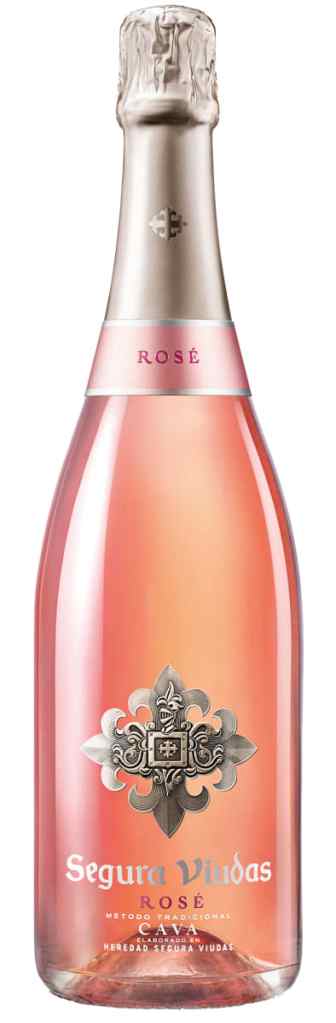
Segura Viudas Rosé
From the winemaker: “Defined by decisive flavors of cherry pith, grapefruit zest and grenadine, it possesses a subtle richness thanks to its refined mousse and textural complexity. A soft finish on the back of the palate gives a lovely, approachable balance to this Cava.”From the Tasting Panel, which scored it a 93: “Strawberry and pink grapefruit perfume the glass.”
From me: A blend of 90 percent trepat — a red grape indigenous to Catalan — and garnacha, it’s made by on an estate that dates to the 11th century, although the winery didn’t open until 1959. I can’t think of a sparkling wine that over-delivers more for the price.
$8.49 at 51 Houston, next to Costco on Richmond
Rosé
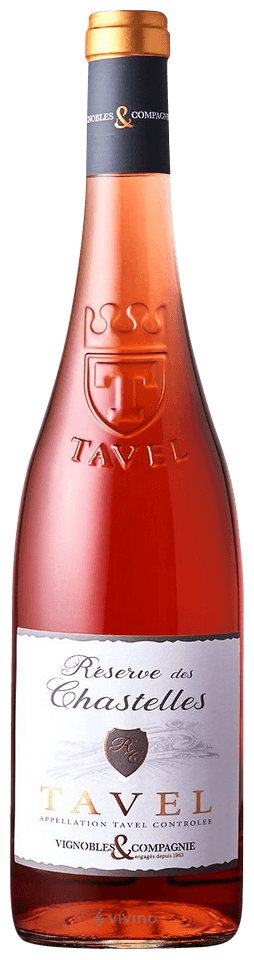
2023 Reserve des Chastelles Tavel
From the winemaker: “A pure salmon pink color, this Tavel combines subtle aromas of red fruit and toasted almonds. Best as an aperitif or paired with white meat and soft cheese.”
From me: With its body and structure, this has been my sipping find of the summer. Tavel is the only appellation in the Rhone Valley which makes rosé only and the prices generally tend to reflect the famous terroir. Here’s an exception, however. It’s hard to drink better for 11 bucks.
$10.99 at Trader Joe’s
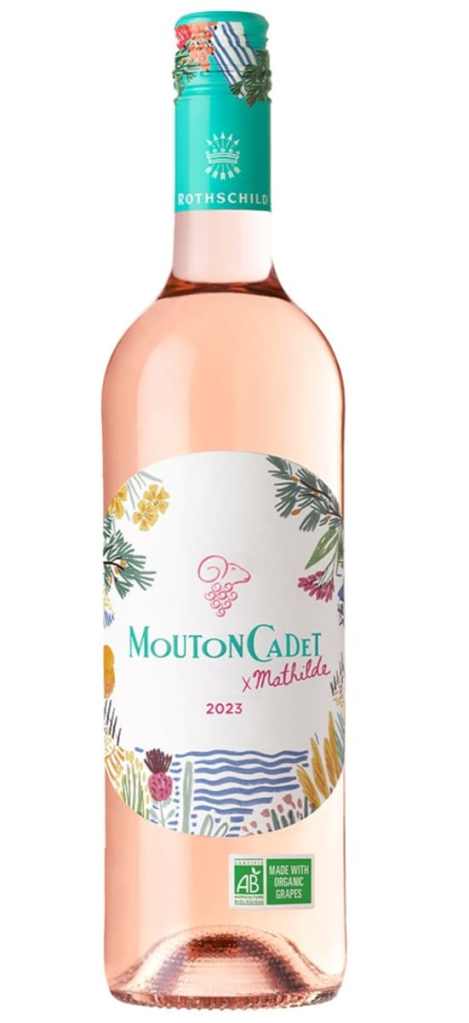
2023 Mouton Cadet Mathilde
From the winemaker: “Scintillating appearance, rather pale tea-rose pink. The nose opens on aromas of red fruit such as redcurrant and wild strawberry, followed with airing by raspberry and a hint of pink grapefruit. A fruit-forward attack on redcurrant and raspberry leads into a nicely balanced mid-palate lifted by fresh citrus flavors, especially grapefruit, while the finish reveals more floral notes reminiscent of lily-of-the-valley and violet.”From Decanter, which scored it a 91: “Very promising nose, displaying scents of dried thyme, tomato leaf, white peaches, raspberry and orange zest. Vibrant, with some weight.”
From me: Baron Philippe de Rothschild introduced Mouton Cadet in 1930 to bring Bordeaux wine to a wider audience than could afford his Grand Cru bottles. This more recently launched lineup honors the Baron’s grandchildren. Mathilde’s name is on the rose, which offers a satisfying range of flavors.”
$18.99 at http://wine.com

2023 Ile de Conas Le Rose
From the winemaker: “This unique Mediterranean blend is succulent with a delicate, tongue-tingly zest. Bursting with flavors, it can be served as a pre-dinner drink or paired with salmon teriyaki, zucchini, carpaccio or Mediterranean salad.”From me: Another super steal from the Trader Joe’s lineup, this estate is Paul Mas’ first in the Languedoc. Note that the Wine Enthusiast named Paul Mas’ operation French Winery of the Year for 2021.
$7.99 at Trader Joe’s
White
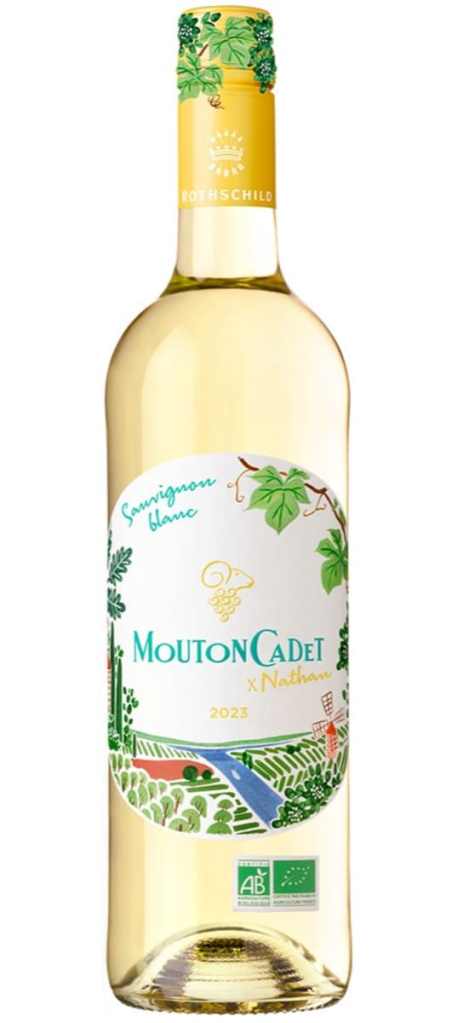
2023 Mouton Cadet Nathan Sauvignon Blanc
From the winemaker: “Golden in color, with a slight ivory hue. The nose opens on citrus aromas, especially lemon and grapefruit, then with airing develops hawthorn and jasmine notes as well as a touch of fresh apricot. From a fresh attack on Kaffir lime flavors with a hint of aniseed, the mid-palate expresses the elegance of the floral notes found on the nose, leading into a finish that lingers on hints of licorice.”From Decanter, which scored it a 90: “Lovely nose with aromas of almond blossom, linden tree, fresh cut red apple and pure lemon. Attractive richness, well-defined finish.”
From me: Nathan’s white is no less appealing than Mathilde’s pink. I’m really excited to have been introduced to these wines, made from grapes purchased from multiple growers in Bordeaux.
$18.99 at http://wine.com
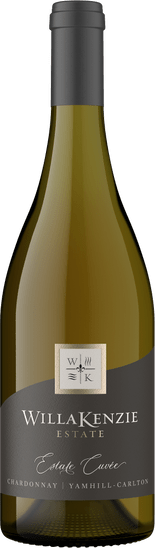
2021 WillaKenzie Estate Estate Cuvee Chardonnay
From the winemaker: “Pure and energetic palate with wonderful salinity and creaminess and a long, snappy finish.”From James Suckling, who scored it a 92: “Aromas of citrus and flowers, with a concentrated palate and bright acidity. Light- to medium-bodied with notes of sliced lemons and honeysuckle. Ends with a tangy and refreshing finish. This is an enjoyable and interesting wine that sees approximately 25-percent new oak.”
From me: The’s elegant, nuanced flavors impressed me from the first sip on. Of course, at this price, I should have been wowed, and I was.
$75 at http://willakenzie.com
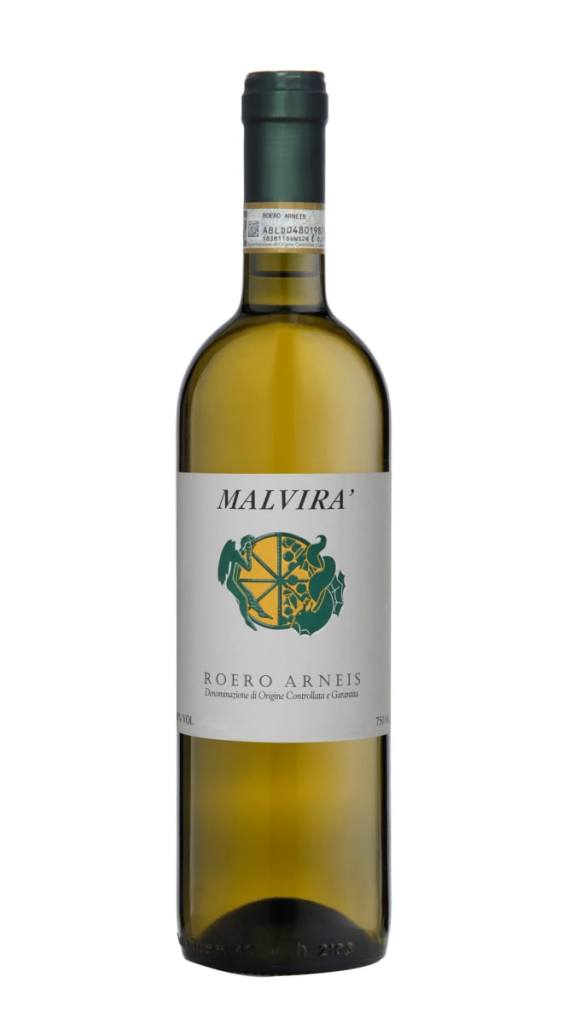
2021 Malvira Roero Arneis
From the winemaker: “Lifted and fresh on the nose with notes of white blossoms and snappy fruits. On the palate, the wine gives way to stone fruits and hints of melon before finishing with a zip of refreshing acidity. The finish is clean but long and showcases this classic vintage perfectly.”From me: Winemaker Roberto Damonte’s father Giuseppe established the winery in 1950, when the Roero region was a true backwater. But he understood the terroir’s potential and Roberto, along with his brother Massimo, have created a world-class property with 100 acres of organically-farmed vines that’s also home to a gorgeous boutique hotel, the Villa Tiboldi. The Damontes have played a significant role in saving the varietal from near extinction in the 1980s. This wine accounts for almost half of their production and most of the fruit comes from the Renesio cru, where arneis is said to have first been identified in 1478, and also the Trinita cru with its stony calcareous soils that give the wine nice minerality.
$18 at AOC Selections
Red
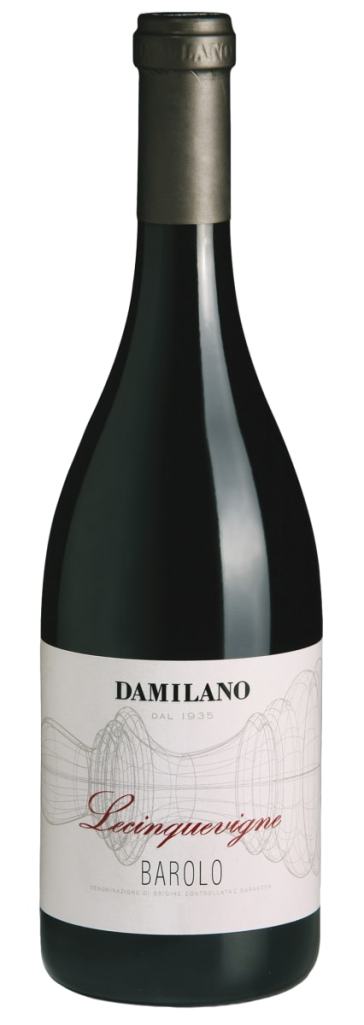
2019 Damilano Lecinquevigne Barolo
From the winemaker: “Ruby red in color with orange reflections. An intense bouquet with tertiary notes of rose, leather, tobacco and emerging notes of violet and tar. The palate is ample and embracing, with prevailing impressions of a soft, persistent long finish.”From the Wine Advocate, which scored it a 93: “With fruit from Brunate, Liste, Cerequio, Cannubi and Raviole, this wine offers an appellation-wide taste of nebbiolo, and the focus, consequently, is on the grape more than any single vineyard. These kinds of blends work very well in a vintage like 2019 that holds its own in terms of balance, intensity and texture. It’s a little subdued on first nose and would benefit from more time in bottle. “
From me: Giuseppe Borgogno began growing grapes and making his own wine more than 100 years ago and his son-in-law, Giacomo Damilano, would create the modern business, now run by four grandchildren. The winery is adjacent to the one-star Michelin restaurant Massimo Camia (which you read about in my previous blog), on the valley floor below La Morra. It’s my new go-to Barolo because of the price. Again, can’t thank you enough, Trader Joe’s.
$35.99 at Trader Joe’s
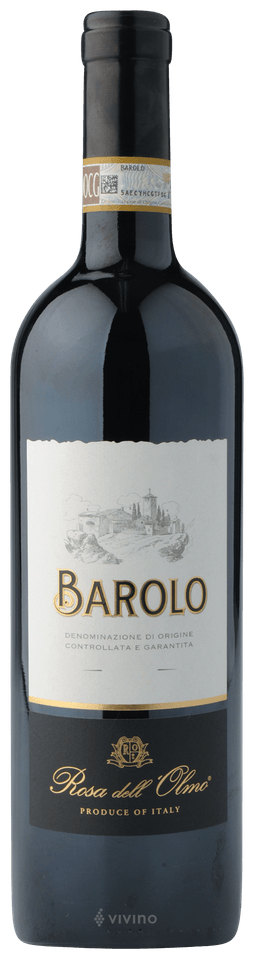
2020 Rosa dell’Olmo Barolo
From the winemaker: “Following a traditional vinification process, our Barolo spends at least 18 months ageing in oak barrels, during which the tannin and extracts necessary to form its noble and long-lasting structure become richer. This is followed by a period of bottle aging. Its color is deep ruby red tending towards garnet and the bouquet is both pleasant and intense, reminiscent of withered roses and violets. On the palate the wine is dry, full, robust and austere, yet also velvety and harmonious.”From me: I’ve tasted many better Barolos, but I’ve never tasted one this good that’s so inexpensive. A superb red wine for the price!
$15.99 at Trader Joe’s
-
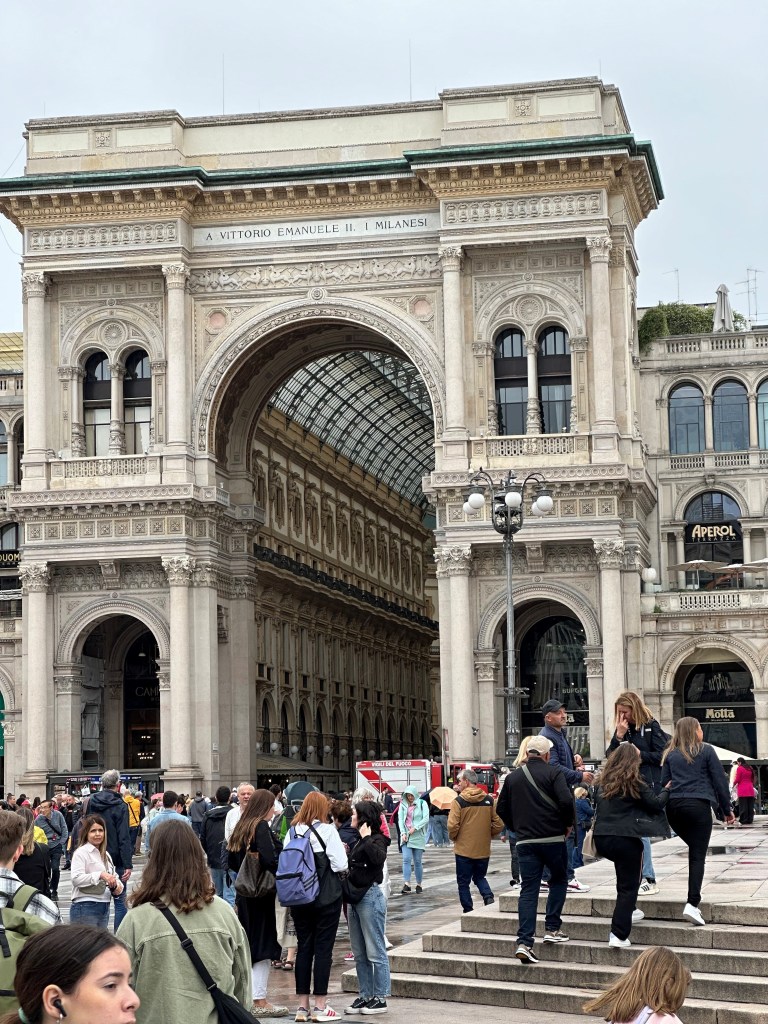
I recently spend nine days leading friends on a tour of my favorite wine region, which included stops in two of Italy’s greatest cities, Turin and Milan. The former I knew a bit from having covered the Winter Olympics there in 2006 for the Houston Chronicle. The latter was largely a blank canvas for me because, when I’m in Europe, I generally go to extreme lengths to avoid major traffic-choked metropolitan areas.
Why? Because I live in one in Texas. Enough is enough.
However, you may now call me a fan of Milan. It was a crazy weekend to be there, on what amounted to Italy’s Fourth of July, but the weather was perfect — fairly cool, no smog, no clouds — and the energy was off the charts. The Galleria shopping area (pictured above) was teeming with celebratory folks, the bars were jammed and the ubiquitous fashion boutiques were all open. I could have shopped til I dropped except for the price tags on the stuff I was drooling over. I mean, who spends $5,500 on a sports coat even if it’s a Brunello Cucinelli? Pas mois.
Anyway, since this is a wine-and-food-centric blog, I’m going to keep it simple and share links to those spots that deserved a five-star rating. Pretty much every place we wined and dined did, too. Chronologically:
Contesto Alimentare, Turin — From the Michelin guide, which gives it “Bib Gourmand” status: “Situated on the central Via Accademia Albertina, this small, simple and unfussy restaurant with small tables set close together serves top-quality Piedmontese cuisine. Alongside its delicious regional specialities, the menu also features dishes from elsewhere in Italy, including Sicily. The tajarin pasta made from 40 egg yolks and served with a veal ragu is superb, as are the rabbit and pork belly dishes. There’s a focus on meat options, followed by some delicious desserts, which include specialities from Piedmont such as panna cotta and typical bacio di dama biscuits.” contestoalimentare.it
Ristorante Savure, Turin — We learned all about pasta making here, then ate more great pasta than I thought possible in a single seating. In effect, we had six main courses, all of them excellent. Better still, it’s amazingly inexpensive considering the quality. https://www.savure.it
Caffè Gelateria Pepino, Turin — Opened in 1884, when it was given a royal warrant to supply the House of Savoy, it claims to be the oldest gelateria in Italy and the setting on the Piazza Carignano is perfect. The gelatos are sublime, of course, and a full bar adds to the appeal. A special treat was Amista Vermouth (you read about same in my last posting) over a scoop of vanilla. Mama mia! Pepino is also famous for inventing the Pinguino, gelato on a stick covered in chocolate. gelatipepino.it
Le Quattro Stagione, Saluzzo — Although I didn’t personally dine with my group here, some felt this was the best restaurant experience they had over the entire tour. Dreamy Saluzzo is in the foothills of the Alps just below Monte Viso and the resto, set in an historic 17th century building, checks all the boxes, especially for value. I’ll be dining there the next time I’m in Italy, guaranteed. http://ristorante4stagione.com
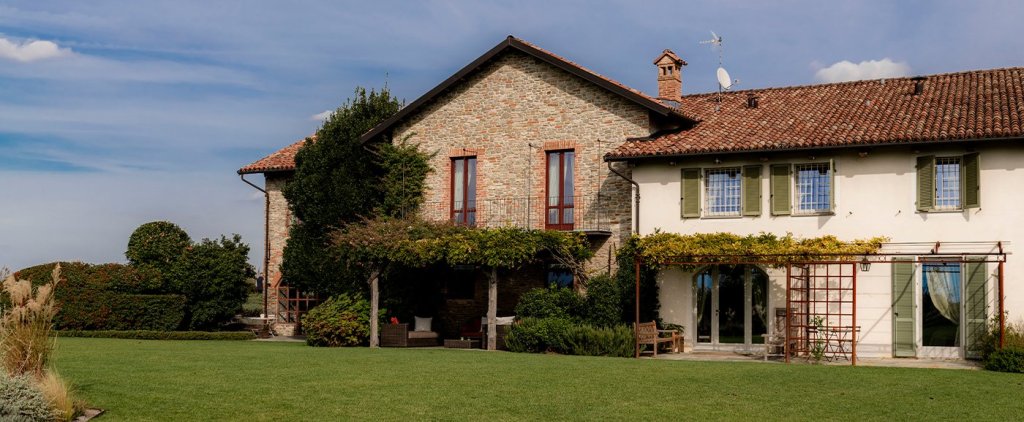
Poderi Luigi Einaudi, Dogliani — A superb producer founded by Luigi Einaudi, who was elected the first president of the Italian Republic after World War II, the winery’s magnificent hilltop site also includes a lovely boutique hotel, the Relais Luigi Einaudi (shown above). I can’t think of a more beautiful, well-situated place to stay while exploring the Langhe. The tasting room offers to floor-to-ceiling windows with views of the grounds and the surrounding vineyards. poderieinaudi.com
Locanda del Sorriso, Dogliani — Dogliani, with its gorgeous cathedral, is a seriously underrated town in the Langhe, and this gorgeous resto proved to be a terrific find. Sorriso means “smile” and we did plenty of that while dining. The wine list, of course, features the best Dogliani dolcettos. lalocandadelsorriso.com
Ceretto, San Cassiano — I’ve been friends with the Cerettos since the mid-1990s and have witnessed their remarkable evolution through the years. While the wide range of wines have always spoken for themselves, the modern tasting room with its “Grape” overlook is second to none, as is the tasting experience. And you can buy everything on site, including some rare single-vineyard wines. ceretto.com
Massimo Camia, La Morra — Michelin gives it a star. Here’s why: “In this restaurant decorated with modern furnishings, the attention is drawn to the picture windows offering fine views of the La Morra hills and the surrounding countryside. The cuisine prepared by Massimo Camia and his daughter Elisabetta includes classic favorites from the chef’s much-loved repertoire, such as the delicious rack of lamb beautifully presented on Luserna stone and served with a barbeque sauce, as well as other elegant dishes, including a few fish options. The excellent selection of Piedmontese cheese is also worth a mention. The chef’s sommelier son Lacopo skilfully and enthusiastically guides guests through the encyclopaedic wine list which includes an extensive choice of Barolo wines and other local labels.” massimocamia.it
Ristorante Modda, Monforte d’Alba — A driving rainstorm made our arrival down a narrow pathway a bit treacherous and kept us from dining on one of the most attractive patios you’ll find anywhere, but, once inside . . . paradise found. The food was universally praiseworthy and the ambience unbeatable. modavenue.eu
Poderi e Cantine Oddero, Santa Maria — Located in a tiny hamlet with a most-impressive church below the hilltop town of La Morra (pictured above), it’s the consummate family winery, dating from 1878 when Giacomo Oddero first bottled the wines in 1878. The current winemaker, Maria Christina, was among the first women to oversee a cellar in the Langhe. Her excellent wines are sold on site, too. oddero.it
Trattoria Il Risorgimento, Treiso — While it almost qualifies as what we Texans call “a hole in the wall,” the food is first-rate and the wine list diverse. Chef/owner Gioele, who’s as local as local gets, may be soft-spoken, but he carries a big stick. We could hear him dressing down Treiso’s mayor while we were lunching because of the noise being made by the machines re-painting street lines beyond the patio. The ruckus quickly stopped. trattoriarisorgimento.it
La Piola, Alba — This is my favorite trattoria anywhere, end of conversation. Situated on the Piazza Risorgimento across from Alba’s Duomo, it offers all the Piemontese classics — the vitello tonnato, agnolotti and tajarin are my holy trinity there — and has a superb wine list to boot. Enrico Crippa, who has earned three Michelin stars for his Piazzo Duomo one floor up, oversees this kitchen, too. lapiola-alba.it

Piazza Duomo, Alba — Crippa, whose food is equal parts edible and artistic as the photo above illustrates, is one of the world’s best chefs and this stylish spot, with its Francesco Clemente mural on the pink main dining-room walls, is most-deserving of its three Michelin stars. We did a lunch there, which offered incredible value at 170 euros per person for four courses. (But Crippa’s justifiably famous salad with upwards of 50 ingredients during high season is a lunchtime add-on for 50 euros.) The Michelin Guide’s assessment: “What is obvious in every single, delicious bite is the chef’s passion for plants, with vegetables, flowers, wild and cultivated herbs harvested daily all featuring in memorable, beautifully presented dishes. The iconic appetisers featuring countless delicious ingredients are a feast for the eyes and the tastebuds alike and were particularly enjoyed by our inspectors. It hardly needs mentioning that this region is passionate about wine, so it’s not entirely surprising that the restaurant offers three different wine lists: Solopiemonte pays superb homage to the region, while Tuttoilresto (divided into two options, white and red) is a celebration of French wines. The efficient and enthusiastic serving staff succeed in taking good care of guests without being excessively formal.” piazzaduomoalba.it

Pio Cesare, Alba — The only winery located in Alba proper and also the only one allowed to produce Barolo outside of the Barolo DOCG because of its historic status, it has a magnificent cellar (shown above) split by a for-real Roman-built wall . Since 1881, five generations of the same family have presided over the Pio Cesare up through the current director, 27-year-old Federica Pio Boffa, who took over for her larger-than-life father, Pio Boffa, after he died of complications from COVID-19 in 2021. Don’t let Federica’s age fool you. She’s got the right genes. piocesare.it
Barolo Bar, Monforte d’Alba — We opted for the elevated outdoor patio across the street from the main bar, which features live music after 8:30 on Wednesday nights, and we weren’t disappointed. Owner Silvia Aiassa’s Langhe-centric wine list is expansive and the small bites were delicious. If you op to take in the tunes, you must order a full meal. Coming off the Piazza Duomo experience, that seemed a tad excessive.
La Baia di Moltrasio, Moltrasio — On the shore of Lake Como, this cozy spot with its eclectic, inventive menu proved a superb find on a night that became too windy and rainy to take our scheduled boat ride. No regrets, to be sure. They had me with the asparagus,egg and parmigiano appetizer. labaiadimoltrasio.com
Senato Caffe, Milan — This lovely wine bar in the Senato Hotel puts Franciacorta front and center, and it thereby saved us a drive to Franciacorta country, about 40 miles east of the city. Thanks to a partnership with the Franciacorta consortium, the wine list offers a superb selection of Italy’s best bubbles, which were the first in Italy to be made exclusively with a second fermentation in the bottle. Franciacorta and its 7,500 acres of vineyards of chardonnay, pinot noir and pinot blanc, has had DOCG status since 1995. senatohotelmilano.it
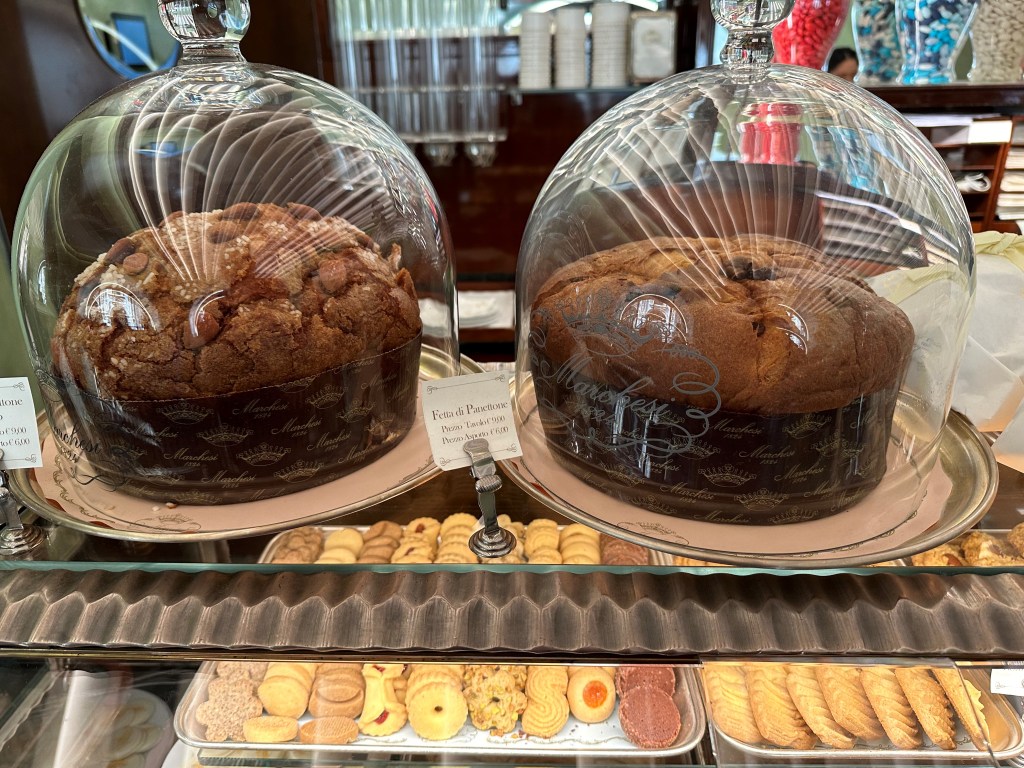
Marchesi 1824, Milan –– This extraordinary bakery, which has been in business since 1824, offers the best panettone I’ve ever tasted — by far — and is said to have invented this famous leavened Christmas cake (pictured above). Marchesi’s is made with raisins from Sei Corone, naturally candied fruit, Bourbon vanilla from Madagascar, Italian honey, and eggs from free-range chickens. The other pastries looked no less fabulous, too. marchesi1824.com
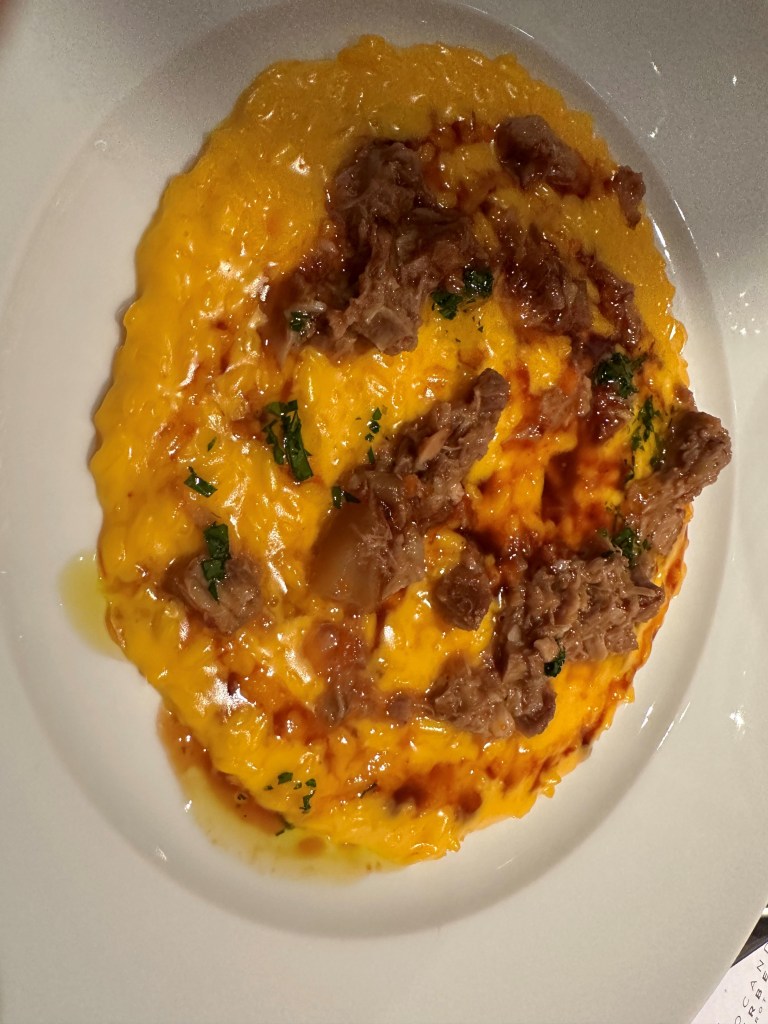
Locanda Perbellini, Milan — With a kitchen overseen by the highly acclaimed, Michelin-starred Veronese chef Giancarlo Perbellini, this stylish, high-energy off-shoot osteria in Milan’s fashionable Brera district offers an eclectic menu featuring classic dishes from all over Italy. The divinely creamy, perfectly textured seafood risotto blew me away. locandaperbellini.it
Il Marchese Osteria, Milan — The most beautiful stop on our culinary adventure with excellent live music to boot (at least on Saturday nights), its Roman food played to somewhat mixed revues within our group, but I’ve never had a better carbonara pasta (pictured above) anywhere. Note that its sister restaurant in Rome has a Michelin star. ilmarchesemilano.it
H-town happenings
Fireworks! Best of the ’80s covered by the Spicolis — 8:30 p.m. Thursday, July 4, at Deep Roots Vineyard in Plantersville. $24. http://eventbrite.com
Summertime UNCORKED — 2 p.m. Saturday, July 20, at Barcelona Wine Bar. $65. http://eventbrite.com
Wine Symposium — 4 p.m. Saturday, July 20, at Stella’s Wine Bar in the Post Oak Hotel. $75. http://eventbrite.com
Cheers for Charity — 4-7 p.m. Saturday, Aug. 17., at Red Oak Ballroom Norris Meetings & Event Center. $65-$125. http://cheersforcharity2023.eventbrite.com
Follow meInstagram: http://@sportywineguy
Facebook: Dale Robertson

Podcast: Sporty Wine Guy, wherever you get your podcasts. That’s me with my sidekick Jeremy Parzen above. A new one will drop soon, as soon as we both have our feet back on the ground in H-Town.
Friends of mine to follow
Sandra Crittenden: http://winelifehousthon.com
Russ Kane: http://vintagetexas.com
Jeffrey Kralik: http://drunkencyclist.com
Katrina Rene: http://thecorkscrewconcie
-
Although I portend to be a food maven and a wine expert, I am reminded on an almost daily basis how much there is still to be learned. As the saying goes, I don’t know what I don’t know. But, dammit, the quest for knowledge continues unabated as my 72nd birthday approaches.
The last two months spent in the South of France and Northwest Italy significantly broadened my horizons. These are neighborhoods I have frequented annually (except during the COVID lockdown of 2020) for three decades now, but so many stones — both the real ones in vineyards and the metaphorical kind — remain unturned.
A first-ever visit to the wine museum in Barolo proved especially fruitful, pardon the pun, because of the expansive chronology of wine history presented in one fascinating exhibit. According to same, Palaeolithic and Mesolithic hunter-gatherers around 11,000 BC were the first to discover that alcoholic fermentation occurred in sugary substances. Initially, alcoholic beverages were probably made from fermented tree sap and a heady honey-based drink called hydromel.
But grapes growing on wild vines, which likely grew as weeds in land cultivated by the earliest farmers, proved a better option because it fermented so easily. Also, grapes prevailed over other pulpy fruit because the vines could be reproduced by taking cuttings, or shoots, that had the desired characteristics rather than by planting seeds. Around 10,000 BC Neolithic farmers began to cultivate vineyards between the Caspian and Black Seas, where varieties bearing the largest fruits were most abundant.
Domestication of the grapevine was completed in Anatolia, where the abundant berries became integral to the economies of the earliest urban societies. The best domestic cultivares, which is to say the vinifera varietals, gradually spread to the west, from continental Greece to southern Italy to southern France and then the Iberian peninsula. In each, new centers of domestication emerged.
And the rest, as we say, is history.
Now let’s talk about vermouth. I always believed it was a fortified wine whose roots were French. Wrong and wrong. Rather, it’s an herbally-infused aromatised wine — with an alcohol content of less than 20 percent — that was born in Turin, although the name “vermouth” is the French pronunciation of the German word Wermut for wormwood, which was long used as the primary ingredient in the drink before being largely banned in the early 20th century for health reasons.
Fortified wines containing wormwood as a principal ingredient emerged in Germany during the 16th century. At about this time, an Italian merchant named D’Alessio began producing a similar product in the Piemonte as “wormwood wine”. Martini & Rossi, the top-selling international brand of vermouth today, would be founded in 1863 in Turin by businessman Alessandro Martini, winemaker Luigi Rossi and accountant Teofilo Sola. When the Sola family sold out in 1879, and the company became known as Martini & Rossi. Martini, of course, would also give his name to the world-famous cocktail, of which vermouth has always been a signature ingredient.
Noilly Prat, founded by Joseph Noilly a half century earlier and based in southern France, is primarily known for its dry, pale vermouths that are more commonly used in martinis. Sweet red vermouth is, in turn, an essential ingredient for making a Negroni along with Campari and gin.
Spices commonly found in vermouth formulas — closely guarded secrets by every major producer — include cloves, cinnamon, quinine, citrus peel, cardamon, marjoram, chamomile, coriander, juniper, hyssop, ginger, labdanum and quinine, although the latter is more famously used these days to make Barolo Chinato, a delicious after-dinner digestif that, sadly, can be difficult to find in the Houston area.
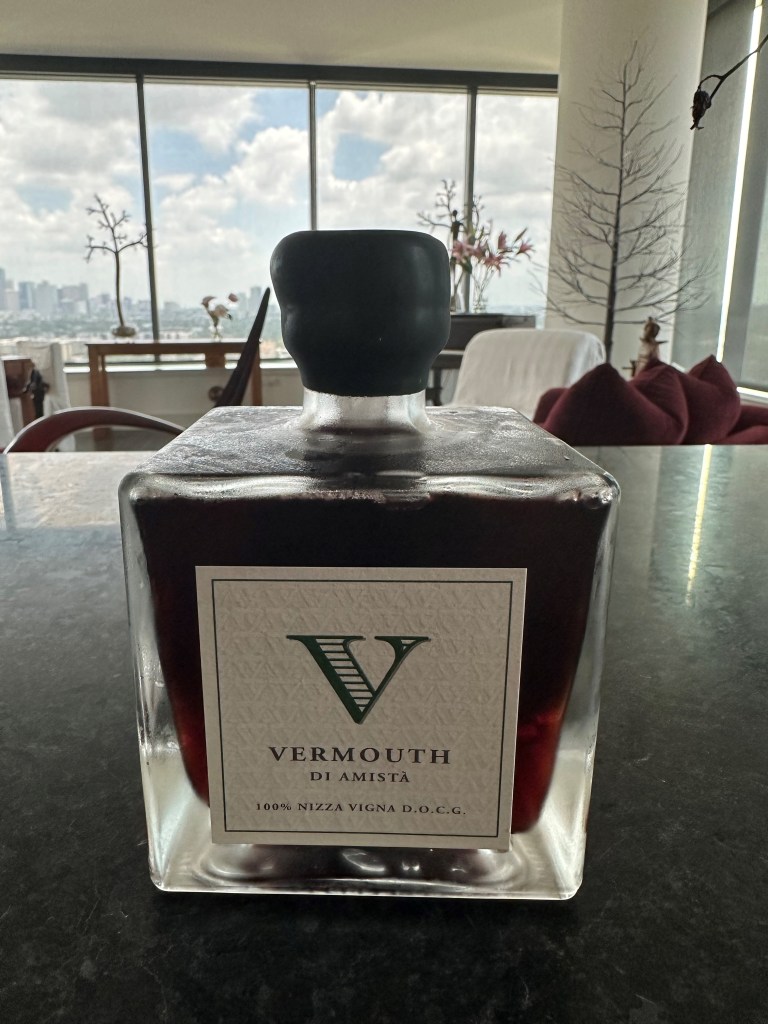
A new favorite vermouth of mine is from Àmista (https://amistapiedmontwine.com), a winery that has been at the forefront of putting Nizza Monferrato on the map as a Grand Cru DOCG for barbera. The same high-quality barbera grapes are used in the vermouth production, too. I’m hoping it will soon be available in the Houston market.
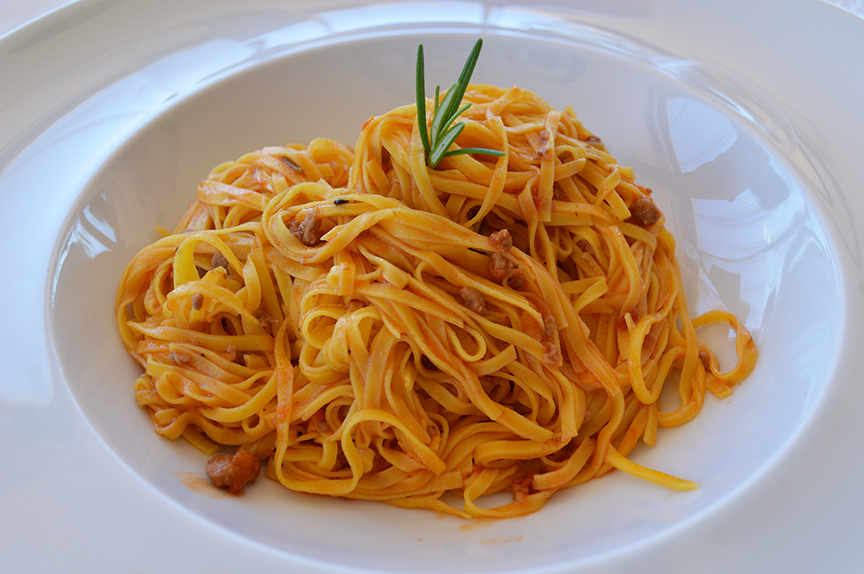
As for my big food discovery, a pasta-making “class” I attended in Turin as part of a tour I was helping lead revealed this factoid: Pastas from northern Italy always include egg yolks, while pastas from southern Italy rarely do. Regarding the former, the famous Piemontese tajarin, pictured above in all its glory, must have a minimum of 24 yolks per kilogram of dough, and some show-off producers use up to 40. #yum!
The Sports Page
Raising a glass to . . . Rudy T and the Rockets of yore
It was 30 years ago this month that the Choke-Turned-Clutch City gang claimed Houston’s first major championship at the expense of Pat Riley and the Knicks. Tomjanovich had starred as a Rocket himself, reaching an improbable NBA Finals in 1981, then eventually closed the deal as a coach. A repeat title followed in 1995 and he eventually earned his rightful place in the Basketball Hall of Fame, joining two of his stars, Hakeem Olajuwon and Clyde Drexler, there.
Pouring one out for . . . Bill Walton
He was a great baller-turned-first-rate broadcaster with a huge heart and a social conscience to match. A three-time collegiate player-of- the-year and twice national champion at UCLA, he became an NBA champion and MVP too before injuries derailed what would still be a Hall-of-Fame career. He claimed a second ring as a Celtic at the expense of the Rockets in 1986. The good they die young. He was born in the fall of 1952, not quite two months after me. Damn.
And for . . . Willie Mays
The “Say-Hey Kid,” the consummate ball player/entertainer, made it to 93 and was the oldest living Hall-of-Famer when he died. But Mays will stay forever young in my memory. He was my boyhood hero and, as a freshman at the University of Houston in 1970, I walked — walked! — from the UH campus to the Astrodome to see him play live in a regular-season game for the first time, 19 years after he had been a NY Giants rookie. Call it a religious pilgrimage. In my mind, and a lot of other minds, too, he’s baseball GOAT. End of conversation.
H-town happenings
Caymus 50th Anniversary Wine Dinner — 7 p.m. Thursday, June 27, at The Grotto Downtown. $150. http://eventbrite.com
Fireworks! Best of the ’80s covered by the Spicolis — 8:30 p.m. Thursday, July 4, at Deep Roots Vineyard in Plantersville. $24. http://eventbrite.com
Summertime UNCORKED — 2 p.m. Saturday, July 20, at Barcelona Wine Bar. $65. http://eventbrite.com
Wine Symposium — 4 p.m. Saturday, July 20, at Stella’s Wine Bar in the Post Oak Hotel. $75. http://eventbrite.com
Follow meInstagram: http://@sportywineguy
Facebook: Dale Robertson
Podcast: Sporty Wine Guy, wherever you get your podcasts. That’s me with my sidekick Jeremy Parzen above. A new one will drop soon, as soon as we both have our feet back on the ground in H-Town.
Friends of mine to follow
Sandra Crittenden: http://winelifehousthon.com
Russ Kane: http://vintagetexas.com
Jeffrey Kralik: http://drunkencyclist.com
Katrina Rene: http://thecorkscrewconcie
-
White
2022 Landmark Vineyards Damaris Reserve Chardonnay
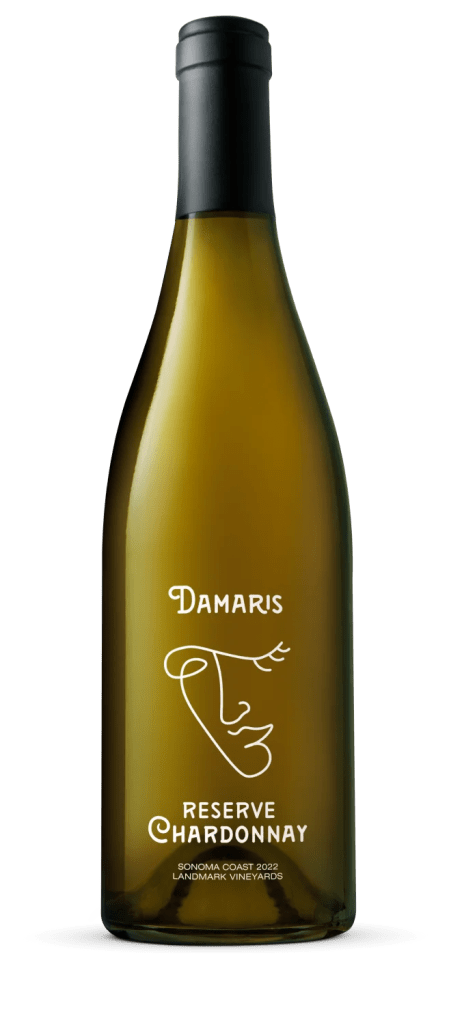
From the winemaker: “It’s a blend from the Flocchini Vineyard in the Petaluma Gap AVA and the Kiser Vineyard in the Western Sonoma Carneros AVA. The ever-present cooling winds of the San Pablo Bay dictate the climate for a moderately cool and highly desired long growing season. The combination of clone, climate, and, ultimately, harvest timing decisions, allow the chardonnay fruit for this blend to develop fully mature flavors while maintaining fine balance and acidity.”
From me: The late Damaris Deere Ford, the great-great-granddaughter of the tractor magnate John Deere, founded the winery in the Sonoma County foothills of the Mayacamus mountain, half-century ago, and the first Damaris was released 14 years later, in 1988, as an homage to her. Classically Californian in style, it has been presented at White House dinners under three presidencies.
$50 at http://landmarkwine.com
Red
2019 J. Lohr Signature Cabernet Sauvignon

From the winemaker: “The cabernet from this vineyard ripens early with excellent color, purity of fruit, and phenolic maturity. Adding the rare Bordeaux variety Saint-Macaire to the blend brings dense savory elements, while a small amount of Malbec contributes bright fruit notes to the finish.”
From the Wine Enthusiast, which scored it a 95: “Nearly opaque in the glass, this luxury-level bottling lays all of J. Lohr’s extensive tools on the table, and succeeds with an intense, complex package. Aromas of dark fruit, densely packed flowers, cocoa and coffee leads from the nose into a palate wrapped in expertly polished tannins. They’re firm, but relent at the right time to allow cassis, graphite and cappuccino flavors to shine.”
From me: Jerry Lohr also founded his eponymous winery in 1974, a very good year it would seem. (My wife Debbie and I will be celebrating our 50th anniversary, too, in June!) Lohr planted his first vines in Monterey in 1972 and followed suit in Paso Robles in 1986. Today J. Lohr has more than 4,000 acres under vine in Monterey’s Arroyo Seco and Santa Lucia Highlands appellations, Paso Robles, and St. Helena in the Napa Valley. This big, expressive cab is the family’s flagship and never fails to deliver the goods. If anything, it’s underpriced.
$100 at http://jlohr.com
2020 Sallier de la Tour Nero d’Avola Sicilia

From the winemaker: “Arguably the most well-known grape from Sicily, Nero d’Avola is perfectly suited for the island’s terroir given its ability to thrive in saline-rich soils and maintain its acidity in the heat. Low yields guarantee a high quality and concentrated harvest. Choosing to age wine partly in wood and partly in steel tanks, allows the wine to display the fresh and fruited notes of a young wine as well as elegant, spicy and licorice aromas of wines with more aging potential.”
From James Suckling, who scored it a 91: “Firm and lightly chewy with earth and spice and some mushroom undertones. Medium body, solid tannins and a fresh, savory finish.
From me: Located on the outskirts of Palermo in the Alto Belice, where the Monte Jato archaeological park presents structures built by the ancient Greeks, Sallier de la Tour has itself been around for more than a century with the La Monaca winery having been completed in 1909. The modern era began in 2008 when Filiberto de la Tour approached his cousin, Alberto Tasca, with the idea of joining forces with the renowned Tasca d’Almerita family of wineries.Under the current manager, Costanza Chirivino, the winery farms all its grapes sustainably.
$16.99 at http://wine.com
2022 G. D. Vajra Barbera d’Alba

From the winemaker: “Lively purple red in color, the nose opens with loads of raspberry and blackberry, purple flowers and a reminiscence of dark fig. The palate is juicy yet fragrant, with enticing and thirst-quenching red and purple fruits.”
From the Wine Advocate, which scored it a 90: “Nicely concentrated with dark cherry fruit, blackberry and cinnamon-like sensations from the grape skins. With that extra density comes extra fruit weight and a powerful (15 percent) alcohol content. The wine does carry muscle for sure, but the results are firm and tight.”
From me: Another wine from an historic winery. The Vajras have farmed Bricco delle Viole, the highest cru in Comune di Barolo, since the 1880s. At the age of 15 — yes, 15 — Aldo Vajra took over the estate in 1968 and by 1971 had acquired the first organic certification in the region, then subsequently created private biotype selections of nebbiolo and dolcetto, pioneered the renaissance of the nearly vanished freisa varietal and began cultivating Rhine riesling.
$26.99 http://wine.com
2019 Zenato Alanera Rosso Veronese
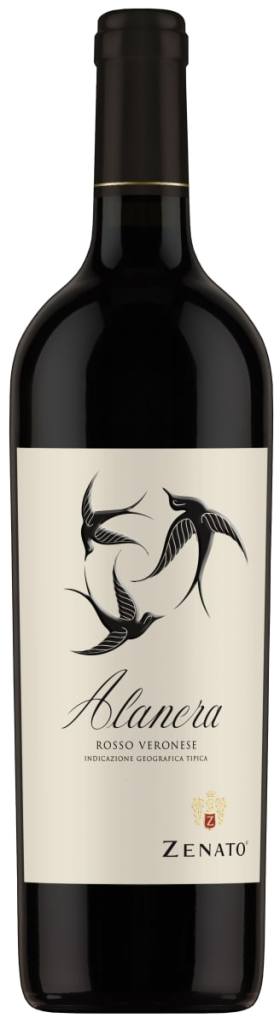
From the winemaker: “Brilliant ruby in color, theAlanera delights the senses with a variety of aromas and flavors that include fresh and dried cherries and prunes, sweet spice, and hints of coffee and tobacco. On the palate, Alanera is full-bodied with elegant and velvety tannins. Vibrant acidity brings balance and freshness, and supports a long and harmonious finish.”
From the Wine Enthusiast, which scored it a 91: “Aromas of black plum and blueberry pie. Though not an Amarone, the winery partially dries 50 percent of the grapes for a few months creating a wine made from both fresh fruit and dried fruit, creating a wine that’s lush and rich on the palate, but vibrant and intense in equal proportions. It’s silky smooth, with a long finish of spiced plums and dried herbs.”
From me: Sergio Zenata’s winery occupies a prime spot near Lake Garda, where corvina thrives, although this complex wine includes rondinella, corvinone, cabernet sauvignon and merlot in the blend. The wine ultimately spends 12 months in a mix of French oak barrels and stainless steel tanks.
$17.95 at http://vivino.com
2021 Flora Springs Trilogy
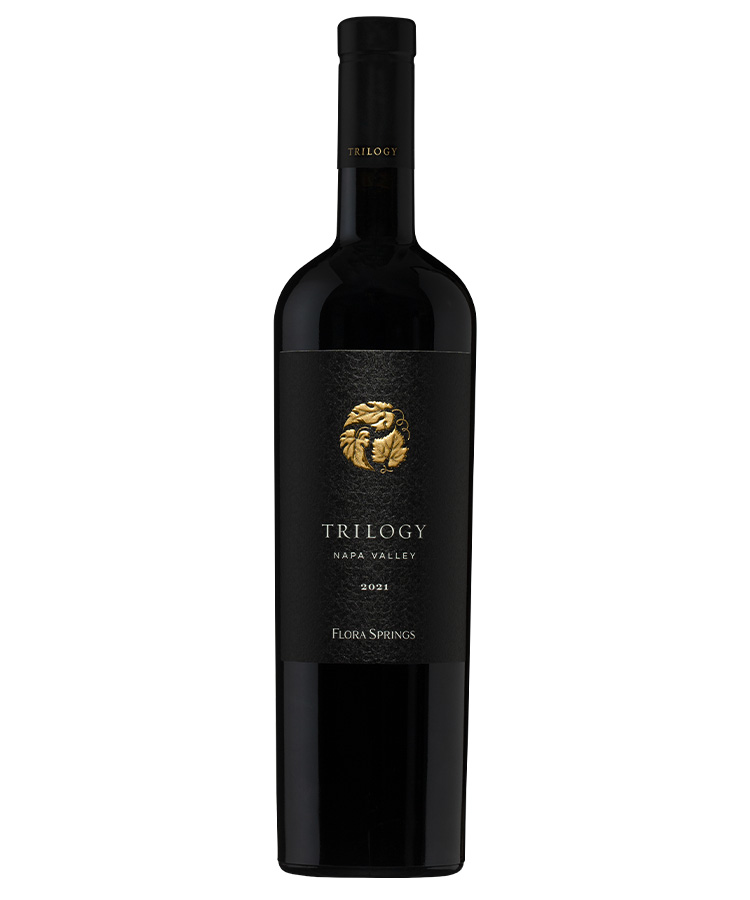
From the winemaker: “A dark, concentrated rendition of our most iconic wine, this bottling is redolent of warm, brambly blue and black fruits and metered aromatics of mint, eucalyptus and cola berry. It’s sleek, focused and concentrated, with supporting tannins that bring a refined element to the wine’s finish.
From: Jeb Dunnuck, who scored it a 94: “Medium to full-bodied, ripe, concentrated, satisfying e ort has lots of blueberry and darker raspberry–like fruit, some chocolaty oak and dusty minerality, ripe tannins, and a great finish. I love its overall balance, it has notable purity.”
From me: Trilogy is a longtime personal go-to California red for me. This is the 38th vintage and arguably one of the best yet, over-delivering even at a hundred bucks a bottle. Owner/winemaker John Komes says it “allowed me to take all I’ve learned in 45 years of farming my vineyard and honing my winemaking craft and creating the wine I’ve always envisioned.. We accomplished a big thing by remaining small.”
$100 at http://florasprings.com
2019 Quadro Monleale Barbera Colli Tortonesi
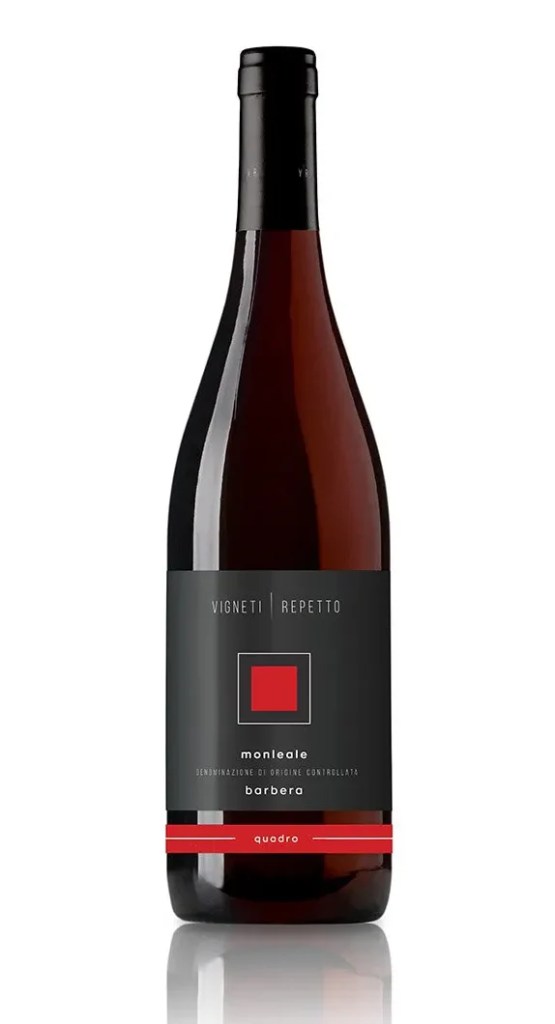
From the winemaker: “All the classic Barbera cherry and raspberry fruit, with the grape’s high acidity honed into a tightly-knit complexity.”
From falstaff.com, which scored it a 92: “Luminous, deep ruby, bright. Opens on the nose with notes of hazelnuts and pomegranate, ripe cherry. Juicy and savoury on the palate, develops very well, with an abundance of dark cherries, fine tannins, and a dark chocolate finish.”
From me: This is the golden age of barbera, from the relatively new Nizza DOCG to the less well-known Colli Tortonesi. Fortunately, the prices haven’t yet gone crazy, so the value remains.
$29 at Tuttililli
-
Updated April 22
Sorry, folks, lots of ground to cover today. We’ll start with sports because I was away from the blog for a couple of weeks while covering the Texas Children’s Houston Open (that would be Houston’s PGA Tour golf tournament for you non sports folks) and the Fayez Sarofim & Co. U. S. Men’s Clay Court Championship. (Right, tennis.) In short, both proved to be extraordinary.
The final round of the golf sort of summed up for me why I squandered my life going to ball games, etc. (It wasn’t for the big bucks, to be sure.) We woke up Sunday morning with five men tied for the lead, four of them guys I really hadn’t heard of before Sunday morning, and Scottie Schleffer, the former Texas Longhorn who’s the world’s best golfer and who was trying to win his third consecutive Tour start. Had he prevailed at Memorial Park, he would have won four in a row because, after he left Houston, he went to Augusta, Ga., and won a second friggin’ Masters.
But, in H-town, Scottie blinked. The German Stefan Jaeger, ranked 43rd on the same leader board that Scheffler is the runaway No. 1, didn’t and therefore claimed his first-ever PGA title. Hey, that’s why we play the games and the tournaments. Nothing is pre-ordained on the field, in the arena, or on the course. On any given Sunday . . .
Except on the LPGA Tour? Nelly Korda did what Scottie couldn’t do, extending her Tour-record tying win streak to five events with a dramatic closing round of her own Sunday in the Chevron Championship at Carlton Woods.
Meanwhile, at River Oaks, arguably the best man — because he was the No. 1 seed — won, never mind that said best man is all of 21 years old and had never prevailed on red dirt anywhere. Kid’s name is Ben Shelton (pictured below). Remember it. He’s special. The Rivers Oaks final was special, too, pitting two Black American men in an ATP Tour final for the first time ever. And it happened at a venue that that has a somewhat murky racial past.
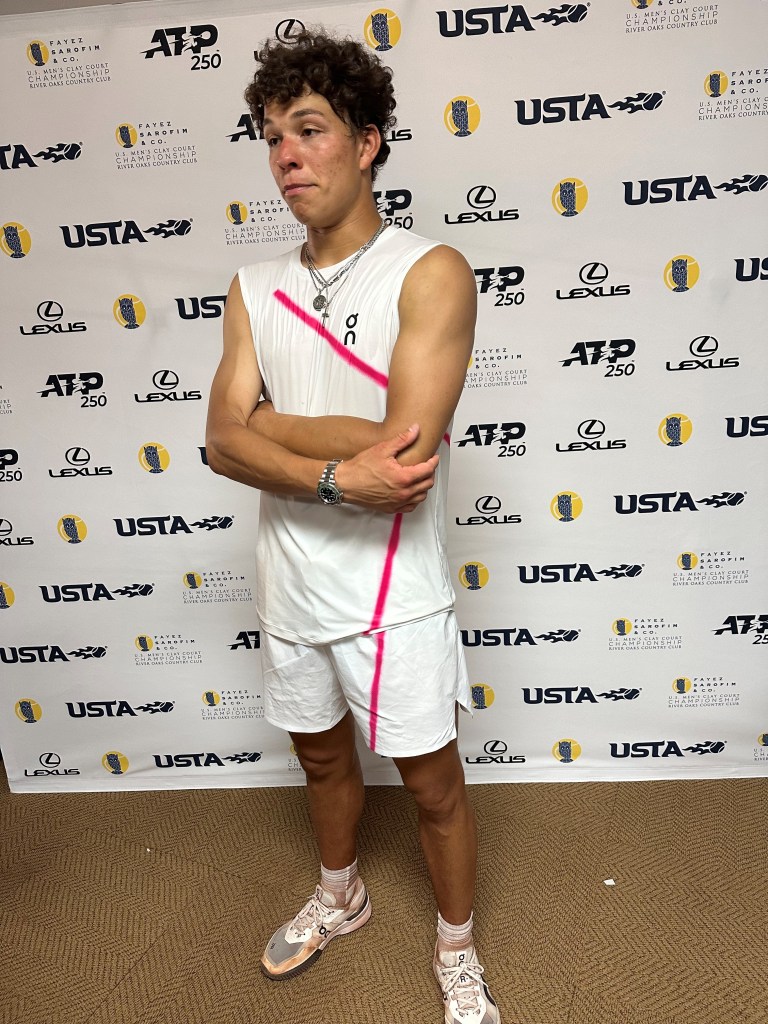
I’ve been blessed to to have covered tennis at that gorgeous venue for 48 years now, and my first tournament in 1977 came only two years after Arthur Ashe made his first and last appearance on the grounds. There’s probably no one left alive who really knows the truth, but the indisputable fact is this: Ashe didn’t play in Houston until seven years after he had won the U. S. Open. Some will tell you he wasn’t invited because of the color of his skin. Others will say he didn’t think he would feel welcome because of the color of his skin and rejected the club’s overtures for that reason.
Anyway, Shelton’s three-set victory over Frances Tiafoe, the 2023 champion, was a near-classic between two gifted, immensely athletic players who also understand life’s bigger picture better than most jocks I’ve met. Note that Tiafoe hadn’t been the first Black to conquer the Stadium Court at River Oaks. That distinction belongs to Bryan Shelton, Ben’s dad, who won the River Oaks International in 1992, and was back on site this spring as Ben’s coach.
It’s important to add that both Shelton and Tiafoe insisted they have never been treated better anywhere on the ATP circuit than at River Oaks. All credit to the current members and, of course, to tournament director Bronwyn Greer and her right-hand person, Haley Wallace. Real pros, those two. Cool stories any way you slice them. Let’s raise a glass to Jaeger and both Sheltons. May many more titles follow!
And kudos to the Texans for landing Stefon Diggs, a huge addition on several levels. An elite receiver by any measure, he’s is going to be very good for young C. J. Stroud. And, yes, vice-versa.
As for the Astros . . . Da hell! Say it ain’t so, Joe. We should be worried, very worried, especially with the bullpen in collective free-fall mode. Two years ago, in route to winning a second World Series, they hadn’t lost their 16th game until May 23. Even last season’s so-so start — 11-10 through April 22 — seems red-hot by comparison. They’ll have to go 84-56 the rest of the way just to equal their so-so 90-72 finish in 2023.
Now, back to wine . . .
The day before I left for France I attended a tasting of Portuguese products, where I encountered an old friend . . . in a bottle. Anybody remember the Mateus Rose? Full disclosure: That was my go-to wine as a teenager with a fake ID in El Paso. I probably hadn’t tasted the stuff in more than 50 years and I would have expected it to be sickly sweet, given my, shall we say, unrefined taste back in those days.
Nope. The Mateus was a bit on the sweet side but not overly so. It was bright and fresh and, at under 10 bucks a bottle, a for-real bargain. Winemaker Diogo Sepulveda calls his wine, which has always been non-vintage and is a blend of baga, rufete, tinta barroca and touriga franca, “very appealing with a bright hue. On the whole, it is a fresh and seductive wine with fine and intense bouquet and all the joviality of young wines. In the mouth, it is a well balanced and tempting wine, brilliantly complemented by a soft and slightly fizzy finish.”

I liked the Mateus so much I made it a point to taste every Portuguese pink wine at the event, and there wasn’t a disappointing one in the bunch. Unfortunately, most of the others didn’t have distributors. Or such a lustrous history.
And, speaking of old friends, I made it point to catch up with two of the human kind on my third day in France, Domaine de Mourchon founder Walter McKinlay and Wendy Heineken Gobbi, who, with her French husband Jean-Marc Gobbi, owns the Château Saint Pierre de Mejans winery in the Luberon. Both have strong Houston ties because McKinlay began doing business in our fair city in the 1960s — North Sea oil shipping — and Heineken Gobbi grew up in Kingwood.
The Mourchon and Mejans wines, brought to Texas by my buddy Douglas Skopp’s Dionysus Imports, offer remarkable quality and value, not to say consistency. (Four of my current favorites are pictured below.) That has a lot to do with the face that McKinlay’s winemaker Sebastian Magnouac has been in the cellar near Seguret in the Southern Rhone Valley since the turn of the century, while Mejans’ Brice Doan de Champassak is celebrating his 27th year, having long preceded the Gobbis who bought the winery from Brice’s family only a few years back.
But both guys are still thinking outside the box and have recently released new reds into the market, although not yet the Texas market. I haven’t tasted either but intend to in the very near future.
Walter and Ronnie are living pretty much full-time in London now — his mobility ain’t what it used to be, but, then, who’s is? — so daughter Kate is running the business side at Mourchon. She has turned her parents’ hilltop villa, with a perfect view of Mont Ventoux to the east, into a rental residence that couldn’t be more perfectly situation for touring the Southern Rhone Valley. Ditto the ancient castle and neighboring mas at Mejans for taking in the many wonders of Provence.
Go to http://vrbo.com/france to book the former (http://domainedemourchon.com) and http://airbnb.com to book the latter (http://saintpierredemejans.com). Gorgeous destinations both, and only about an hour apart.

H-town happenings
Wine and Live Art Dinner: 6:30 p.m. Thursday, April 25, at Potente. $250.
Butcher’s Wine-Pairing Dinner: 6:30 p.m. Friday, April 26, at Central Market. $100. http://eventbrite.com http://eventbrite.com
Kemah Boardwalk Spring Wine Fest : 2 p.m. Saturday, April 27. $59.95. http://eventbrite.com
Derby Wine Fest: 2:30 p.m. Saturday, May 4, at Brenner’s on the Bayou. $150.00. http://eventbrite.com
Wine Dinner with a four-year vertical of Serca reds from Argentina: 6 p.m. Thursday, May 9, at the Aktins House. $105. http://eventbrite.com rom $105.00
Wine Lovers Run Houston: 7:30 a.m. Saturday, May 11, at Eleanor Tinsley Park. $35. http://eventbrite.com
Revana Wine Dinner: 6 p.m. Thursday, May 16, at La Griglia. $250. http://eventbrite.com
Wagyu and Wine Night: 6 p.m. Thursday, May 16, at R-C Ranch. $100. http://eventbrite.com
Six-Course Dinner and SERCA Wines Pairing with Chef Kristin Qassom: 6 p.m. Friday, May 17, at SERCA Wines. $195. http://eventbrite.com
Bazaar Food and Wine Festival: 5 p.m. Saturday, May 18, at Sugar Land Town Square. $150. http://eventbrite.com
Follow meInstagram: http://@sportywineguy
Facebook: Dale Robertson
Podcast: Sporty Wine Guy, wherever you get your podcasts. That’s me with my sidekick Jeremy Parzen above. Expect a new one sometime this week, or next. Hey, we’re busy blokes!
Friends of mine to follow
Sandra Crittenden: http://winelifehousthon.com
Russ Kane: http://vintagetexas.com
Jeffrey Kralik: http://drunkencyclist.com
Katrina Rene: http://thecorkscrewconcie
-
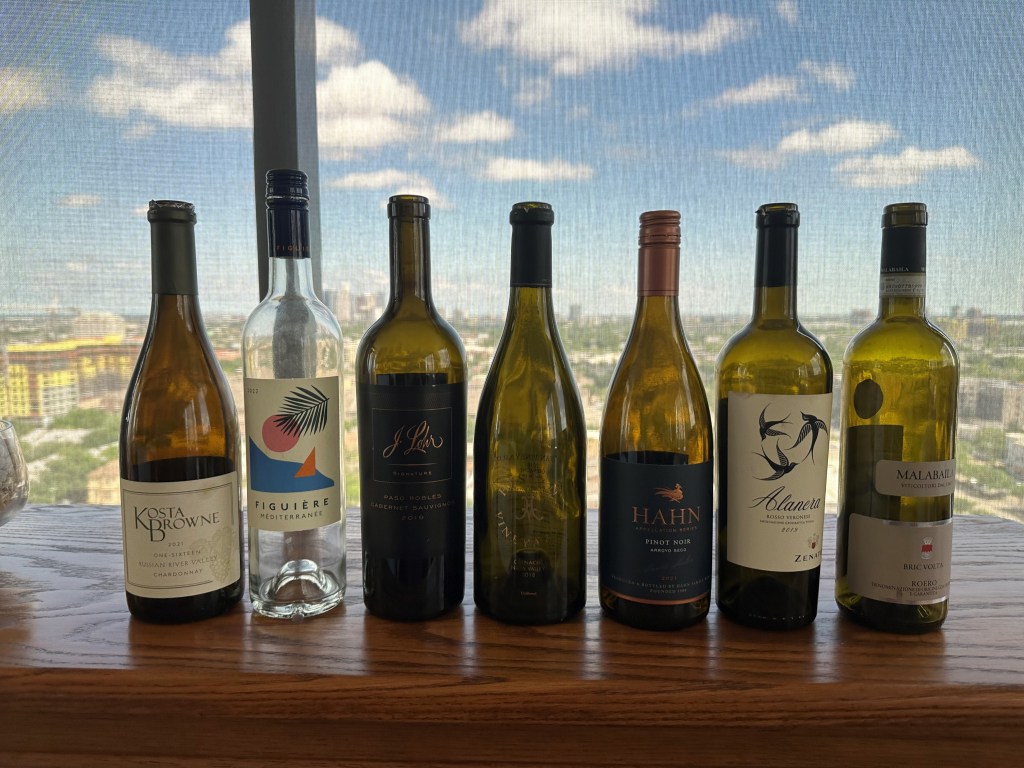
White
2021 Kosta Browne One-Sixteen Chardonnay Russian River Valley
From the winemaker: “Expressive aromatics of fresh mango, honeyed lemon peel and toasted brioche encompass the senses. Stunningly balanced with a refined, smooth palate, lively acidity, and a weightless texture on the finish.”
From James Suckling, who scored it a 96: “Aromas of gunpowder, dried peach and sliced cooked apple. Sea shell. Pineapple. Medium to full body with a creamy texture and lots of fruit but still reserved at the end. Hints of brioche and caramel and then cream. Plenty of fruit and length.”
From me: You think of Kosta Browne and you think pinot noir. Well, think again. This is a world-class chardonnay and, yes, priced accordingly. But, having said that, try buying a bottle of Le Montrachet for 100 bucks.
$99.99 from http://wine.com
Rosé
2023 Figuière Méditerranée
From the winemaker: “Pale salmon pink in color. Nose has notes of white flowers that then develop into white peach skin. The palate expresses the velvety texture of citrus peel and the zestiness of an essential oil. Not mandarin, not lemon, not orange, more like kumquat. There’s something astringent, green, tight and fresh.”
From me: This family-owned domaine with its 210 acres of vines overlooks the Iles d’Or on the French Riviera. It may not be in the high-rent grape-growing neighborhoods of the South of France, which explains the price, but this wine fully captures the best of the sunny South of France in the bottle.
$16.99 at Whole Foods
White
2021 Kosta Browne One-Sixteen Chardonnay Russian River Valley
From the winemaker: “Expressive aromatics of fresh mango, honeyed lemon peel and toasted brioche encompass the senses. Stunningly balanced with a refined, smooth palate, lively acidity, and a weightless texture on the finish.”
From James Suckling, who scored it a 96: “Aromas of gunpowder, dried peach and sliced cooked apple. Sea shell. Pineapple. Medium to full body with a creamy texture and lots of fruit but still reserved at the end. Hints of brioche and caramel and then cream. Plenty of fruit and length.”
From me: You think of Kosta Browne and you think pinot noir. Well, think again. This is a world-class chardonnay and, yes, priced accordingly. But, having said that, good luck trying to buy a bottle of Le Montrachet for 100 bucks.
$99.99 from http://wine.com
Red
2019 J. Lohr Signature Cabernet Sauvignon
From the winemaker: “The cabernet from this vineyard ripens early with excellent color, purity of fruit, and phenolic maturity. Adding the rare Bordeaux variety saint-macaire to the blend brings dense savory elements, while a small amount of malbec contributes bright fruit notes to the finish.”
From the Wine Enthusiast, which scored it a 95: “Nearly opaque in the glass, this luxury-level bottling lays all of J. Lohr’s extensive tools on the table, and succeeds with an intense, complex package. Aromas of dark fruit, densely packed flowers, cocoa and coffee leads from the nose into a palate wrapped in expertly polished tannins. They’re firm, but relent at the right time to allow cassis, graphite and cappuccino flavors to shine.”
From me: Again, $100 is real money. But, like the Kosta Browne chardonnay, it still over-delivers. It’s the best red I’ve tasted so far this year, and it has been a good year for tasting reds.
$100 at http://jlohr.com
2018 Hestan Vineyards Grenache Napa Valley
From the winemaker: “The grapes are pressed using 100-percent whole cluster fermentation and aged 20 months, providing the wine with great structure and freshness throughout the palate.The wine exhibits highly expressive notes of allspice, white pepper, and ripe red fruits, with a medium body mouthfeel it expresses a rich red intensity on the palate.”
From me: I tasted this side by side with one of my reference-standard wines from Gigondas. It was a wash. Impressive, to say the least.
$60 at hestanvineyards.com
2021 Hahn Pinot Noir Arroyo Seco
From the winemaker: “Ruby red in color, with aromas of black cherry, ripe red berry and subtle hints of vanilla and warm spice. On the palate, soft and delicate flavors of cherry and raspberry are followed by creamy nuances and spicy minerality, culminating in a pleasantly long finish.”
From me: Arroyo Seco couldn’t be more perfectly situated for growing great fruit. The rocky soils drain well and the ocean breezes blowing off Monterey Bay through the Salinas Valley ensure gradual ripening of the grapes. Longer hang times equals riper fruit. Location, location, location . . .
$17.99 at http://wine.com
2019 Zenato Alanera Rosso Veronese
From the winemaker: “Brilliant ruby in color, Alanera delights the senses with a variety of aromas and flavors that include fresh and dried cherries and prunes, sweet spice, and hints of coffee and tobacco. On the palate, Alanera is full-bodied with elegant and velvety tannins. Vibrant acidity brings balance and freshness, and supports a long and harmonious finish.”
From, the Wine Enthusiast, which scored it a 91: “This wine has forward aromas of black plum and blueberry pie. Though not an Amarone, the winery partially dries 50 percent of the grapes for a few months, creating a wine made from both fresh fruit and dried fruit that’s lush and rich on the palate but vibrant and intense in equal proportions. It is silky smooth, with a long finish of spiced plums and dried herbs.”
From me: Sergio Zenata, whose estate is located not far from the eastern shore of gorgeous Lake Garda, is known for making great wines that don’t cost a lot. I love people like Sergio Zenata.
$17.95 at http://vivino.com
2020 Malabaila Bric Volta Roero
From the winemaker: “Bright garnet red color. Red fruit aromas like raspberry, strawberry and blackberry that grow in elegance with spices, balsamic touches and mountain herbs. Powerful and elegant but with soft tannins.”
From the Wine Spectator, which scored it a 90: “Intense and sappy, featuring rose, strawberry, currant and tobacco flavors. On the elegant side, with firm, yet refined tannins and a lingering finish.”
From me: The estate, near Canale, has been owned by the Malabaila family since the beginning of the 15th century. That’s staying power. This nebbiolo is a baby Barbaresco, way overdelivering for the price.
$19.97 at Spec’s
-
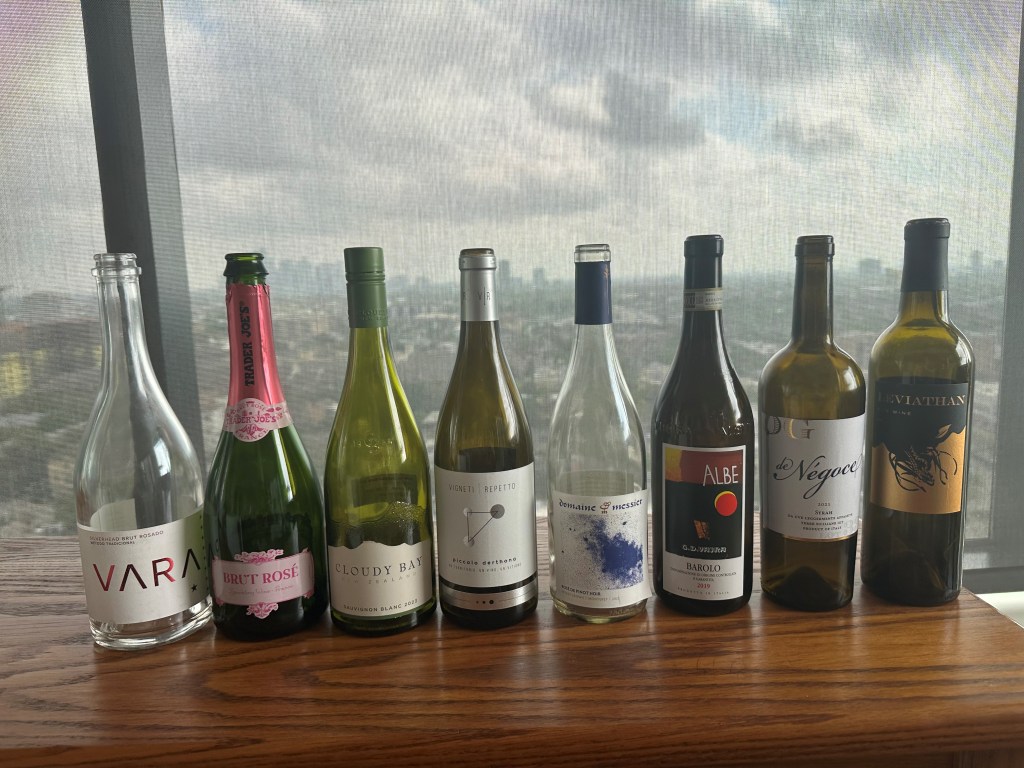
Bubbles
Vara Silverhead Brut Rosado
From the winemaker: “This wine has an abundance of lively, tiny bubbles against a vibrant pink background. Aromas of raspberries, wild strawberries, hibiscus flowers and earthy green tea notes. On the palette it’s a balanced, dry, traditionally styled sparkling wine that presents a creamy mousse and lively acidity showcases a complex range of flavors: tangerines, ripe strawberries, fresh shortbread cookies, and almonds. The length of flavors is long, the finish crisp and mouthwatering.”
From me: I was hoping this sparkler, which I had never heard of until recently, would prove to be good because I was born in Albuquerque, where the winery is located, and I spent many summers there visiting my grandparents. I assumed it would be good because the winemaker is Laurent Gruet, who began making sparkling wine at the age of 16 at his family’s Gruet winery, New Mexico’s most famous sparkling wine (but no longer owned by the Gruets). The fruit (75 percent syrah and the rest chardonnay) was grown in the Ancient Lakes AVA in Washington State.
$27 at http://varawines.com
Trader Joe’s Brut Rosé
From the winemaker: “Trader Joe’s French Sparkling Brut Rosé was developed as a complement to its best-selling sparkling wine, Trader Joe’s French Brut Blanc de Blancs. We wanted a wine of the same excellent caliber but with its own unique point of view, and we believe this is the one. It’s a rosé made with a proprietary blend of grapes grown on the French coast of the Mediterranean Sea; the blend offers a little more depth, fruit, and body than the Blanc de Blanc, yet maintains those classic, creamy bubbles and that crisp, clean finish for which the Blanc de Blanc is so favored. It’s truly delicious.”
From me: Truly delicious works for me, too. And, at this price . . . Woo hoo!
$6.99 at Trader Joe’s
Whites
2023 Cloudy Bay Sauvignon Blanc
From the winemaker: “Enticing and appealing, with notes of honeydew melon, passionfruit, citrus and blackcurrant leaf.
From the Wine Spectator, which awarded a score of 93: “Leaps out of the glass with effusiveness, featuring flavors of apple blossom, Key lime, Honeycrisp, lemon thyme and fresh grated ginger. Notes of passionfruit, pineapple and lemon candy linger on the long, expressive and mouthwatering finish.”
From me: Cloudy Bay has long been the reference standard for New Zealand sauvignon blanc, at least in my book. But I’d forgotten how delightfully refreshing this wine is until I tasted it again recently.
$37.99 at http://wine.com
2021 Vigneti Repetto Piccolo Derthona Timorasso
From the winemaker: “Floral and citrus notes, minerality and freshness. The pairing is with grilled fish dishes, white meats, fried vegetables; ideal as an aperitif.”
From http://thelivingvine.ca: “This timorossa steps up to prove just how beautiful and age-worthy (the varietal) can be Notes of petrol, straw, lemon and white fig, this white is layered and complex, with beautiful acidity and a gorgeous palate.”
From me: Like the arneis grape back in the 1970s, timorasso wasn’t on many wine drinker’s radar screens before a fellow named Walter Massa, whose winery was near Tortona in the Colli Tortonesi about an hour south of Milan, decided back in the 1980s to think outside the box. Barbera was the cash cow in the neighborhood, but Massa thought the terroir was actually better suited for a white grape like timorasso. At the time, there was barely more than an acre of the vines in the ground. Today? More there are more than 400 and it seems like winemakers throughout the Piemonte are at least experimenting with timorasso, which delivers excellent acidity and freshness in the right hands, like the Repettos. Derthrona, by the way, was the ancient name of Tortona.
$26 at http://tuttilili.com
Rosé
2022 Domaine Messier Rose de Pinot Noir Monterey
From the winemaker: “Gives a bouquet of ripe, wild strawberry with subtle savory complexity. The palate gives juicy grapefruit and lemon peel with ripeness balanced by a significant line of acidity.”
From me: I provided a brief summary of the Domaine Messier project in California’s Carmel Valley in my last blog. Luc Messier and Julie Fette seem unlikely vintners, but when you discover the success they enjoyed in their day-job professions — Luc in the business world, Julie as a French professor — it’s no surprise they could figure out wine-making. This is the most elegant, compelling still rosé I’ve tasted of late, and it’s their first release. The Messier chardonnay and pinot noir are also well worth tasting.
$38 at http://shopdomainemessier.com
Reds
2021 OG de Negoce Syrah Terre Siciliane IGT
From the winemaker: “Expressive on the nose with red cherries, plum sauce, and black olive haloed by blueberry and tar. The entry is luscious and earthy with delicate leather and bramble interwoven with cigar box and black cardamom, medium acidity, and swept by polished, grainy, horizontal tannins. The finish is long, barrel-kissed, and resonant with blueberry and plum coulis.”
From me: The de Negoce brand comes to us from Cameron Hughes, who has reinvented what it means to be a negociant. He has a unique knack for finding surplus — but excellent — juice from all over the world. We hardly think of syrah when we think of Sicily, but perhaps we should after tasting this concentrated, reductive red, which spent 12 months in French oak and could pass for an Amarone in a blind tasting.
$12 from http://denegoce.com
2019 C.D. Vajra Albe Barolo
From the winemaker: “Features a classic pigeon blood garnet color, with a very lively core. A rush of red berries, raspberries and red currants is wrapped by a layer of sweet spices. The mouthfeel opens with a gorgeous balance, great energy and refined tannins, and the aftertaste echoes the aromatics with lingering complexity.”
From the Wine Enthusiast, which scored it a 94: “Stunning in its purity, freshness and vibrancy, the Albe Barolo from the venerable Vajra family is a beauty. Aromas of fresh cherries, wild strawberries, rose- buds, wild herbs, underbrush and subtle chalky notes waft from the glass. The generous palate showcases the tart red fruits Nebbiolo is known for, but at a higher gear followed by more savory flavors finishing with well-integrated tannins and vibrant acidity.”
From me: It checks all the Barolo boxes at a price very few, if any, quality Barolos can match. I’ll be buying two or three more bottles when I make my Whole Foods run today.
$39.99 at Whole Foods
2021 Leviathan Red Wine
From the winemaker: “The wine reveals distinct aromas of blackberry bramble, black cherry, and chaparral. Savory spices and star anise meld with mineral, graphite, bay, and laurel reflective of the rocky Northern California terrain. With finely structured tannins, this wine is silky and elegant — yet persistent.”
From Jeb Dunnuck, who scored it a 94: “Always a good value, the 2021 California Red Wine is no exception and has darker berry fruits, some leafy herb, sage, lavender, and chocolate nuances, full-bodied richness, and a lush, round, seamless style that’s already impossible to resist. This is primarily Cabernet Sauvignon (with plenty of other red varieties), and it should shine for 7-8 years, if not a decade, although I would drink this puppy in its youth.”
From me: Like Cameron Hughes, Andy Erickson has also been a rule-breaker, going against the trendy grain of making wines that ostensibly taste of place, instead choosing to make wines that just taste really good — and offer superb value. Since the first vintage of Leviathan in 2004, Erickson has made all of California his appellation. This vintage is a cab-centric blend that includes merlot, petite sirah, petit vergot and cab franc.
$36.99 at http://wine.com
-
I’ve fortuitously crossed paths of late with Houstonians who have entered the wine-making ranks from very different places. Although they are still novices relatively speaking, they’re doing it right and making excellent, big-league albeit small-production wines. I hope to be writing about them in much greater detail going forward, but I wanted them on everyone’s radar screen today.
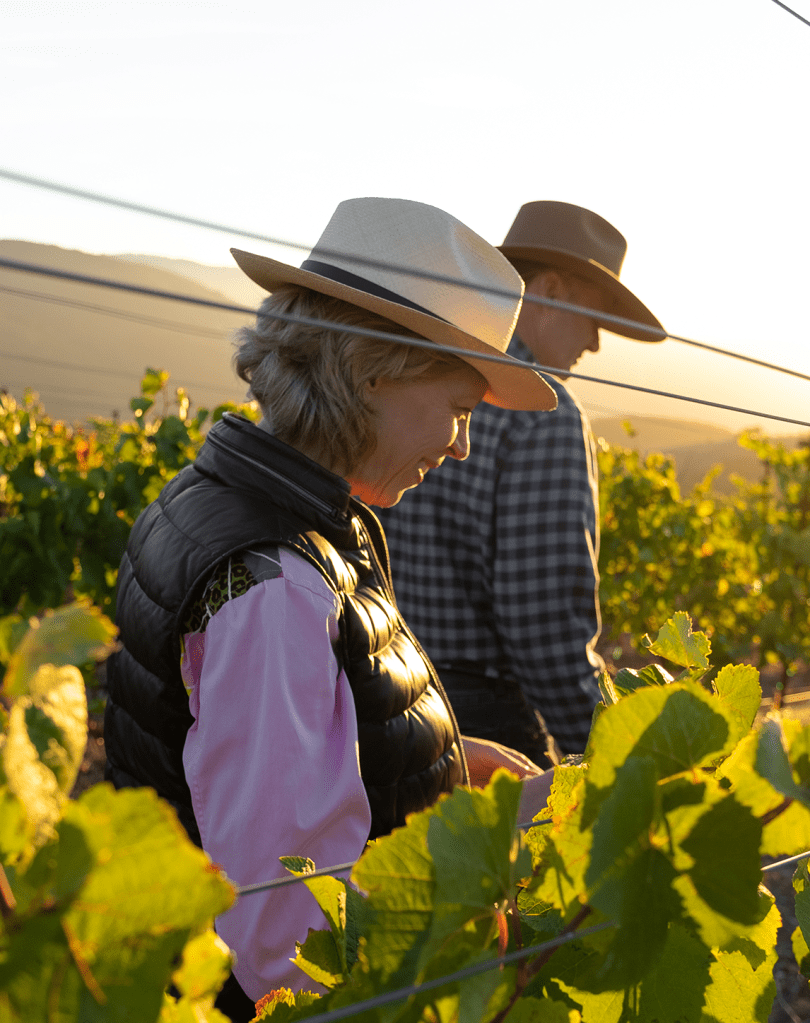
First, meet Julie Fette and Luc Messier, pictured above. They launched their Domaine Messier (http://domainemessier.com) in the fall with a rose, a chardonnay and a pinot noir made from fruit grown on their own property in Carmel Valley. Considering the vines are only three years old, these first-vintage-release wines are extraordinary. The pink pinot noir is one of the most elegant I’ve sampled in a long time.
Domaine Messier, they explain on their website, “is not only a part of our true namesake—“messier” means guardian of the harvest in old French—but it also bears the name of the astronomer, Charles Messier. It is from his catalogue of Messier Objects, 110 nebulae and star clusters, that we draw inspiration for our vineyard and winery. Emblazoning each bottle of Domaine Messier wine, you will find artfully interpreted images of Messier Objects which correspond with each vintage produced.
“Our first vintage for 2022 begins with Messier 22, an elliptical globular cluster of stars located in the constellation of Sagittarius. Each vintage will be inspired by its corresponding Messier Object, and the labels will be inspired by NASA images for that Object. Soon we expect to enjoy astounding perspectives of Messier Objects from the James Webb Space Telescope. After 88 years of wine production, the cycle will reset to Messier 1.”
After 88 years? Well, they seem to be in this for the long haul.
Originally from New Jersey, Fette is a Fulbright Scholar and a tenured professor of French at Rice University. Messier has enjoyed a remarkable corporate career in a variety of roles, having landed in Houston as a then-senior Conoco-Phillips executive. Having un-retired in 2022, he’s currently COO for Enerkem, a cutting-edge, Canada-based waste recycling company, so he’ll be doing a bit of commuting between Houston and Montreal for at least the near term.
But the person he most looked-up to as a boy growing up in Quebec was his grandfather, Joseph, a farmer. And what is wine-growing but farming?
Both coming off divorces, Fette and Messier met in Houston a little over a decade ago and it was truly love at first sight. They, of course, had a shared love of wine, too, and that made their project a no-brainer pursuit.
Full disclosure: Their intention is to move to the Carmel area when she retires, But, for the moment, they are proud and happy Houstonians. They have made a lot of friends here. About 100 will be convening in a couple weeks for a private release party. However, the wines are already available through the above website.

Then there’s Jennifer Rossi. A Houston native and a graduate of Memorial High School in Spring Branch, Rossi first identified wine as something intriguing when she and some of her Vassar classmates visited a winery near the university in upstate New York to celebrate her 21st birthday. It only offered pinot noirs, but each was very distinctive and that piqued her interest in this winemaking thing.
After returning to Houston and earning her MBA at Rice (where she became president of the wine club), then marrying and landing a job as a management consultant for Sendero, she still couldn’t get the wine thing out of her head. So Rossi began her studies in 2016 at The Texas Wine School, soon completing WSET (Wine & Spirit Education Trust) levels 1,2, and 3, French Wine Scholar and Texas Specialist of Wine. She also finished the Winemaking Certificate program offered through Texas Tech University and began making homemade wine, with a huge assist from Brock Estes, the owner of Fly Gap Winery in Mason, and major moral support from her husband Drew, a periodontist.
That experiment gave birth to what became The Cause Urban Winery (http://causeurbanwinery.com) in 2020. Right, at the height of COVID. But that freed up her day-job schedule because she began working remotely, giving her more time to spend mapping out a course in wine. And, speaking of giving birth, Rossi is seven months pregnant with her first child. Yes, the wine business must go on a temporary hiatus starting this summer.
But hopefully during her down time the winery and tasting room the Rossis are building out in a repurposed buidling at 6200 Stillman, near the intersection of I-10 and Wescott, will be finished. To date, she has been making her wines at John Rivenburgh’s Kerrville Hills wine incubator, a communal space for aspiring vintners like Jenn and also grape growers, which she doesn’t intend to be.
Nor does she need to be because she has been able to source some excellent Texas fruit, although some years are more complicated regarding same than others. Making wine in Texas takes lots of courage and capital — she freely admits she became her own the winemaker because she didn’t have the cash to hire an experienced one — but Rossi couldn’t be more upbeat about her prospects going forward.
A lot of folks are rooting for her, too, because of how she has structured her company. It supports five great local causes, each of them assigned to a specific wine. For every bottle sold, at least $1 goes to the Memorial Park Conservancy, (2021 Alta Semita Mourvèdre); the Houston Arboretum and Nature Center (2022 Caprifolia Trebbiano), the Houston Area Women’s Center (2021 Vai Avanti Rosé of Mourvèdre); Scout’s Honor Rescue (2021 Skýlos Viognier) and the Houston Food Bank (2020 Cura Annonae Petite Sirah). The latter, her original release, was a bit funky on the first taste, but it opened up splendidly over the course of a couple hours.
You can meet Rossi and taste at the Rice Village Farmers Market on Sunday, March 19, from 9 a.m. through noon. You’ll find her delightful.
H-Town happenings
Tastings Every Saturday at French Country Wines: Noon-5 p.m. Free. http://frenchcountrywines.com
Tastings Every Saturday at TuttiLili: Noon-5 p.m. Free. http://tuttilili.com
Tastings Every Wednesday at Montrose Cheese & Wine: 5-7 p.m. Free. http://montrosecheeseandwine.com
Symposium Saturdays: 4-5 p.m. at Stella’s Wine Bar in the Post Oak Hotel. $75. http://eventbrite.com
Houston Rodeo Uncorked Wine Winners: 6:30 p.m. Saturday, March 16, at JMP Wines Tasting Room. $75 http://eventbrite.com
Wines of Portugal tasting: 6-8 p.m. Wednesday, April 10 at Station 3. $30 http://eventbrite.com
Follow meInstagram: http://@sportywineguy
Facebook: Dale Robertson
Podcast: Sporty Wine Guy, wherever you get your podcasts. That’s me with my sidekick Jeremy Parzen above.
Friends of mine to follow
Sandra Crittenden: http://winelifehousthon.com
Russ Kane: http://vintagetexas.com
Jeffrey Kralik: http://drunkencyclist.com
Katrina Rene: http://thecorkscrewconcierge.com
-
Updated Feb. 28

A week from tomorrow tonight at the Post Oak Hotel, I’m putting myself on the auction block to benefit the Alliance Française de Houston. In fact, you’ll get two chances to sip and swirl with me and find out, up close and personal, if indeed I do have good taste in wine.
We’ll be celebrating the first 100 years of the Alliance chapter in Houston and the start of our second century — le deuxième siecle, as the French would say — with a black-tie- optional gala featuring all the things you associate with these fund-raising fetes including both silent and live auction items. In my role as president of the board of directors, I’ve been made a co-host of the latter, so I’ll be twice standing up in front of our guests and asking them to spend their hard-earned money for the “privilege” of sharing some of my favorite wines.
I know . . . What could possibly go wrong? Well, worst case, I can bid on myself, although I do hate drinking alone.
Seriously, this is going to be an extraordinary evening of super food (I’ve tasted through the menu and can guarantee there’s no rubber chicken in the mix!) paired with excellent wines in a gorgeous ballroom at Houston’s only five-star hotel. As I type this, I’m delighted to report that just three individual tickets at $250 each remain to be sold so please don’t hesitate to reach out with your credit cards and join the party. Purchases can be made online at http://alliancehouston.org or by dropping a check off at our building, 427 Lovett Blvd., in the heart of Montrose.
The Alliance has for decades brought Houston’s Francophones and Francophiles together through language classes and cultural events, but recent years have been difficult for us in large part because of the pandemic. Although online learning kept most of our students in the fold, income from tastings, concerts, lectures, et. al, and renting our home to other organizations largely dried up just when our also century-old abode began needing a major facelift. Recently, for example, the plaster ceiling in our reception area suddenly came crashing down. Zut alors! Fortunately, no one was in the room at the time.
Needless to say, proceeds from the gala will be largely targeted toward infrastructure repairs and upgrades. To date, we’ve been trying to not spend money we don’t have, but hopefully this soiree will help us turn the corner.
My auctioned tastings (one featuring a lineup of my favorite roses as summer approaches) will be held at Ruggles Black on West Alabama and Porta’Vino on Washington Avenue just north of 1-10. Chef Bruce Molzan at the former and restaurateur Bill Floyd at the latter have long been great — and generous — friends. But a number of other restaurants have offered tasting dinners for auction, including Artisan’s Jacques Fox, who has agreed to be the official chef of the Alliance Française de Houston. Our official purveyor of French goods, the French Farm (http://thefrenchfarm.com), will be prominent in the auction mix, too.
The evening’s wines, still and sparkling, have been generously donated by two board members who also happen to be board members, Jean-Francoise Bonneté (http://bonnete.com) and Douglas Skopp (http://dionysusimports.com). Both have outstanding portfolios as you’ll see by perusing their websites. The cocktail hour starts at 6:30 p.m. Come join the fun and raise a glass, or several, to the beautiful French language and France’s wonderful culture.
Viva Italy, too!
Yep, I’m by-cultural. In late May and early June as many of you may know because, yes, it has been mentioned in this space before, I’m leading a lovely 10-day tour through the heart of Italy’s Piemonte wine country, my favorite wine region on the planet and a place I’ve visited frequently for nearly 30 years.
Our home base for four nights in the Langhe will be the elegant Relais Luigi
Einaudi, which sits on a panoramic hilltop above the town of Dogliani, one of
the region’s hidden gems. (Better still, the Einaudi winery sits right next
door.) From there, we’ll visit two Ceretto venues, the hilltop headquarters in
San Cassiano just west of Alba and the flagship Bricco Roche estate, with its
landmark glass Cube designed and constructed by the same firm responsible for
the Pyramid at the Louvre in Paris.Note that the Cerettos, great personal friends of mine since the mid-1990s, are
partners with rock-star chef Enrico Crippa at Piazza Duomo, one of the world’s
greatest restaurants where we’ll lunch after a morning visit to the historic
Pio Cesare cellars nearby. The older section dates to the late 19th century and
the cavernous space is split by a 2,000-year-old Roman wall. Pio Cesare is
uniquely situated, being the only winery in Alba proper.
The sumptuous lunch at Piazza Duomo will be one of at least three that will be
prepared by chefs possessing Michelin stars. Another, Guido, located at the
Fontanafredda winery, has a storied history and personal memories that I’ll be
excited to share with you. In route to Lake Como, where we will spend a night, we
will also have a catered lunch at the magnificent Airbnb owned by the Amistà
Winery in Nizza, the happening new DOCG that was carved out of the Barbera
d’Asti DOC in 2014.On Thursday, May 23, we’ll convene in Turin, which I got to know well while
covering the 2006 Winter Olympics for the Houston Chronicle, and we’ll wrap up
our grand adventure in Milan on Saturday, June 1 with a sumptuous farewell
dinner. Heading to Milan, we’ll make a detour to Franciacorta’s bubbles
country, too, in order to taste at the spectacular Ca del Bosco property.And, before we hit the wine trail, we’ll be taking a detour up and over the Alps
into my neighborhood, the Ubaye Valley (http://ubaye.com),
for a special late-afternoon dinner with my great friend, chef Hubert Longeron,
at his gîte in one of France’s most remote and breathtakingly beautiful
corners.The cost is $7,750 per person, all-inclusive once you step off the plane. Registration can be handled through http://gourmettours.biz.
Here are links to some of our stops:
WINERIES
Amistà: http://amistapiedmontwine.com
Bruno Rocca: http://www.brunorocca.it
Ca del Bosco: http://cadelbosco.com
Ceretto: http://www.ceretto.com
Domenico Clerico: www.domenicoclerico.com
Oddero: http://www.oddero.it
Pio Cesare: http://piocesare.it
Poderi Luigi Eiunadi: http://www.poderieinaudi.com
HOTELS
Relais Luigi Einaudi (Dogliani): http://www.relaiseinaudi.com
Villa Morelia (Jausiers, France): http://villa-morelia.com

RESTAURANTS (*Michelin stars)
***Piazza Duomo: http://piazzaduomoalba.com
*Massimo Camia (La Morra) : http://massimocamia.it
*Guido (Serralunga): http://guidoristorante.it
Le Quattro Stazione (Saluzzo): http://le-sanssouci.com
Sans Souci (Jausiers): le-sans-souci.com
Ristorante Moda (Monforte d’Alba): http://modavenue.eu
La Locanda del Sorriso (Dogliani): http://lalocandasorriso.com
Tratorria Il Risorgimento (Treiso): http://risorgimento.yolasite.com
La Piola: http://lapiola-alba.it
OTHER
Wine Museum (Barolo): http://wimu.barolo.it: We’ll visit on Monday morning, May 27, for big-picture purposes and to give everyone a chance to take a stroll through the town of Barolo.
H-Town happenings
Tastings Every Saturday at French Country Wines: Noon-5 p.m. Free. http://frenchcountrywines.com
Tastings Every Wednesday at Montrose Cheese & Wine: 5-7 p.m. Free. http://montrosecheeseandwine.com
Symposium Saturdays: 4-5 p.m. at Stella’s Wine Bar in the Post Oak Hotel. $75. http://eventbrite.com
Orin Swift Wine Dinner: 6 p.m. Thursday, Feb. 29, at Kiran’s. $195. 713-960-8472 info@kiranshouston.com
Wine Tasting & Pasta Celebrating Black & Women’s History: 11 a.m. Saturday, March 2, at 2515 Harvard St. $10. http://eventbrite.com
Houston Rodeo Uncorked Wine Winners: 6:30 p.m. Saturday, March 16, at JMP Wines Tasting Room. $75 http://eventbrite.com
Follow me
Instagram: http://@sportywineguy
Facebook: Dale Robertson
Podcast: Sporty Wine Guy, wherever you get your podcasts. That’s me with my sidekick Jeremy Parzen above.
Friends of mine to follow
Sandra Crittenden: http://winelifehousthon.com
Russ Kane: http://vintagetexas.com
Jeffrey Kralik: http://drunkencyclist.com
Katrina Rene: http://thecorkscrewconcierge.com
The Sporty Wine Guy
All things wine… but a little sports talk, too

 The Sporty Wine Guy